6 Best Heavy Weight Interfacings for Bag Structure
Achieve professional bag structure with our guide to the 6 best heavy-weight interfacings. Learn which materials offer the perfect support for your projects.
Creating a structured bag is a lot like choosing the right yarn for a complex cabled sweater; if your foundation lacks integrity, the entire project will sag or lose its intended shape. Just as you wouldn’t use a loose, single-ply roving for a structured heel, you shouldn’t rely on flimsy stabilizers for a bag meant to hold its own. Finding the perfect balance between rigidity and flexibility is the secret to a professional finish. This guide breaks down the best heavy-weight interfacings to ensure your handmade bags look as polished as your finest stranded colorwork.
Pellon 71F Peltex: Best Overall Heavy Stabilizer
Pellon 71F is the industry standard for a reason; it provides an uncompromising, board-like stiffness that acts as the "backbone" of your bag. Think of it like using a rigid, non-stretchy cotton yarn for a structured market tote—it simply won’t give, no matter how much weight you add.
This ultra-firm, fusible stabilizer is perfect for bag bottoms, side panels, or any area where you need the fabric to stand upright without help. It is exceptionally easy to fuse, though you must be careful to use a pressing cloth so you don’t gum up your iron.
Because it is so stiff, it can be tricky to maneuver under a standard home sewing machine needle. If you are used to the fluid movement of knitting on circular needles, the sudden resistance of Peltex can feel jarring, so take your time and use a heavy-duty needle.
Decovil I Light: Best for Professional Structure


Decovil I Light is often called "synthetic leather" because it offers a unique, luxurious hand that feels more like a high-end handbag than a craft project. Unlike the paper-like feel of some stabilizers, this product maintains a supple yet firm structure that creates beautiful, crisp corners.
If you have ever blocked a delicate lace shawl and marveled at how the fabric holds its shape while remaining soft to the touch, you will appreciate how Decovil behaves. It bridges the gap between rigid board-like stabilizers and soft, flexible fleece.
The main trade-off is the cost and the thickness, which can create bulk at the seams. If you are working with a delicate fabric, test a swatch first to ensure your machine can handle the layered thickness without skipping stitches.
Fast2Fuse Heavyweight: Best for Bag Base Design

Fast2Fuse is a double-sided fusible product that essentially laminates your fabric between two layers of adhesive. It is incredibly robust, making it the go-to choice for the base of a bag that needs to carry heavy items like knitting supplies or books.
Using this is similar to working with a stiff, dense wool felt; it provides a solid foundation that won’t buckle under pressure. Because it is double-sided, it eliminates the need for pinning or basting, which saves time and prevents shifting.
Be aware that once you fuse this, there is no going back. If you misalign your fabric, you cannot easily peel it off without damaging the fibers, so measure twice just like you would before cutting into a precious hand-dyed skein.
Vilene S520: Best for Crisp, Rigid Handbags

Vilene S520 is a firm, fusible interfacing that is prized for its ability to create razor-sharp edges and smooth, professional-looking surfaces. It is less prone to wrinkling than other heavy stabilizers, making it ideal for the exterior panels of a structured clutch or tote.
For knitters who obsess over the perfection of their tension and stitch uniformity, S520 provides the same level of satisfaction in sewing. It creates a clean, architectural look that elevates a simple fabric choice into something that looks store-bought.
However, because it is so rigid, it does not handle tight curves well. Use this for flat panels and geometric designs where you want to emphasize straight lines and sharp angles.
Pellon 72F Peltex II: Best Double-Sided Option
Pellon 72F is essentially the double-sided version of the 71F, offering the same extreme rigidity with the added convenience of fusible adhesive on both sides. This is a game-changer for construction, as it allows you to fuse your lining and exterior fabric simultaneously.
Think of this as the ultimate tool for "sandwiching" layers, much like securing a backing to a quilted project. It removes the need for extra stitching to hold your layers together, which keeps your bag looking clean and minimal.
The downside is that it creates a very thick final product. Ensure your sewing machine is up to the task of punching through multiple layers of fabric and double-sided stabilizer, and always use a fresh, sharp needle.
Bosal In-R-Form Plus: Best for Soft Yet Firm Bags
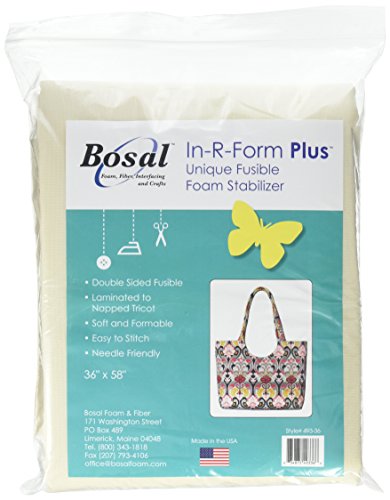
Bosal In-R-Form Plus is a unique, foam-based stabilizer that provides structure while maintaining a soft, padded feel. It is perfect for bags that need to hold their shape but still have a bit of "give," such as a project bag or a laptop sleeve.
If you have ever used a soft, squishy merino wool for a cozy cowl, you know the value of structure that isn’t stiff or scratchy. This product offers a similar comfort, protecting your contents while providing a sturdy, cushioned wall.
It is generally easier to sew through than the board-like stabilizers, making it a great choice for beginners. However, it is not as rigid as Peltex, so it won’t hold a sharp crease if that is the specific look you are chasing.
How to Choose the Right Interfacing for Your Bag
Choosing the right stabilizer is a process of matching your fabric weight to your desired outcome. If you are using a lightweight cotton, you need a heavy stabilizer to compensate, just as you would use a larger needle to get gauge with a thinner yarn.
Consider the "hand" of the final bag: do you want it to stand up on its own like a basket, or should it be soft enough to fold away? A structured handbag requires the heavy-duty options listed above, while a slouchy hobo bag might only need a medium-weight fusible.
Always perform a "drape test" by fusing a small scrap of your fabric to your chosen stabilizer. Observe how it bends, how it feels, and whether the adhesive bleeds through—much like testing a swatch for gauge and drape before beginning a sweater.
Understanding Fusible vs. Sew-In Interfacing
Fusible interfacing uses heat-activated adhesive to bond directly to your fabric, creating a single, cohesive unit. It is the most popular choice for bag making because it prevents the fabric from shifting during construction, much like how blocking sets your stitches in place.
Sew-in interfacing, by contrast, is attached by stitching it to the fabric layers. While it takes longer to apply, it is a safer bet for delicate or heat-sensitive fabrics that might be ruined by a hot iron.
If you are working with a fabric that has a high synthetic content or a delicate texture, sew-in is your best friend. It offers the structure you need without the risk of scorching or melting your outer material.
Essential Tips for Applying Fusible Interfacing
The most critical step in applying fusible interfacing is using enough heat, time, and pressure. Many beginners fail because they simply "tap" the iron down; you must hold it firmly in place for the full duration recommended by the manufacturer to activate the adhesive.
Always use a pressing cloth between your iron and the interfacing to prevent glue from getting onto your iron plate. A dirty iron is the quickest way to ruin your next project, much like getting oil or debris on your knitting needles.
Work on a hard, flat surface rather than an ironing board if possible. The extra resistance of a tabletop allows you to apply more downward pressure, ensuring a stronger, more permanent bond between the layers.
Troubleshooting Common Bag Making Interfacing Issues
If your interfacing is bubbling or peeling, it usually means the heat didn’t penetrate evenly or the fabric wasn’t pre-shrunk. Like blocking a garment, pre-washing your fabric is essential to ensure that the fabric and stabilizer contract at the same rate.
If your bag feels too stiff or "crunchy," you may have chosen an interfacing that is too heavy for your fabric choice. In the knitting world, this is akin to using a size 2 needle for a bulky yarn—the resulting fabric is stiff, dense, and lacks the movement you intended.
If you find that your machine is struggling to sew through the layers, switch to a topstitch or denim needle. These needles are designed for heavy-duty work and will prevent the skipped stitches that often occur when the machine encounters too much resistance.
Mastering the art of structure is the key to transitioning from "homemade" to "handmade" quality. By treating your bag construction with the same care and technical consideration you apply to your knitting, you ensure a durable result that stands the test of time. Don’t be afraid to experiment with different combinations of fabric and stabilizer to find your preferred aesthetic. With the right foundation in place, your bags will be just as impressive as your most intricate lace or cable work.