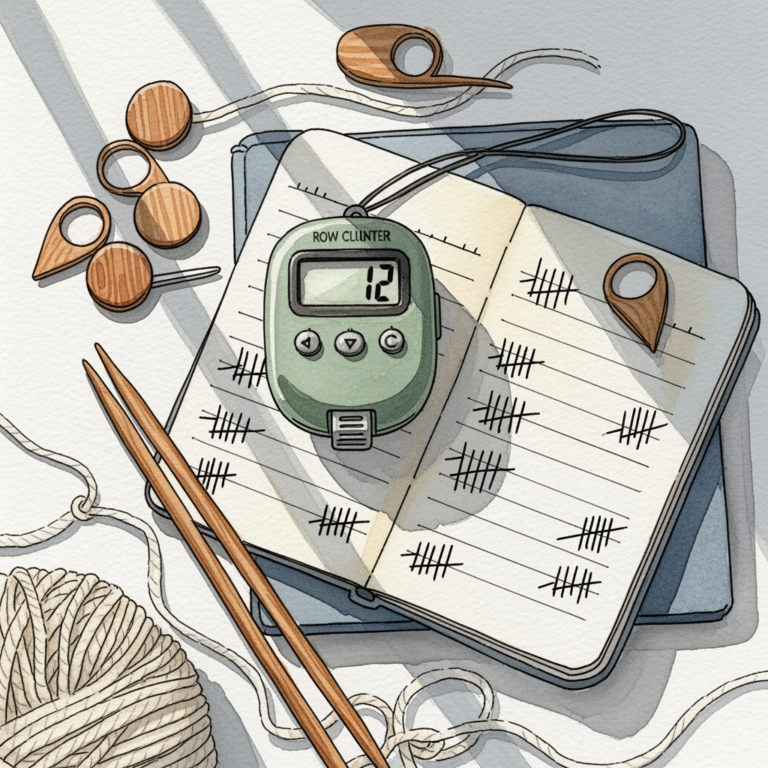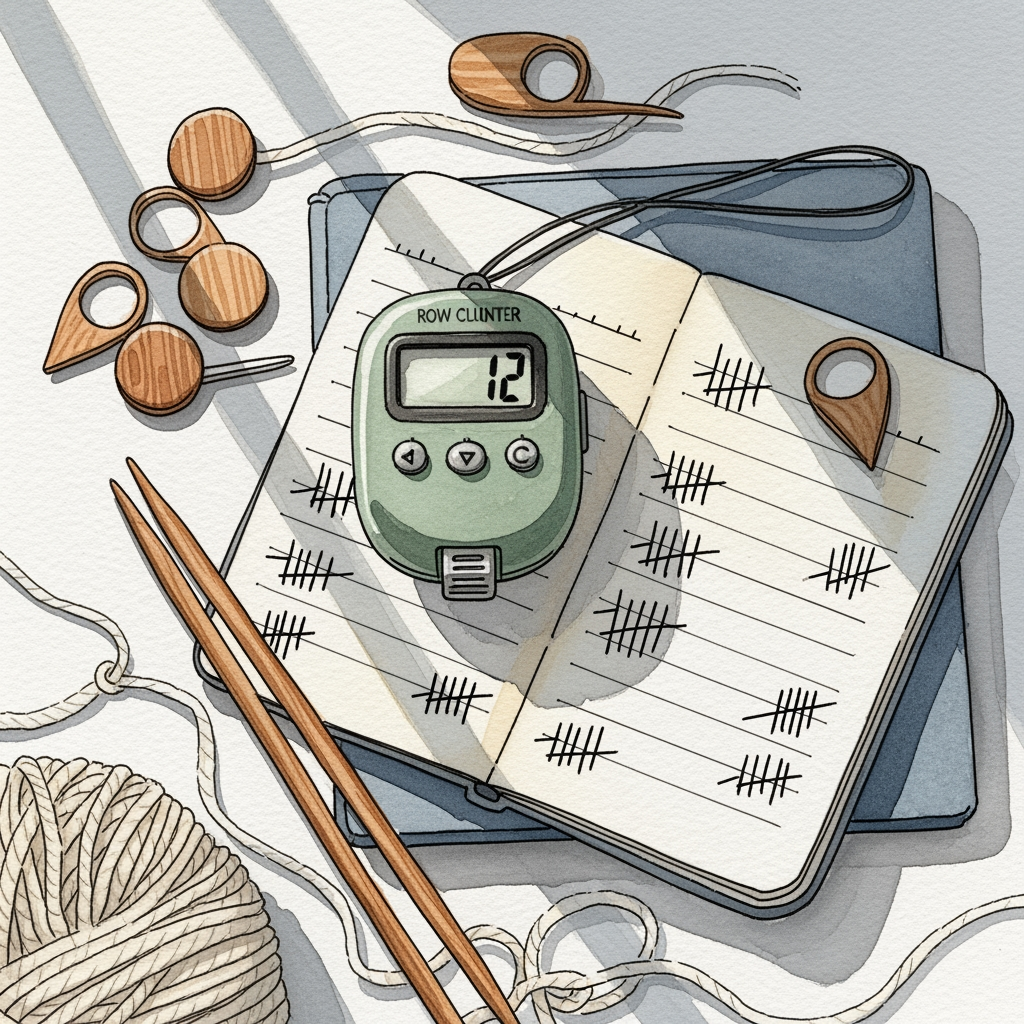
7 Best Row Counters For Project Tracking To Try
Keep your knitting on track with these 7 top-rated row counters. Discover the best tools for precise project management and error-free crafting sessions today.
Losing your place in a complex lace chart or a long stockinette sleeve is a rite of passage every knitter eventually faces. While some makers rely on counting rows by sight, most of us eventually seek a reliable tool to keep our rhythm steady. Choosing the right row counter is about finding a device that integrates seamlessly into your hands without disrupting your flow. Here are the top tools that help keep your project tracking precise and stress-free.
Knitter’s Pride Mindful Collection Row Counter


This counter is designed for the knitter who appreciates aesthetics as much as functionality. It features a sleek, meditative design that feels substantial in the hand, making it a pleasant companion for long knitting sessions.
The primary benefit here is the smooth, tactile feedback provided by the clicking mechanism. It avoids the jarring, loud "clack" of cheaper plastic models, which can be distracting when you are trying to find your zen in a repetitive row.
Because it is part of the Mindful Collection, it features a consistent, high-quality build that stands up to being tossed in a project bag. If you are someone who values a cohesive toolset, this counter is a beautiful addition to your knitting kit.
Clover Kacha-Kacha Clicker: Best For Durability
The Clover Kacha-Kacha is a legendary tool in the knitting community for a reason: it is nearly indestructible. If you are the type of knitter who keeps a project in a bag that gets crushed, sat on, or dropped, this is your best bet.
The name "Kacha-Kacha" is onomatopoeic, reflecting the distinct, satisfying sound it makes when you click it. Some knitters find the sound slightly loud, but that audible confirmation is exactly what you need when working on complex colorwork where missing a single row could ruin a motif.
It features a locking mechanism that prevents the numbers from spinning accidentally while it’s rolling around in your knitting bag. This is a critical feature for anyone who has ever opened their bag to find their row count reset to zero.
Cocoknits Method Maker’s Keep Magnetic Counter
Cocoknits has revolutionized the way we organize our tools with the Maker’s Keep, a wearable magnetic bracelet. The row counter attaches directly to this wristband, keeping your tracking device exactly where your hands are.
This setup is a game-changer for knitters who suffer from "counter amnesia," where you finish a row and realize you can’t remember if you clicked the button. By having the counter on your wrist, you can click it the moment you finish your last stitch without reaching for a separate tool.
The magnetic base is strong enough to hold your tapestry needles or small stitch markers as well. It is a brilliant solution for those who knit on the go, such as on public transit or in crowded spaces where you don’t have room for a notions tin.
Susan Bates Digital Finger Ring Row Counter

If you prefer a wearable option that isn’t magnetic, the digital finger ring is a classic choice. It slips over your index finger, allowing you to toggle the count with your thumb while you hold your needles.
The digital display is easy to read, which is a major advantage for knitters who struggle with the tiny, printed numbers on traditional mechanical counters. It is lightweight and unobtrusive, making it perfect for long-distance knitting where extra weight on your needles or wrist would cause fatigue.
However, be mindful that the rubber strap can sometimes snag on delicate fibers like mohair or silk. If you are working with fuzzy or high-friction yarns, ensure the strap is tucked away or consider a different style to avoid pulling at your stitches.
Boye Aluminum Traditional Row Counter Beads

For the purist who dislikes digital screens and clicking sounds, these traditional beads are the gold standard. You simply slide the beads along a tether to track your progress, which is completely silent and requires no batteries.
This method is particularly useful for knitters who work in quiet environments or during late-night sessions where clicking sounds might wake a partner. It is a low-tech, high-reliability solution that will never break or run out of power.
The trade-off is that it requires a manual "reset" process, which can be tedious if you are working on a project with hundreds of rows. It is best suited for shorter patterns or as a secondary tracker to verify your digital count.
KnitIQ Digital Handheld Clicker Row Counter

The KnitIQ clicker is designed for those who want a dedicated, handheld device that is easy to grip. It is slightly larger than a ring counter, which makes it much harder to lose in the depths of a sofa cushion.
The buttons are large and responsive, making it an excellent choice for knitters with arthritis or limited hand dexterity. You don’t need a precise pinch to operate it; a simple, quick tap is all it takes to advance the count.
This counter also includes a neck lanyard, which is a lifesaver if you tend to set your tools down and lose them. It keeps your tracker front and center, ensuring you never miss a row during a marathon knitting session.
Smart Knit Row Counter App For Mobile Users
In the modern age, your phone is already in your pocket, making it a convenient base for a row counter app. These apps often allow you to save multiple projects at once, which is a must-have for the "multi-project" knitter.
The biggest advantage of an app is the ability to add notes to specific rows. You can type "increase row" or "start cable" directly into the app, which serves as a digital shorthand for your pattern instructions.
The downside is the "screen fatigue" factor; switching between your pattern and your counter can break your rhythm. If you go this route, consider a phone stand so the counter stays visible while you work.
How To Choose The Right Row Counter For Projects
Selecting the right tool depends entirely on your specific knitting habits and the project at hand. If you are working on a complex lace shawl with a 40-row repeat, you need something that is impossible to accidentally reset.
Consider the "click-to-stitch" ratio. If you are working with a thin, lace-weight yarn, you might be clicking your counter every 30 seconds. In this case, a mechanical button that is too stiff will quickly lead to hand cramps.
Always prioritize ease of use over bells and whistles. If you have to fight with your tool to record your progress, you will eventually stop using it, and that is when mistakes begin to creep into your work.
Manual vs Digital: Which Counter Suits Your Style
Manual counters are the reliable workhorses of the knitting world. They are immune to battery failure and digital glitches, making them ideal for long-term projects like heirloom blankets that might span several years.
Digital counters offer precision and ease of use, especially for those who struggle with fine motor tasks. They provide a clear, unambiguous number that eliminates the "did I count that row?" anxiety that plagues many knitters.
Ultimately, your choice should reflect your environment. If you knit in a busy household, a digital counter with a locking feature is essential. If you knit in a quiet, dedicated space, a manual bead counter might be all you need.
Best Practices For Accurate Row Tracking Habits
The most important habit you can cultivate is the "end-of-row" click. Make it a non-negotiable part of your knitting muscle memory, just like moving your stitch marker, to ensure your count is always current.
If you find yourself frequently losing track, use a "double-check" method. Count your stitches every ten rows to ensure they match the pattern requirements; if the math doesn’t add up, your row counter is likely the first place to look for an error.
Finally, don’t be afraid to use markers. Placing a locking stitch marker every 10 or 20 rows provides a physical reference point that allows you to verify your counter’s accuracy at a glance.
Finding the perfect row counter is a personal journey that evolves alongside your skill level and project complexity. Whether you prefer the satisfying click of a mechanical device or the convenience of a digital app, the best tool is the one that stays out of your way. By integrating a consistent tracking habit into your routine, you can spend less time worrying about your place and more time enjoying the rhythm of your needles. Happy knitting, and may your row counts always be accurate.