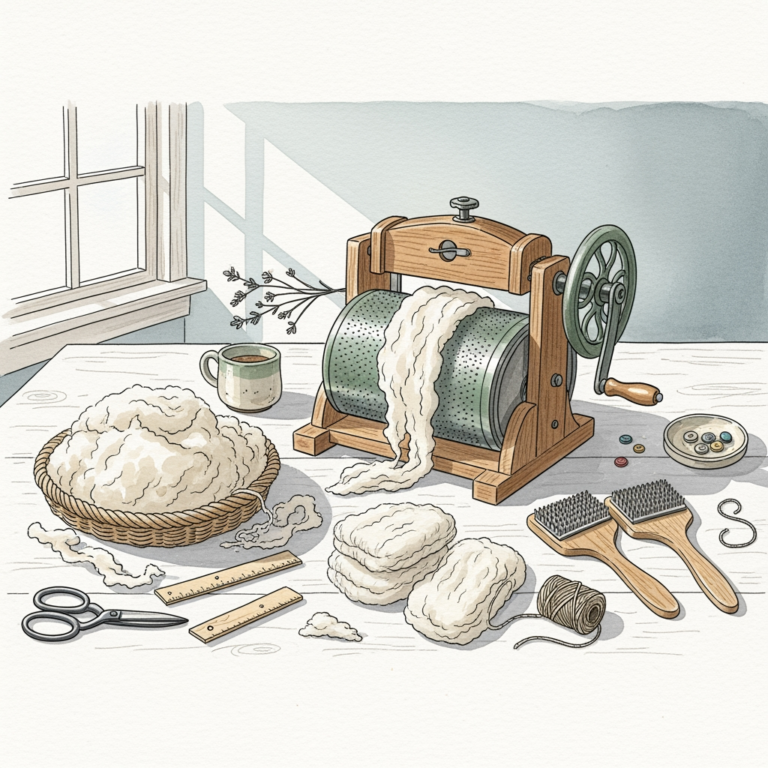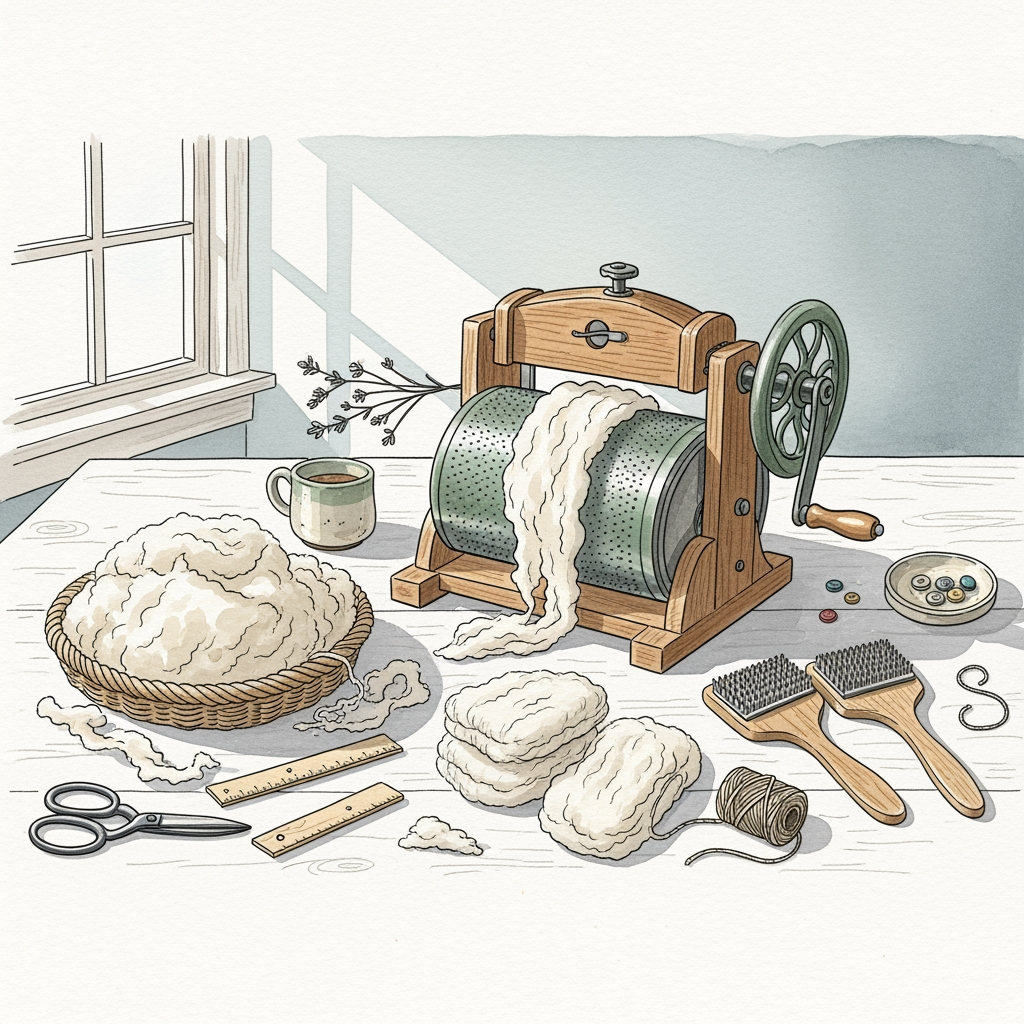
6 Best Wool Pickers For Opening Fibers Worth Owning
Discover the top 6 wool pickers for efficient fiber opening. This guide reviews essential tools to help spinners and crafters improve their fiber processing.
Preparing raw fleece for spinning is a transformative process that turns matted locks into a cloud of airy, workable fiber. A high-quality wool picker is the secret weapon that drastically reduces the time spent hand-teasing, allowing you to focus on the joy of drafting. Whether you are processing a small batch of local sheep’s wool or a large haul of alpaca, the right tool ensures your fiber is ready for the drum carder or hand combs. Investing in one of these machines is a commitment to professionalizing your fiber prep.
Ashford Wool Picker: The Gold Standard for Fiber
The Ashford wool picker is a staple in many fiber studios for a reason: it is incredibly reliable and widely available. Its classic wooden construction offers a sturdy base that doesn’t dance around your table while you work.
The teeth are spaced to provide a gentle opening action, which is vital if you are working with delicate fibers like fine Merino or kid mohair. If you pull too aggressively, you risk breaking the staple length, which makes spinning consistent yarn much more difficult.
The bottom line is that the Ashford is a workhorse that balances gentleness with efficiency. It is an ideal entry point for someone moving from hand-teasing to mechanical processing.
Strauch Double Row Picker: Precision Performance
When you need to process fiber that is particularly matted or contains a lot of vegetable matter, the Strauch double-row picker excels. The dual rows of teeth engage the fiber twice in a single pass, ensuring that every lock is thoroughly opened.
This precision is invaluable when you are preparing fiber for a high-twist worsted yarn. By ensuring the fibers are perfectly aligned and separated, you avoid those frustrating "nubs" or slubs that can ruin a smooth, even spin.
If your primary goal is maximum loft and thorough blending, the Strauch is hard to beat. It is a heavier investment, but the resulting fiber quality is noticeably superior for complex spinning projects.
Louet Wool Picker: Sturdy Design for Heavy Use
The Louet picker is built with a focus on durability and safety, featuring a design that feels solid and secure under your hands. It is particularly well-suited for fiber artists who process large quantities of wool on a regular basis.
Because it has a robust frame, you can apply a bit more pressure without worrying about the machine flexing or shifting. This is a significant advantage when you are working with coarser, long-staple wools that require a bit more "muscle" to open up.
Ultimately, the Louet is a long-term investment for the serious hobbyist. It holds up well over years of heavy use, provided you keep the teeth clean and the wood conditioned.
Patrick Green Picker: Best for Consistent Results
Patrick Green pickers are often praised for their incredible build quality and the specific geometry of their teeth. They are designed to "flick" the fiber open rather than tearing it, which preserves the integrity of the individual strands.
Consistency is the name of the game here. If you are blending different fibers—perhaps adding a bit of silk or angora to your wool—this picker ensures the transition between fibers is seamless and uniform.
For the spinner who is meticulous about their fiber prep, the Patrick Green offers a level of control that is hard to replicate. It turns the chore of preparation into a satisfying, rhythmic part of your craft.
Schacht Wool Picker: High Capacity for Large Batches
If you find yourself processing entire fleeces at a time, the Schacht picker offers a high-capacity design that saves your wrists from repetitive strain. Its wide bed allows you to feed more fiber at once, significantly cutting down your processing time.
This tool is designed for the knitter who also spins for weaving projects, where large amounts of consistent yarn are required. You can load it up, and it will handle the volume without clogging or stalling.
The Schacht is the ultimate efficiency tool for those with limited studio time. It handles large batches with ease, letting you get to the spinning wheel faster.
Majacraft Wool Picker: Ergonomic and Efficient Tool
Majacraft understands the importance of ergonomics, and their picker reflects that with a design that minimizes wrist fatigue. It operates smoothly, requiring less physical force to pull the carriage through the fiber bed.
This is a game-changer if you have any history of repetitive strain injuries or simply want to spend hours in the studio without discomfort. It feels balanced and intuitive, making the mechanical process feel more like a natural extension of your hands.
The Majacraft picker is a top-tier choice for comfort. It proves that you don’t have to sacrifice ease of use for high-performance fiber opening.
Why Every Fiber Artist Needs a Quality Wool Picker
Hand-teasing fiber is a meditative practice, but it is also incredibly time-consuming and hard on the fingers. A picker does the heavy lifting, opening up the locks so that your drum carder doesn’t have to work as hard, which preserves the life of your carder’s cloth.
Using a picker also improves the quality of your yarn. By evenly distributing the fibers, you prevent the formation of dense clumps that can cause weak spots in your spinning.
Whether you are working with raw fleece or commercially cleaned roving, a picker elevates your raw material. It turns a pile of matted wool into a light, airy batt that is a joy to spin.
How to Safely Operate Your Picker Without Injury
Wool pickers are essentially beds of very sharp, exposed needles. Always keep your hands and fingers well away from the path of the teeth, especially when the carriage is in motion.
Never try to force a thick, matted clump through the teeth in one go. Instead, pull the fiber apart slightly with your hands before feeding it into the picker to prevent the machine from jamming.
Safety is paramount when using these tools. Treat your picker with the same respect you would a sharp set of knitting needles or a shearing tool, and always keep the lid or safety guard engaged when not in active use.
Maintaining Your Picker Teeth for Smooth Blending
Over time, your picker teeth can become bent or clogged with lanolin and dust. Periodically inspect the teeth to ensure they are straight and aligned, as bent teeth can snag and tear your fiber rather than opening it.
Clean the teeth regularly with a stiff brush to remove residual dirt and debris. If you are processing greasy wool, you may also need to wipe down the teeth with a mild solvent to prevent buildup that can transfer to your clean fiber.
A well-maintained picker lasts a lifetime. Taking five minutes to clean it after a session ensures your fiber remains pristine and your machine operates smoothly for years.
Selecting the Right Picker for Your Fiber Projects
Choosing the right picker depends on the type of fiber you use most often. If you work primarily with fine, delicate wools, look for a picker with finer, more closely spaced teeth to prevent breakage.
For those working with coarse, long-staple, or heavily matted wool, a picker with sturdier, wider-spaced teeth is a better choice. It will handle the bulk without getting stuck or pulling the fiber too hard.
Ultimately, match the tool to your fiber goals. Consider how much volume you process, your physical comfort, and the specific characteristics of the wool you love to knit with.
Choosing the right wool picker is a significant step toward mastering your fiber arts journey. By selecting a tool that aligns with your specific volume and fiber preferences, you remove the barriers between your raw materials and your finished hand-knits. Remember that the best picker is the one that makes your preparation process feel like a pleasure rather than a chore. Happy spinning, and may your fiber prep be as smooth as your finished stitches.