6 Best Felting Awls For Punching Through Dense Wool
Need to pierce thick wool? Discover our top 6 felting awls, selected for durability and precision to ensure effortless punching through even the densest fibers.
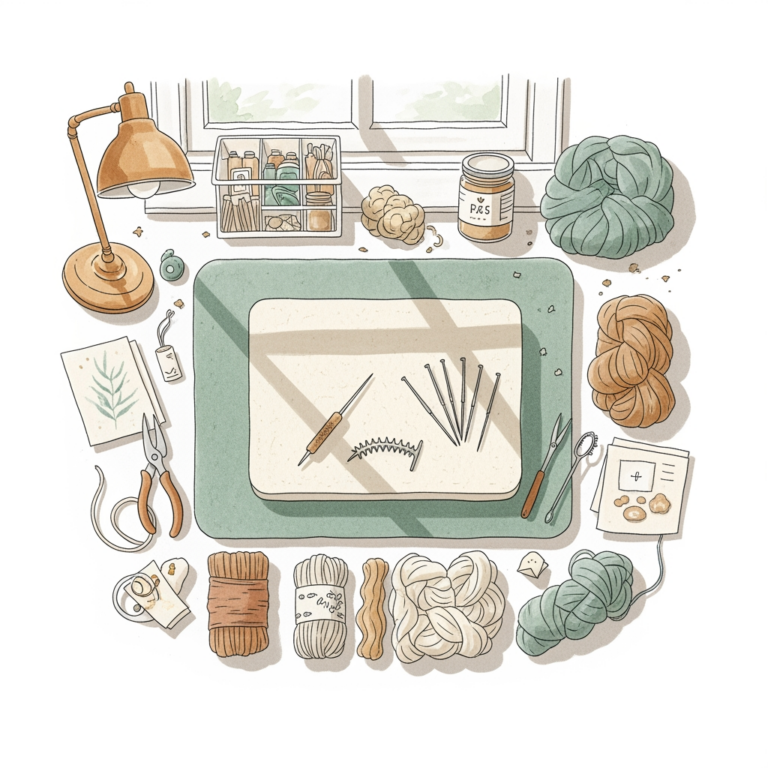
Needle felting is the quiet, meditative counterpart to the rhythmic clicking of knitting needles, allowing us to sculpt fiber into three-dimensional art. When you are working with dense, tightly packed wool roving, the right felting awl or punch tool is the difference between a smooth creative flow and a hand cramp. Choosing the correct instrument requires understanding how needle gauge interacts with fiber resistance. This guide breaks down the best tools to help you pierce through your densest projects with ease and precision.
Clover Pen Style Needle Felting Tool: Best Overall


The Clover Pen Style tool is a staple in many fiber studios for good reason. It mimics the familiar grip of a fountain pen, which is a massive advantage if you are used to holding knitting needles for hours.
The spring-loaded mechanism is its standout feature, as it allows for a quick, rhythmic punching motion that reduces wrist strain. It typically houses three needles, which helps distribute the force needed to punch through dense wool cores without bending the individual tips.
However, keep in mind that the needles are fixed in a specific configuration. If you are working on a very small, delicate sculpture, this tool might feel a bit bulky compared to a single-needle setup.
Ashford Wooden Handle Felting Punch: Best Value

If you appreciate the feel of natural materials in your hand, the Ashford wooden handle is a tactile delight. It offers a sturdy, ergonomic grip that feels substantial without being overly heavy.
This tool is an incredible value for makers who want a reliable, no-frills option that will last for years. Because it is a simple wooden handle, it is incredibly easy to replace the felting needles when they inevitably dull or snap.
The trade-off here is the lack of a protective guard or a spring-loaded mechanism. You have to be more mindful of your finger placement, much like you would when managing a sharp tapestry needle during finishing work.
Hamanaka Three-Needle Punch Tool: Best Precision
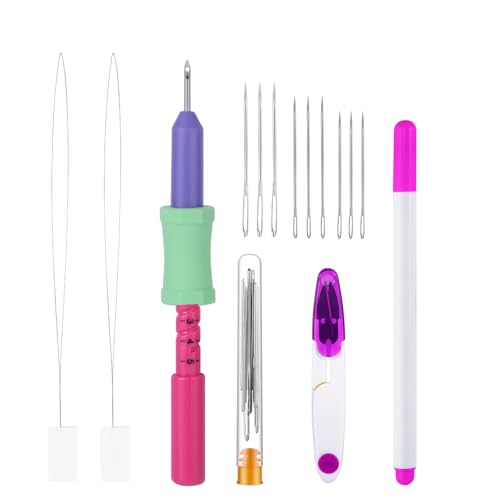
When you are sculpting fine details—like the bridge of a nose on a wool animal or the edges of a felted flower—precision is non-negotiable. The Hamanaka tool is designed specifically for this kind of intricate, controlled work.
The needles are spaced closely together, allowing you to create firm, tight felt in a very concentrated area. It is perfect for "sculpting" wool into rigid shapes that won’t lose their form over time.
Because it is so precise, it is not the best choice for large, flat surfaces where you need to cover a lot of ground quickly. Use this for the finishing touches rather than the initial core-building phase.
Lacis Heavy Duty Felting Awl: Best for Density

Sometimes, you need to work with core wool that is packed so tightly it feels like a brick. The Lacis Heavy Duty awl is built for these high-resistance scenarios where standard needles might bend under the pressure.
This tool is designed to pierce through dense layers with minimal effort, making it ideal for structural work. It acts more like an awl than a delicate punch tool, allowing you to create deep anchor points in your project.
Be aware that because it is "heavy duty," it leaves larger puncture marks than finer needles. It is a workhorse tool, not a detail tool, so keep your finer needles nearby for the surface work.
Woolbuddy Ergonomic Felting Tool: Best Comfort

If you suffer from hand fatigue or have sensitive joints, the Woolbuddy tool is a game-changer. The handle is shaped to fit the natural contours of the palm, encouraging a relaxed grip.
When you are spending an entire afternoon felting, a tool that prevents "clawing" your hand is worth its weight in gold. The ergonomic shape allows you to maintain a consistent punch depth, which leads to a more even felted surface.
The only downside is that the handle is quite thick. If you have smaller hands, you might find it slightly cumbersome for very agile, fast-paced felting maneuvers.
Dimensions Needle Felting Tool: Best for Travel

For the knitter who loves to take their fiber arts on the road, the Dimensions tool is a convenient, compact companion. It is lightweight and easy to toss into a project bag alongside your sock yarn and notions pouch.
It features a retractable guard that keeps the needles safe while you are in transit. This is a huge plus, as felting needles are notoriously brittle and can easily snap if they get snagged on a sweater or a stray stitch marker.
While it is perfect for portability, it may not be as robust as the wooden-handled options for long-term, intensive studio use. It is a fantastic secondary tool to keep in your "go-bag" for crafting on the train or at a knit-night.
Understanding Felting Needle Gauges and Sizes
Just like knitting needles, felting needles come in various gauges, and the sizing logic is counter-intuitive. A higher gauge number actually means a thinner, finer needle, while a lower number indicates a thicker, coarser needle.
- 32-36 Gauge (Coarse): Best for initial shaping and joining large pieces of wool together.
- 38-40 Gauge (Medium): The "all-purpose" needles for most sculpting tasks.
- 42+ Gauge (Fine): Essential for surface detailing and working with fine-micron wools.
Using the wrong gauge can be frustrating; a needle that is too thick will leave gaping holes in your project, while one that is too thin will break immediately if forced through dense wool. Always start with a coarser needle to build your core, then switch to finer needles as your project becomes more compact.
How to Select the Right Wool for Needle Felting
Not all wool is created equal, and your choice of fiber will dictate how easily your tool punches through. Coarser, long-staple wools like Corriedale are excellent for beginners because they felt quickly and hold their shape well.
If you are aiming for a smooth, professional finish, look for fine-micron wools like Merino. Be warned, however: Merino is "slippery" and takes much longer to felt, requiring more patience and consistent punching.
If you are struggling to get your wool to firm up, check your fiber’s "crimp." Wool with a high degree of natural crimp will interlock and felt much faster than straight, smooth fibers.
Essential Safety Tips for Using Felting Awls
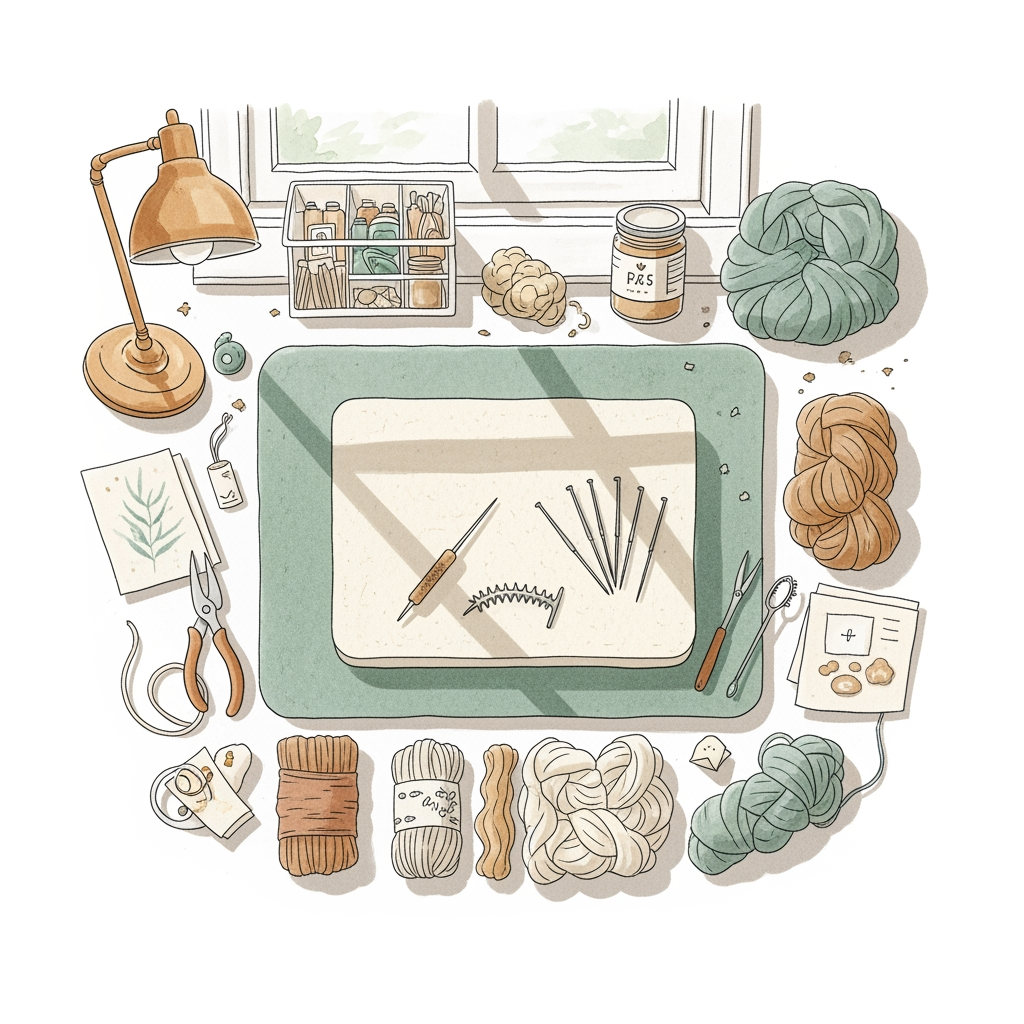
Felting needles are essentially tiny, barbed spears that are incredibly sharp. Always work on a dense foam pad or a dedicated wool mat to ensure the needle has a soft place to land after passing through your project.
Never hold your piece in your hand while punching; it is far too easy to slip and sustain a painful injury. Keep your fingers well away from the "strike zone," and if you are teaching a beginner, emphasize that the needle should always be moving in a straight, vertical line.
If you feel the needle hitting resistance, don’t force it. Wiggling the tool sideways while it is embedded in the wool is the number one cause of snapped needles.
Maintaining Your Felting Tools for Longevity
Treat your felting needles with the same care you give your favorite circular needles. After a long session, wipe them down with a soft cloth to remove any lanolin or fiber residue that can build up on the barbs.
Store your tools in a dry, rust-free environment, as the barbs are very susceptible to corrosion. If you notice your tool "dragging" through the wool, it is a sign that the barbs are clogged or the needle tip has become dull.
When a needle breaks—and it will happen—don’t throw the handle away. Most high-quality felting tools are designed to have their needles swapped out, making them a sustainable investment for your fiber arts kit.
Finding the right felting tool is a personal journey that depends on your hand strength, project scale, and preferred fiber. By understanding the mechanics of needle gauges and the importance of ergonomic support, you can turn your dense wool roving into beautiful, structured creations. Don’t be afraid to experiment with different handles until you find the one that feels like a natural extension of your hand. Happy felting, and may your needles stay sharp and your wool stay firm.