6 Best Swift Tools For Preparing Hanks Of Yarn
From manual winders to umbrella swifts, discover the top six tools to streamline your yarn prep. Learn how to transform hanks into tidy cakes effortlessly.
Transforming a tangled hank of hand-dyed wool into a tidy center-pull cake is one of the most satisfying rituals in a knitter’s life. A quality swift acts as your third hand, providing the necessary tension to keep your yarn flowing smoothly without snags or knots. Choosing the right tool depends on your workspace, the volume of yarn you process, and your personal preference for manual versus mechanical movement. This guide explores the best swifts on the market to ensure your winding sessions are as seamless as your knitting.
Stanwood Needlecraft Tabletop Swift: Best Overall
The Stanwood Tabletop Swift is a staple in many dedicated knitting rooms for a reason. Its stainless steel hardware and sturdy construction provide a level of stability that cheaper models simply cannot match.


Because it clamps securely to the edge of a table, you don’t have to worry about the swift wobbling or tipping over during a fast-paced winding session. It handles a wide range of hank sizes with ease, making it a versatile workhorse for everything from lace-weight silk to bulky wool blends.
If you wind yarn frequently, the smooth rotation of this swift will save you significant time and frustration. It is the gold standard for those who want a reliable, "set it and forget it" tool that lasts for years.
Amish-Style Wooden Yarn Swift: Best Manual Choice
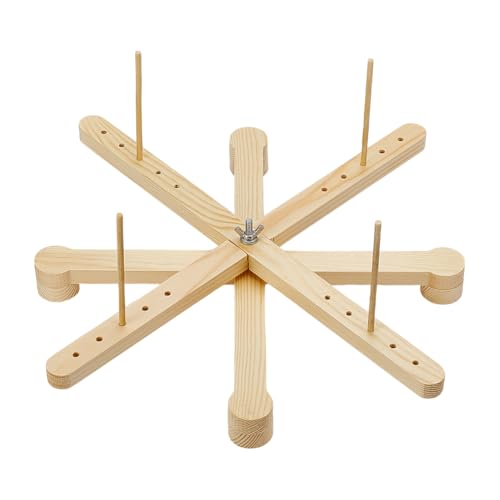
The Amish-style swift is a beautiful, low-tech solution that sits directly on your tabletop rather than clamping to it. It consists of a rotating wooden cross that you adjust to fit the circumference of your hank.
Many knitters prefer this style because it is incredibly portable and requires no hardware or complex assembly. You simply place it on your table, drape your yarn, and start winding; the friction-free rotation is surprisingly smooth.
However, keep in mind that since it isn’t clamped down, you’ll need to be mindful of your winding speed. It is the perfect choice for the knitter who values simplicity and wants a tool that can be tucked away in a project bag at a moment’s notice.
Lacis Wooden Umbrella Swift: Best for Large Skeins
When you are dealing with those massive, 200-gram hanks of hand-dyed luxury yarn, a standard swift can sometimes feel cramped or unstable. The Lacis Umbrella Swift is designed to expand widely, accommodating even the largest skeins without collapsing under the weight.
The umbrella mechanism allows for precise tension control, which is vital when you are winding delicate fibers like alpaca or mohair that tend to "grab" onto themselves. If the yarn is wound too tightly, you risk stretching the fibers, which can ruin your gauge later.
This swift excels at keeping the yarn path clear and open. It is a fantastic investment for the knitter who frequently works with large-format projects like oversized sweaters or blankets.
KnitPicks Yarn Swift: Best Value for Beginners
If you are just starting your journey into hand-dyed hanks, you don’t necessarily need a professional-grade piece of equipment. The KnitPicks swift offers a functional, entry-level experience that gets the job done without breaking the bank.
It uses a classic umbrella design that is intuitive to set up and use right out of the box. While it may not have the heavy-duty finish of more expensive models, it is perfectly capable of handling standard 100-gram skeins of worsted or fingering weight yarn.
For the casual knitter who only winds yarn occasionally, this is a smart, economical choice. It provides the essential utility you need to transition from hanks to cakes without the high price tag.
Strauch Jumbo Ball Winder and Swift: Best Pro Set
For the serious stash-builder, the Strauch system is the ultimate upgrade. When you pair their heavy-duty swift with a high-capacity ball winder, you can process multiple skeins in minutes with professional-level results.
This setup is designed for durability and high volume. If you are a designer or a frequent knitter who processes large quantities of yarn for complex colorwork projects, the efficiency gains here are undeniable.
The hardware is built to withstand constant use, ensuring that your cakes are perfectly tensioned and ready to knit. While it is a significant financial commitment, it is a tool that will likely be the last swift and winder set you ever need to buy.
ChiaoGoo Natural Wood Swift: Best Premium Build

The ChiaoGoo Natural Wood Swift is as much a piece of functional art as it is a tool. Crafted from high-quality wood, it feels substantial and smooth to the touch, which is important when you are handling delicate fibers.
Beyond its aesthetics, the build quality ensures that the moving parts remain fluid over time. It doesn’t have the "wobble" often associated with cheaper wooden models, giving you a consistent experience every time you wind.
If you enjoy the tactile nature of knitting, you will appreciate using a tool that feels as premium as the yarn you are winding. It is a wonderful gift for yourself or a fellow knitter who appreciates fine craftsmanship.
How to Properly Set Up Your Swift for Winding Yarn
Proper setup is the difference between a smooth winding session and a tangled mess. Always ensure your swift is positioned at a comfortable height relative to your ball winder, typically about two to three feet away.
Before draping your yarn, check that the swift is fully expanded so the hank is held taut but not stretched. If the yarn is loose, it will slip off the arms; if it is too tight, you risk damaging the yarn’s elasticity.
- Check the twist: Ensure the yarn is not twisted around the arms of the swift.
- Remove ties carefully: Untie the security ties after the yarn is on the swift, not before.
- Test the rotation: Give it a gentle spin to ensure it moves freely before you begin winding.
Wooden vs. Plastic Swifts: Which Material Lasts?
Wooden swifts offer a classic feel and are often more aesthetically pleasing, but they require a bit more care to prevent warping in humid environments. They are generally sturdier and provide a more satisfying "weight" during operation.
Plastic swifts are lightweight, easy to clean, and often more resistant to changes in temperature or humidity. They are excellent for travel or for knitters who need to set up and break down their workspace frequently.
Ultimately, the choice comes down to your environment and usage frequency. If you live in a very humid climate, a high-quality plastic or stainless steel model might offer better long-term reliability than wood.
Essential Tips for Preventing Yarn Tangling Issues
The most common cause of tangles is moving too fast or failing to remove the security ties in the correct order. Always work at a steady, rhythmic pace, and keep your eyes on the yarn as it travels from the swift to the winder.
If you notice a snag, stop immediately. Trying to power through a tangle almost always results in a knot that can take twenty minutes to pick apart, especially with sticky fibers like wool or mohair.
- Watch the tension: Keep your hand lightly on the yarn between the swift and the winder to maintain even tension.
- Use a guide: If your setup allows, use a yarn guide to keep the strand centered.
- Clear the area: Ensure no loose threads or furniture are near the swift that could catch the yarn.
Maintenance Guide for Keeping Your Swift Smooth
Your swift is a mechanical tool that benefits from occasional attention. Keep the moving joints clean and free of dust, which can accumulate over time and cause the swift to stutter during rotation.
If you notice a wooden swift becoming "sticky," a tiny amount of wood wax or a light rub with a dry cloth can restore the finish. Avoid using heavy oils or lubricants, as these can transfer to your yarn and potentially stain delicate fibers.
Finally, always store your swift in a dry, temperature-controlled area. Folding it down when not in use will protect the arms from accidental damage and keep the mechanism aligned for your next project.
Investing in a reliable swift is one of the best decisions you can make to improve your knitting experience. By choosing the right tool for your needs and maintaining it with care, you turn a potentially tedious chore into a calm, meditative part of your process. May your hanks always wind smoothly and your stash remain beautifully organized. Happy knitting!