6 Best Fringe Makers For Decorative Edges Worth Owning
Elevate your textile projects with these six top-rated fringe makers. Discover essential tools for crafting perfect, professional decorative edges with ease.
Adding a fringe to a hand-knitted shawl or a woven wall hanging is the ultimate finishing touch that transforms a project from a simple fabric into a professional-grade piece. While manual knotting is possible, specialized fringe makers provide the consistency and speed that save hours of tedious labor. Choosing the right tool depends entirely on your project’s scale, the weight of your yarn, and the desired aesthetic of your edges. This guide breaks down the best options on the market to help you achieve that perfectly uniform finish every time.
Clover Tassel Maker: Best Overall for Versatility
The Clover Tassel Maker is a staple in my notions bag because it tackles more than just fringe; it creates perfectly uniform tassels that add weight and movement to scarves. Its adjustable design allows you to set the size of your fringe, meaning you aren’t locked into one specific length for every project.
If you are working on a heavy wool wrap, this tool excels at creating dense, plush tassels that won’t look skimpy. The plastic construction is lightweight, yet it holds tension well enough to keep your yarn wraps even throughout the process.
The trade-off here is that it isn’t a "twister." If you want that classic, rope-like twisted fringe look, you will still need to manually twist the strands after creating the loops. For most makers, however, the ability to switch between sizes makes this the most versatile tool for your stash.
Lacis Fringe Twister: Best for Precision Twisting
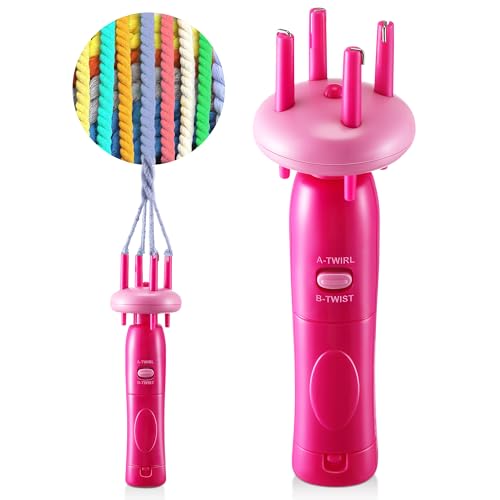

When you need a professional, high-end finish on a hand-woven scarf, the Lacis Fringe Twister is the gold standard. It uses a gear-driven mechanism to twist two strands of yarn simultaneously, ensuring they are identical in tension and tightness.
Precision is the name of the game with this tool. Because it creates such consistent results, it is ideal for projects using delicate fibers like silk or fine alpaca that tend to look messy if the twist is uneven.
Be aware that this tool requires a bit of a learning curve to get the "rhythm" down. If you don’t hold the tension correctly while the tool is spinning, the fringe can end up looking lopsided. Practice on scrap yarn before diving into your finished heirloom piece.
Susan Bates E-Z Fringe Tool: Best Budget Option

Sometimes you just need a simple tool that gets the job done without any bells and whistles. The Susan Bates E-Z Fringe Tool is a straightforward plastic guide that helps you measure and cut consistent lengths of fringe quickly.
This is perfect for beginners who are intimidated by complex mechanical twisters. It essentially acts as a spacer, ensuring that every piece of fringe you cut is exactly the same length, which is half the battle when trying to avoid a jagged edge.
While it lacks the mechanical twisting function of the more expensive models, it is incredibly durable and impossible to break. If you are doing a large-scale project where you need to cut hundreds of identical strands, this tool is a massive time-saver.
Schacht Spindle Company Fringe Twister: Best Build

If you are a serious weaver or knitter who produces large blankets and wraps, the Schacht Fringe Twister is a lifetime investment. The build quality is exceptional, featuring a sturdy handle and a smooth, reliable gear system that feels solid in your hand.
The primary advantage of this tool is its durability under heavy use. If you are twisting heavy-weight wool or multiple strands of acrylic, lesser plastic tools might flex or slip, but the Schacht maintains its integrity.
The weight of the tool also helps it stay stable while you work. It is an excellent choice for someone who values "buy it for life" tools that won’t need to be replaced after a few projects.
Ashford Fringe Twister: Best for Heavy Textiles
Ashford is a trusted name in the fiber arts world, and their fringe twister is designed specifically for those working with heavier yarns. It handles thick, bulky fibers with ease, making it a favorite for rug makers and heavy tapestry artists.
The mechanism is designed to handle more torque than smaller, lighter tools. If you have ever tried to twist a thick, multi-ply wool yarn with a flimsy tool and had the gear slip, you will appreciate the grip this tool provides.
Because it is optimized for heavy textiles, it might feel a bit "clunky" if you are working with fine lace-weight mohair. Always match your tool to the weight of your yarn to ensure the best mechanical performance.
Knitter’s Pride Fringe Tool: Best Ergonomic Grip
Knitter’s Pride understands that repetitive motions can lead to hand fatigue, especially if you have a large project with hundreds of fringe knots. Their tool features an ergonomic design that is much easier on the joints than the hard, thin plastic of older models.
The grip is comfortable and fits well in the palm, which is a major consideration if you suffer from arthritis or simply have long sessions of finishing work ahead of you. It is a thoughtful design that prioritizes the maker’s physical comfort.
While it is primarily a measuring and cutting tool, the ergonomics make it a joy to use. It is a great middle-ground option for those who want something better than a basic plastic guide but don’t need a complex mechanical twister.
How to Choose the Best Fringe Maker for Your Project
Choosing the right tool starts with identifying your end goal. Ask yourself: do I want a simple, straight fringe, or do I want the sophisticated, rope-like look of a twisted fringe?
- For straight fringe: Look for a simple measuring guide or a tassel maker.
- For twisted fringe: Invest in a mechanical twister.
- For volume: Choose a tassel maker that allows for thick yarn wraps.
Consider your yarn weight as well. Fine, slippery yarns like bamboo or silk require a tool with excellent tension control, while heavy wools require a tool that can handle torque without the gear slipping.
Essential Techniques for Creating Professional Fringe
The secret to professional-looking fringe is consistent tension and clean cutting. Before you start, always steam or block your project to ensure the edge is stable and the stitches are relaxed.
When knotting, use a crochet hook to pull your fringe through the edge stitches. Always pull the yarn through in the same direction to ensure the knots lie flat and uniform.
If you are twisting, always twist in the same direction—usually clockwise—and then ply them together in the opposite direction. This "locks" the twist so the fringe doesn’t unravel over time.
Natural Fiber vs. Synthetic Yarn for Fringe Edges
Natural fibers like wool have a natural "grab" or friction that helps fringe knots stay tight without extra help. However, they can also be prone to felting if you aren’t careful during the blocking process.
Synthetic yarns, especially slippery acrylics, are notorious for knots sliding out over time. If you use synthetic yarn, consider adding a tiny dab of clear fabric glue to the knot or ensuring your knots are extra tight.
- Wool/Alpaca: Best for twisted fringe; holds a twist beautifully.
- Cotton: Great for straight fringe; provides a crisp, clean look.
- Acrylic: Requires extra security; prone to unraveling if not knotted tightly.
Troubleshooting Common Fringe Application Mistakes
The most common mistake is uneven length. If your fringe looks messy, it’s usually because the yarn was pulled differently during the cutting process. Always use a rigid guide rather than "eyeballing" the length.
Another common issue is a fringe that unravels. This usually happens because the twist wasn’t secured properly or the yarn is too slick. If this happens, try a "double knot" or a slightly tighter twist.
Finally, don’t forget to trim your fringe after it has been attached. Lay the piece flat on a cutting mat and use a rotary cutter and a long ruler to get that perfectly straight, crisp edge that defines a professional finish.
Selecting the right fringe maker is about balancing the needs of your specific fiber with the physical comfort of your hands. Whether you prioritize the precision of a mechanical twister or the simplicity of a measuring guide, the right tool will elevate your finished work significantly. Take the time to practice on scrap yarn, and you will find that a well-executed fringe is the hallmark of a truly polished project. Happy making, and may your edges always be perfectly aligned.