6 Best Swivel Stands For Pattern Books To Organize
Organize your pattern books with ease. Explore our top 6 swivel stand picks to streamline your workspace, improve accessibility, and keep designs tidy.
Keeping your pattern book at eye level is the secret to avoiding the dreaded "knitter’s neck" during long sessions of stranded colorwork or complex lace. A good swivel stand acts as a third hand, allowing you to follow your chart without constantly shifting your posture or losing your place. When your pattern is positioned correctly, you can maintain your rhythm and tension, which is essential for consistent gauge. These six stands offer the stability and flexibility needed to keep your focus on your needles rather than your neck pain.
Levo Book Holder: Best Overall Swivel Stand
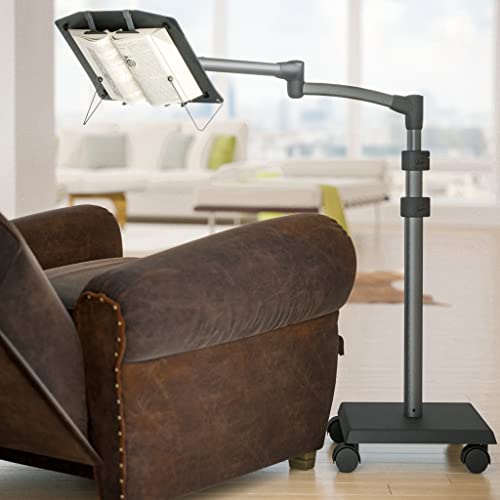

The Levo Book Holder is the gold standard for those who spend hours working on intricate cables or detailed charts. Its floor-standing, heavy-duty design means it doesn’t take up precious real estate on your crafting table, where your yarn bowls and notions bags already live.
The beauty of this stand lies in its extreme adjustability. You can swing the arm directly over your lap or push it aside when it’s time to stand up and stretch. It holds heavy, thick pattern books with ease, which is a lifesaver when you’re working from a massive reference volume of stitch dictionaries.
However, the footprint is significant. If you knit in a cramped corner of your living room, you’ll need to ensure you have the floor space to accommodate the weighted base. It is an investment piece, but for the serious knitter, the ergonomic relief is well worth the cost.
Wishacc Bamboo Book Stand: Best Adjustable
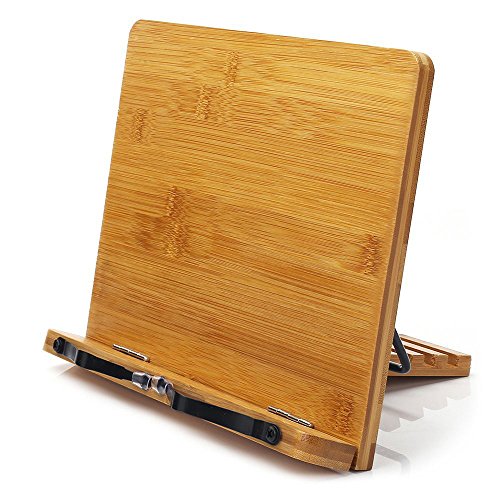
If you prefer a natural aesthetic that matches your wooden needle collection, the Wishacc Bamboo stand is a beautiful choice. It’s lightweight, portable, and features multiple angle settings that allow you to tilt your pattern to the perfect reading degree.
The real advantage here is the versatility of the page clips. They are strong enough to hold a single sheet of paper—perfect for printed PDF patterns—but flexible enough to accommodate a thick, spiral-bound book. This is ideal if you frequently switch between single-skein projects and large-scale sweater patterns.
Keep in mind that because it is lightweight, it can slide if placed on a very slick table surface. A small piece of shelf liner underneath the base will solve this instantly. It’s a simple, effective tool that doesn’t overcomplicate the process of keeping your place.
A+ Book Stand: Best Heavy Duty Metal Option
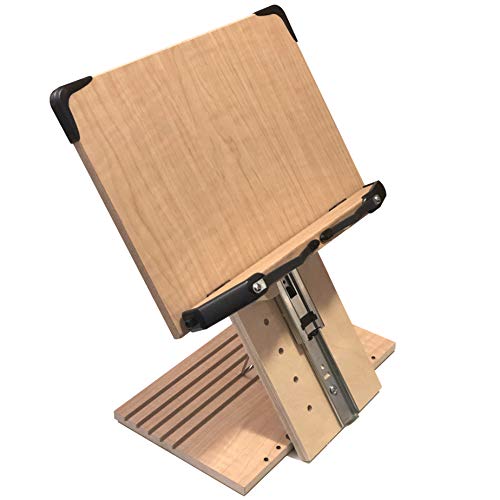
When you are working on a massive project like a cabled afghan, you need a stand that won’t wobble under the weight of a heavy pattern book. The A+ Book Stand is built like a tank, using metal construction that provides total stability.
The heavy-duty clips are a game-changer for keeping pages flat, especially when you are working with a new book that keeps trying to snap shut. This is a common frustration that can cause you to lose your row count, potentially leading to errors in your pattern repeat.
Because this is a metal stand, it is quite heavy, which makes it less portable than bamboo options. If you tend to knit in different rooms, you might find it cumbersome to move. However, if you have a dedicated "knitting chair" or desk, its durability is unmatched.
Luckies of London Book Rest: Best Compact

Sometimes you don’t need a massive stand; you just need something to prop up a small pamphlet or a printed chart. The Luckies of London Book Rest is a clever, minimalist design that folds completely flat when not in use.
This is perfect for the "commuter knitter" who likes to keep a pattern tucked into their project bag. It’s small enough to fit in a tote alongside your yarn and needles, ensuring you have a steady place to read your pattern while knitting on the train or in a waiting room.
The trade-off for its portability is a lack of height adjustment. You will likely need to place it on top of a box or another book to get it to eye level. It’s a secondary tool, but an incredibly useful one for maintaining your flow while on the go.
Read-Rest Swivel Stand: Best Ergonomic Design

The Read-Rest focuses heavily on the mechanics of viewing, offering a smooth swivel motion that allows you to rotate your pattern as you change your seating position. It is designed to reduce the strain on your neck and shoulders, which is vital for long-term health.
If you are prone to tension headaches after a long knitting session, this stand is a worthy addition to your toolkit. By keeping the pattern at a consistent eye level, you avoid the repetitive motion of looking down and back up, which is a major contributor to muscle fatigue.
The build quality is solid, though the swivel mechanism requires a bit of space to rotate freely. Ensure your table is clear of other clutter so you can take full advantage of that 360-degree range of motion. It is a highly functional piece of equipment for the dedicated maker.
Mind Reader Book Stand: Best Budget Choice

For those just starting their knitting journey or those who prefer to spend their budget on high-quality wool rather than accessories, the Mind Reader is a fantastic entry point. It offers basic functionality at a price that won’t break the bank.
It features a simple, effective design that gets the job done without unnecessary bells and whistles. While it may not have the premium feel of a heavy-duty metal stand, it is perfectly capable of holding a standard pattern book or a set of printed instructions.
The main drawback is that it may struggle with very thick, heavy books. If you are working from a massive encyclopedia of stitches, you might find it needs a little bit of propping. For most standard knitting patterns, however, it is an excellent, cost-effective solution.
Why Swivel Stands Improve Your Knitting Posture
Knitting is a repetitive motion sport, and your posture plays a massive role in how long you can knit without pain. When you look down at your lap to read a pattern, you create a "forward head" posture that puts immense strain on your cervical spine.
A swivel stand brings the pattern into your field of vision, allowing you to keep your spine neutral. This is especially important when you are working with fine-gauge yarn or intricate lace where you need to check your chart every few stitches.
By maintaining a neutral neck position, you also improve your breathing and circulation. When you are relaxed and pain-free, your tension remains more consistent. This lead to a more even fabric, which is the hallmark of a skilled knitter.
Key Features to Consider for Your Craft Space
When selecting a stand, consider the weight and size of the books you use most often. If you frequently use heavy, hardbound stitch dictionaries, you need a stand with a wide, stable base and strong clips.
- Adjustability: Can it change height and angle?
- Portability: Do you need to move it between rooms?
- Stability: Will it tip over if you accidentally bump the table?
- Footprint: How much space does it take up on your work surface?
Think about your specific knitting habits. If you knit in a recliner, you need a stand that can reach over your legs. If you knit at a desk, a compact, table-top swivel stand might be more appropriate.
How to Position Patterns for Better Visibility
Optimal positioning is all about minimizing eye movement. Your pattern should be at a distance where you can read the text clearly without squinting, usually about 16 to 20 inches from your face.
Position the stand so that the light source is hitting your knitting and your pattern equally. If you are working with dark-colored yarn, you may need a dedicated task light clipped to your stand to ensure you can see your stitches clearly against the pattern chart.
If you are using a digital pattern on a tablet, ensure your stand has a rubberized grip to prevent the device from sliding. Always keep your row counter or a sticky note nearby to mark your progress on the chart, which further reduces the amount of time you spend scanning the page.
Maintaining Your Book Stand for Long-Term Use
Most swivel stands are low-maintenance, but they do require occasional care to keep the joints moving smoothly. If you notice a stand becoming stiff, a small drop of silicone lubricant on the hinge can make a world of difference.
Check the tension screws on your stand every few months, especially if you move it frequently. Over time, these can loosen, causing the stand to sag under the weight of your books. A quick tighten ensures your pattern stays exactly where you need it.
Finally, keep the base clean and free of yarn scraps or dust, which can interfere with the swivel mechanism. With minimal care, a good book stand will last for decades, supporting you through hundreds of projects and thousands of rows.
Investing in a swivel stand is one of the smartest upgrades you can make for your knitting practice. By prioritizing your ergonomics, you ensure that your hobby remains a source of joy rather than a cause of physical strain. Choose the stand that best fits your space and project needs, and you will find yourself knitting longer, more comfortably, and with far fewer mistakes. Happy knitting, and may your rows always stay even.