6 Best Scale Weights For Measuring Yarn Yardage
Accurate yarn yardage is key for any project. We review the 6 best scale weights to ensure precision, consistency, and efficiency for every fiber enthusiast.
Every knitter eventually faces the "yarn chicken" dilemma, where you aren’t quite sure if your remaining stash will finish that final sleeve. Accurate weight measurement is the secret weapon that turns guesswork into a precise science, saving you from mid-project panic. By understanding the relationship between grams and yardage, you can confidently manage your inventory and plan your next cast-on. These six scales provide the reliability needed to ensure you never run out of yarn at a critical moment.
American Weigh Scales Blade: The Best Overall Pick
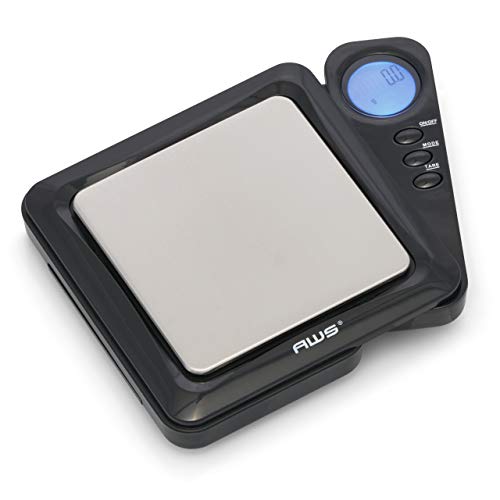

The Blade series is a staple in many knitting studios because of its sleek, flat design that mimics a pocket ruler. Its form factor is perfect for sliding under a ball of yarn without the bulk of a traditional kitchen scale.
For those working with luxury fibers like silk or cashmere, this scale offers the sensitivity required to measure small amounts of high-value yarn. You get high-precision readings that don’t fluctuate, which is vital when you are down to the last few grams of a rare hand-dyed skein.
The trade-off here is the smaller platform size, which can make it tricky to balance a large, center-pull cake of yarn. If you are weighing massive amounts of bulky wool, you might need to use a small bowl to keep your yarn contained.
Bottom line: This is the best all-rounder for the serious stash-keeper who values precision and portability in equal measure.
Ozeri Pronto Digital Scale: Best Budget Choice

If you are just starting your journey into weight-based yarn management, the Ozeri Pronto is a reliable entry point. It is straightforward, easy to read, and won’t break the bank when you are already spending your budget on beautiful fiber.
The large, backlit display is a major plus when you are working in dim evening light while knitting. You don’t have to strain your eyes to read the weight, which helps prevent transcription errors when you are logging your stash in a notebook.
Keep in mind that this scale is built for general kitchen use, so it may lack the ultra-fine sensitivity of professional-grade jewelry scales. It is perfect for weighing full skeins or large remnants, but might be less precise for tiny scraps of lace-weight yarn.
Bottom line: The best choice for the budget-conscious knitter who needs consistent results for everyday project planning.
My Weigh Kitchen Scale: Best for Larger Projects

When you are tackling a sweater project that requires multiple skeins of worsted weight wool, you need a scale that can handle some weight. The My Weigh is built to be a workhorse, offering a larger platform that easily accommodates large, squishy balls of yarn.
The stability of this scale is its greatest asset, as it rarely tips or wobbles under the weight of a heavy project. This is particularly helpful when you are weighing a sweater body to see how much yarn you have left for the sleeves.
Because it is larger, it occupies more space on your knitting desk. However, if you are a frequent sweater knitter, having a dedicated, sturdy space for your yarn is worth the footprint.
Bottom line: Choose this model if you primarily knit garments and need to weigh substantial amounts of yarn at once.
Etekcity Food Scale: Best for Precision Accuracy

Precision is non-negotiable when you are trying to match dye lots or calculate exactly how much yardage you need for a complex colorwork yoke. The Etekcity scale excels at providing consistent, repeatable measurements down to the gram.
This scale is incredibly user-friendly, featuring a simple tare function that allows you to zero out the weight of your yarn bowl or basket instantly. You can weigh your yarn in its container without doing any mental math, which reduces the chance of errors.
While it is very accurate, the design is fairly basic. It doesn’t have advanced features, but it does exactly what a knitter needs it to do without unnecessary complications.
Bottom line: The go-to for knitters who prioritize accuracy above all else during their project planning phase.
Weighmax Digital Scale: Best for Portable Needs
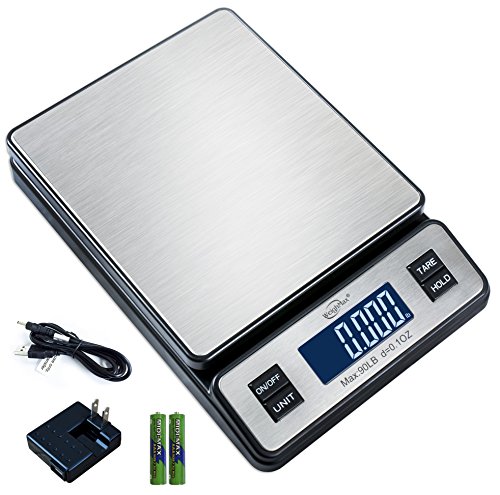
Knitters are often on the go, whether heading to a local guild meeting or taking a project on a long flight. The Weighmax is compact enough to throw into a project bag, ensuring you can weigh yarn wherever your needles take you.
Despite its small size, it is surprisingly durable and can take a bit of jostling in your bag. It is ideal for checking yardage when you are shopping at a yarn festival and need to know if a partial skein is enough for a pair of socks.
The downside is that the display can be obscured if you are weighing a very large ball of yarn. Use a small container to elevate your yarn if the size of your cake starts to hide the screen.
Bottom line: The perfect companion for the traveling knitter who needs to verify yardage on the fly.
Escali Primo Digital Scale: Best for Durability
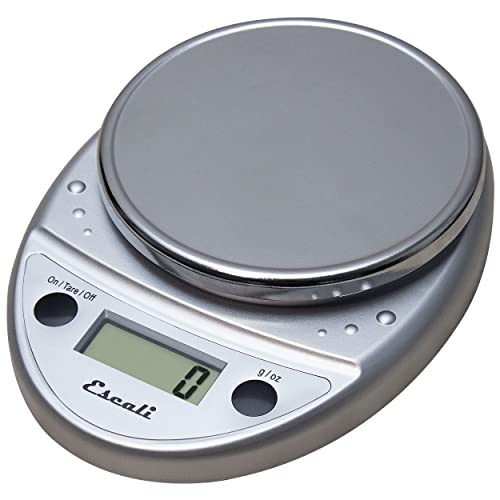
The Escali Primo is legendary in the crafting community for its long-term reliability and simple, intuitive interface. It is a "set it and forget it" tool that will likely remain on your desk for years without needing recalibration.
The sealed buttons are a thoughtful feature, as they prevent fiber dust or stray yarn bits from getting stuck in the mechanism. If you work with shedding fibers like mohair or angora, this design detail is a major advantage.
It is slightly more expensive than some budget options, but the build quality justifies the price. It is a professional-grade tool that respects the time and effort you put into your knitting.
Bottom line: The best investment for the knitter who wants a durable tool that will last through years of projects.
Why Precision Scales Matter for Yarn Yardage
Knowing the exact weight of your yarn is the only way to accurately estimate remaining yardage. Because yarn is sold by weight, not length, the weight-to-yardage ratio is the most reliable metric you have.
This is especially important when you are working with hand-spun yarn or reclaimed wool from a thrifted sweater. Since these yarns don’t come with a standard ball band, weighing them is the only way to know how much you actually have on hand.
Accuracy here prevents the heartbreak of running out of yarn just inches away from binding off. By tracking your weight, you can transition from guessing to knowing exactly how much you can knit.
How to Calculate Yardage Using Gram Weights
To calculate yardage, you first need to know the total weight and total yardage of a full, original skein. Use the formula: (Remaining Weight / Total Weight) x Total Yardage = Remaining Yardage.
For example, if a 100g skein has 400 yards, and you have 25g left, you have 100 yards remaining. This simple math is a life-saver when you are working on a project with limited yardage, like a pair of socks where you need to match the weight of the first sock to the second.
Always weigh your yarn in the same environment to ensure consistency. Humidity can affect the weight of natural fibers like wool, so keep your stash in a stable, climate-controlled area.
Essential Tips for Accurate Yarn Weighing
- Always use a consistent container: Tare your scale with the same bowl or basket every time to avoid variations.
- Keep the scale on a flat surface: Any tilt can throw off the sensor, leading to inaccurate readings.
- Remove any tags or labels: Even a small paper tag can weigh a gram or two, which matters when you are working with small amounts.
- Check your scale periodically: Use a known weight, like a coin, to verify your scale is still calibrated correctly.
Common Mistakes When Measuring Yarn at Home
The most common error is failing to account for the weight of the "center pull" core or the label itself. If you leave the paper band on while weighing, your calculation will be skewed, leading you to believe you have more yarn than you actually do.
Another mistake is assuming all yarns of the same weight have the same yardage. A bulky-weight wool will have significantly less yardage per 100g than a fingering-weight wool, so always verify the specifics of your yarn type.
Finally, avoid weighing your yarn while it is still damp from blocking. Wet yarn is significantly heavier, and you will get a false reading that makes your yardage estimates completely unreliable.
Mastering the weight of your yarn is a transformative step that elevates your knitting from a hobby to a refined craft. By choosing the right scale and applying these simple measurement techniques, you gain total control over your stash and your projects. May your needles always stay sharp and your yarn supply always be sufficient for the task at hand. Happy knitting!