6 Best Tension Weights For Consistent Edges Reviewed
Achieve perfect edges with our review of the 6 best tension weights. Discover how these essential tools ensure consistent, high-quality results for projects.
Achieving perfectly uniform edges is the hallmark of a professional-looking project, yet many knitters struggle with uneven tension along their selvedges. Tension weights act as a silent partner, providing the consistent downward pull necessary to keep your stitches from distorting as you work. Whether you are tackling a complex lace shawl or a simple stockinette scarf, these tools help maintain the structural integrity of your fabric. This guide explores the best options on the market to help you achieve that elusive, polished finish.
ChiaoGoo Tension Weight: Best Overall Performance


The ChiaoGoo tension weight is a masterclass in functional design, offering a balanced heft that suits a wide variety of yarn weights. Its sleek, snag-free construction ensures that your delicate fibers remain pristine even during long sessions of intensive knitting.
This weight excels because it provides a steady, predictable pull that doesn’t fluctuate as you move your needles. If you are working on a large, heavy project like a wool blanket, the stability provided by this tool prevents the fabric from creeping upward and distorting your edge stitches.
The primary trade-off is its weight; it can feel slightly heavy for those working with ultra-fine lace weight yarns. However, for most worsted and DK projects, it is the gold standard for maintaining a perfectly straight edge.
Addi Tension Spring: Best for Precision Knitting
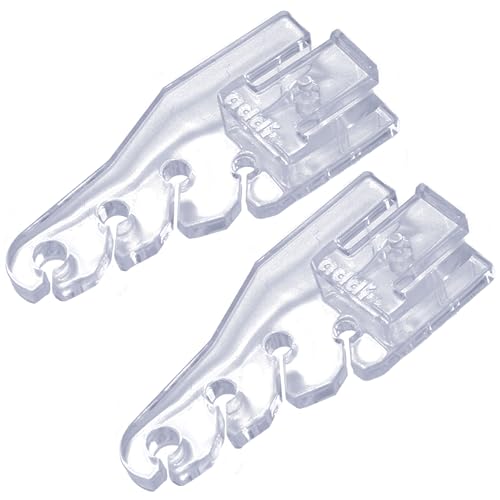
When you need surgical precision, the Addi tension spring is the tool to reach for. Unlike solid weights, this spring-loaded device offers a dynamic tension that adjusts slightly with your hand movements, preventing the "snapping" that can occur with rigid weights.
It is particularly effective for knitters who suffer from hand fatigue, as the spring absorbs the micro-fluctuations in your pulling motion. If you are working on colorwork where tension is everything, this device helps keep your floats and edges in total harmony.
Be aware that the spring mechanism requires a bit of a learning curve to attach properly without catching on fine fibers. Once mastered, it provides an unrivaled level of control for intricate patterns.
Clover Hanging Weight: Best for Beginner Ease

Clover’s design philosophy shines here, offering a simple, intuitive clip-on system that is perfect for those new to using tension aids. You simply attach it to the edge of your work, and the weight does the rest of the heavy lifting.
This tool is ideal for beginners who are still developing their muscle memory and often find their edges tightening or loosening mid-row. It removes the guesswork from selvedge management, allowing you to focus on your stitch pattern rather than the mechanics of the edge.
While it lacks the advanced adjustability of premium models, its durability and ease of use make it a staple in any beginner’s knitting bag. It is the most reliable way to build confidence in your stitch consistency.
KnitPro Tension Claw: Best for Ergonomic Comfort
The KnitPro tension claw is designed with the human hand in mind, featuring a shape that minimizes snagging on both the yarn and your own fingers. Its ergonomic profile makes it a joy to use during marathon knitting sessions.
The "claw" mechanism provides a secure grip on the fabric, which is vital when working with slippery materials like silk or bamboo blends. If you find that other weights slide off your work, this design will solve your problem immediately.
Because of its specific grip style, it may leave a temporary mark on very delicate, high-twist fibers. Use it with confidence on sturdier wools and acrylics where a firm hold is required to keep the edge from curling.
Boye Adjustable Weight: Best for Portability

If you are a knitter on the go, the Boye adjustable weight is your best companion. Its compact size and modular weight system mean you can carry it in any project bag without adding significant bulk.
The ability to adjust the weight is a game-changer when you switch between different yarn thicknesses. You can easily add or remove increments to ensure that your tension remains consistent whether you are knitting a bulky hat or a lightweight summer top.
It is a highly versatile tool, though it requires occasional tightening of the adjustment screws to ensure it stays locked in place. For the versatile crafter, this is the most practical choice for a rotating project queue.
Lacis Tension Device: Best for Fine Lace Work
The Lacis tension device is a specialized tool engineered specifically for the challenges of lace weight yarns. Its lightweight construction ensures that it provides enough pull to keep the delicate stitches open without stretching the fiber to its breaking point.
When working with lace, even a slight imbalance in tension can ruin the symmetry of your motifs. This device acts as an anchor, ensuring that each yarn-over and decrease remains crisp and well-defined throughout the entire garment.
It is not meant for heavy-duty work, but it is indispensable for fine gauge projects. If you are tired of your lace edges looking uneven after blocking, this device provides the structural support you need.
Why Tension Weights Improve Your Edge Consistency
Tension weights function by creating a constant, downward force that mimics the weight of a finished garment. Without this, the weight of the fabric is unevenly distributed, often leading to elongated edge stitches that look sloppy compared to the rest of the piece.
By stabilizing the selvedge, these tools allow the yarn to settle into the stitch pattern more uniformly. This is particularly important for projects that will eventually be seamed, as a consistent edge makes mattress stitch much easier to execute.
Ultimately, using a weight helps you achieve a professional, store-bought finish that is difficult to replicate through manual tensioning alone. It is an investment in the longevity and aesthetic quality of your handmade items.
How to Select the Right Weight for Yarn Thickness
Selecting the right weight is all about matching the tool’s mass to the fiber’s natural tension requirements. A general rule of thumb is to choose a weight that is approximately 5–10% of the total weight of your current project.
- Lace/Fingering: Use lightweight spring-loaded devices to avoid distortion.
- DK/Worsted: Standard solid weights or adjustable clips are ideal.
- Bulky/Super Bulky: Utilize heavier, locking claw-style weights to manage the fabric’s natural heft.
Always consider the fiber content as well; slippery fibers like silk require a more secure, grippy weight, while woolly, grabby fibers may only need a light touch. If you are unsure, start lighter and work your way up.
Troubleshooting Common Tension Weight Slip Issues
If your weight is slipping, the most common culprit is the attachment point. Ensure that you are clipping the weight onto a stable, dense part of the fabric rather than a loose, decorative edge.
If the weight continues to slide, consider adding a small piece of rubberized shelf liner between the clip and the yarn for extra friction. This simple hack can save you from the frustration of constant re-attachment.
Also, check for debris or yarn fuzz inside the clip mechanism, as this can prevent it from closing fully. Keeping your tools clean is just as important as keeping your needles smooth for maintaining consistent results.
Expert Tips for Maintaining Even Edge Stitching
Beyond using weights, the way you work your edge stitches plays a massive role in your final results. For a clean edge, try slipping the first stitch of every row purlwise with the yarn in front, which creates a neat, chain-like selvedge.
Pay close attention to your tension on the very last stitch of the row, as this is where most knitters tend to pull too tightly. Relaxing your grip at the end of the row prevents the edge from drawing in and puckering.
Finally, remember that consistent tension is a habit, not just a tool. Use your weights as a training aid, but continue to practice your manual tension control; over time, your hands will learn to replicate the consistency the weights provide.
Investing in the right tension weight is a simple way to elevate your knitting from amateur to artisan. By understanding the interplay between your yarn weight, needle choice, and the tool’s mechanics, you can eliminate edge distortion for good. Choose the tool that best fits your most frequent project type and enjoy the newfound clarity in your stitches. Happy knitting, and may your edges always be as uniform as your stitches.