7 Best Stitch Rings For Marking Rounds To Try
Discover the 7 best stitch rings for marking rounds. This guide reviews top materials and designs to help knitters maintain accuracy and track progress easily.
Finding the rhythm in a round of knitting often depends on the humble stitch marker keeping your place. Whether you are navigating a complex lace repeat or simply tracking the start of a sock cuff, the right marker can make or break your flow. After two decades at the needles, I have learned that the best tools are the ones you forget you are using. Here are seven of my favorite stitch markers to help you master your rounds.
Cocoknits Colorful Nylon Stitch Markers


These nylon rings are the gold standard for many knitters because they are incredibly lightweight and flexible. Because they are made of coated nylon, they won’t snag on even the most delicate mohair or single-ply yarns.
The primary advantage here is the lack of a seam. Many cheaper plastic rings have a small bump where the mold joined, which inevitably catches on your yarn as you work. Cocoknits markers are smooth, seamless, and slide effortlessly across your needles.
If you are working on a project with a high stitch count, the color-coding is a lifesaver. You can use different colors to denote pattern repeats versus the beginning-of-round marker, preventing those frustrating "where did I lose my count" moments.
Clover Locking Stitch Marker Assortment

Locking markers are essential for when you need to mark a specific stitch rather than just a position on the needle. I always keep a handful of these in my notions pouch for picking up dropped stitches or securing a project while it is on waste yarn.
The "safety pin" style mechanism is reliable, but it does require a bit of finesse. If you are working with a very splitty, multi-ply cotton yarn, be careful when inserting the hook so you don’t accidentally pierce the fiber itself.
These are best used for "set and forget" tasks. Because they have a bit of bulk, I generally avoid using them as permanent row-markers on smaller needles, as they can pull at the fabric and create an uneven gauge.
Knitter’s Pride Rainbow Metal Rings

Metal rings are my go-to choice when I am knitting with slick, nickel-plated needles. They have a satisfying weight that helps them stay put, and the vibrant colors make them easy to spot against dark or variegated wool.
The trade-off with metal is the potential for a slight "tink" sound against your needles. While some find this rhythmic, others prefer the silence of plastic or nylon; choose based on your personal preference for a quiet knitting environment.
These rings are exceptionally durable and won’t warp over time. If you tend to knit with a tight grip, these metal rings won’t bend or lose their shape like soft plastic alternatives might.
Katrinkles Wooden Stitch Marker Sets

There is something inherently tactile and grounding about using wooden tools. Katrinkles markers are beautifully crafted and often come in fun, thematic shapes that add a touch of personality to your project.
Because they are made of wood, they have a natural "grip" that keeps them from sliding around too much. This is perfect if you are working on a project where you need the marker to stay firmly in place until you reach it.
However, be mindful of the finish. If you are using a very delicate, fuzzy fiber like angora, ensure the wood is sanded perfectly smooth to prevent snagging. They are a wonderful, sustainable choice for the eco-conscious maker.
Dritz Plastic Split Ring Markers

These classic split rings are the workhorses of the knitting world. They are incredibly inexpensive, easy to find, and simple to slip on and off your needle without having to stop your flow.
The design is straightforward: a simple open loop that allows you to move it between needles as you work. They are perfect for beginners who are just learning to track their rounds and want a tool that doesn’t require a complex locking mechanism.
The downside is that they can occasionally slip off the needle if you are knitting very loosely. If you are working on a project with a large needle size, you might find yourself chasing these markers across the floor.
Tulip Heart-Shaped Locking Markers
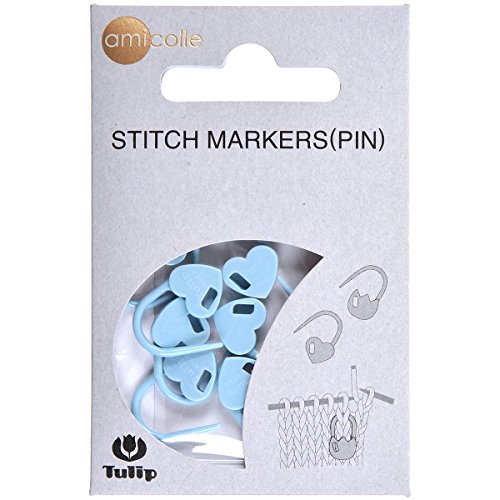
Tulip is known for high-quality engineering, and these heart-shaped markers are no exception. They lock securely with a satisfying click, ensuring they stay exactly where you put them, even through hours of travel or storage.
Beyond their functionality, they are quite beautiful. The heart shape isn’t just for show; it makes them very easy to grip and manipulate, even if you have arthritis or struggle with small, fiddly notions.
I recommend these for high-stakes projects, like intricate cables or lace, where losing a marker would be a disaster. They are a bit of an investment, but the quality of the hinge mechanism is far superior to generic bulk packs.
Susan Bates Crystal Plastic Rings
These are the classic, no-nonsense rings that many of us grew up using. They are thin, clear, and unobtrusive, making them perfect for when you want to focus entirely on your stitches rather than your tools.
The thin profile is a major benefit for those working on fine-gauge projects. If you are knitting socks on 2.25mm needles, a bulky marker will distort your stitches, but these crystal rings sit flat and remain virtually invisible.
They are essentially indestructible and come in a variety of sizes. If you are a minimalist who wants a tool that simply does its job without any fuss or aesthetic distraction, these are the best value on the market.
Why Stitch Markers Are Essential for Rounds
Stitch markers are the "punctuation" of your knitting. Without them, a round of 200 stitches can quickly become a blur, leading to mistakes in colorwork or cable repeats that are difficult to fix later.
By marking your repeats, you create small, manageable milestones. Instead of trying to keep track of a 50-stitch lace pattern, you are simply focusing on the 10 stitches between markers. This reduces mental fatigue and allows you to catch errors immediately.
Ultimately, markers provide a safety net. They allow you to knit with confidence, knowing that if you get interrupted by a phone call or a doorbell, you can return to your work and know exactly where you stand in the round.
How to Choose the Right Marker for Your Yarn
The golden rule is to match your marker to your yarn’s texture. If you are working with a fuzzy, high-halo yarn like mohair, avoid anything with a sharp hinge or a rough seam, as these will snag and pull your fibers.
- For slick, slippery yarns (silk/bamboo): Use metal or wood markers for a bit of extra friction.
- For textured or fuzzy yarns: Use seamless nylon or smooth, polished plastic.
- For large-gauge projects: Use larger, lightweight rings to avoid distorting the fabric.
Always consider the weight of the marker as well. A heavy metal marker can pull on a delicate lace fabric, causing uneven tension in the stitches directly beneath it. If you notice a "ladder" forming, swap to a lighter material.
Tips for Preventing Marker Snags While Knitting
Snags are almost always caused by a gap between the marker and the needle. If your marker is too large for your needle size, it can catch on the tip of the needle as you move to the next stitch, causing frustration and potential fiber damage.
To prevent this, keep a variety of sizes in your kit. A marker that fits snugly on a 3.0mm needle will be far too large for a 2.0mm needle; ensure your marker ring diameter is just slightly larger than your needle diameter.
Finally, cultivate the habit of checking your markers every few rounds. If you feel a slight tension as you move the marker from the left needle to the right, stop and check for a snagged fiber before it turns into a dropped stitch.
Choosing the right stitch marker is a small detail that yields massive rewards in your knitting consistency. Whether you prefer the weight of metal or the flexibility of nylon, the best marker is one that disappears into your process. Experiment with these options, keep your kit stocked, and enjoy the peace of mind that comes with a perfectly marked round. Happy knitting!