7 Best Row Markers For Tracking Complex Repeats
Master complex knitting patterns with our top 7 row markers. These essential tools ensure precise counting and seamless tracking for even the trickiest repeats.
Mastering complex lace repeats or intricate cable charts requires more than just patience; it demands a reliable system for tracking your place in the pattern. Without clear markers, a single skipped yarn-over or a misplaced purl can derail hours of careful work. These seven tools offer the precision needed to keep your rhythm steady and your stitch count accurate. Investing in the right markers is the simplest way to transform a frustrating project into a meditative experience.
Cocoknits Colorful Nylon Stitch Markers


These markers are a favorite in my kit because they are incredibly smooth and snag-free. The nylon coating ensures they glide over bamboo and metal needles alike without catching on the yarn ply.
Their distinct color coding is a game-changer when you are working on multi-repeat patterns. You can use one color for the start of a round and another for the beginning of a specific chart segment.
Because they are thin, they won’t distort your gauge or create unsightly gaps between stitches. They are ideal for delicate fingering weight projects where bulkier markers would be a nuisance.
Clover Locking Stitch Marker Assortment

Locking markers are the workhorses of the knitting world, especially when you need to count rows or mark a specific increase point. The Clover assortment is reliable, snapping shut with a satisfying click that stays secure even when tossed in a project bag.
I often use these to "anchor" my work when I need to walk away from a complex lace section. By locking one into the fabric, I can easily identify the row I left off on without counting every single stitch upon my return.
Be mindful that these can occasionally snag on high-twist wool or mohair blends. If you are working with fuzzy fibers, handle them with care to avoid pulling loose strands.
Knitter’s Pride Rainbow Metal Ring Markers

If you prefer a marker that stays on the needle, these metal rings are a fantastic choice. They are lightweight, durable, and offer a satisfying "clink" as you move them from needle to needle.
The rainbow finish isn’t just for aesthetics; it helps you distinguish between different sections of a complex repeat. I find them particularly helpful when working on circular needles, as they don’t get lost in the join.
However, metal markers can be cold to the touch and somewhat slick. If you are a loose knitter, ensure your needle tips aren’t so slippery that the markers slide off accidentally.
Dritz Bamboo Locking Stitch Markers

Bamboo markers offer a unique advantage: they are incredibly lightweight and gentle on the yarn. If you are working with delicate silk or plant fibers, these are less likely to cause friction-based damage.
They have a softer, more organic feel than plastic or metal, which is a nice touch during long knitting sessions. They are also less likely to "ping" across the room if you drop them.
The tradeoff is that they can be slightly more fragile than their plastic counterparts. Avoid forcing them open too wide, as the hinge point is the natural weak spot of the design.
Katrinkles Wooden Pattern Row Counters

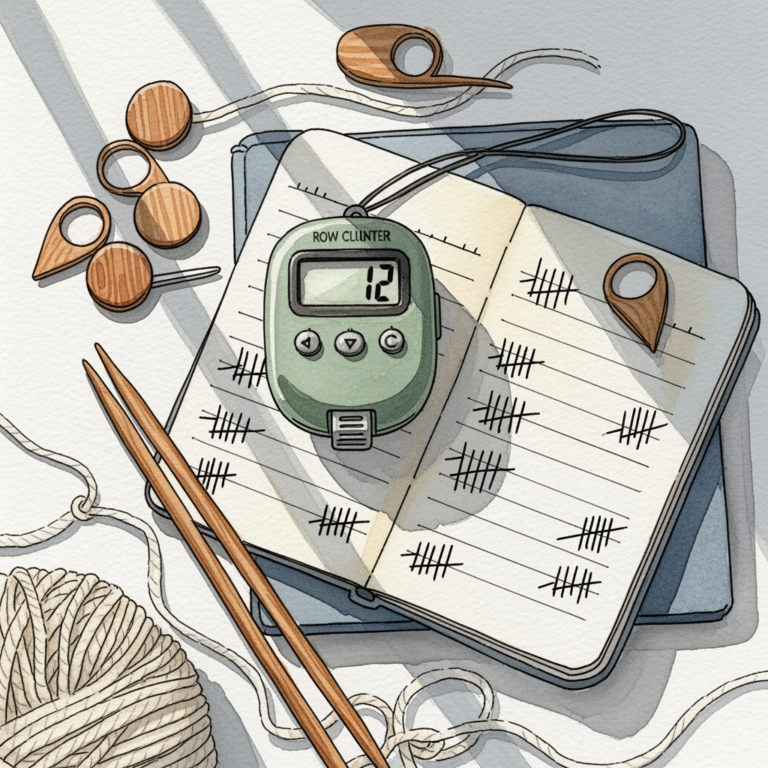
Sometimes you need a tool that tracks more than just a stitch position. These wooden row counters are beautiful, tactile, and perfect for keeping track of long, repeating chart rows.
They act as a visual anchor for your brain, helping you stay focused on the current row of a complex cable pattern. I recommend these for knitters who find digital counters distracting or unreliable.
Because they are a physical object, they require a bit of manual effort to advance. Use them when you have a dedicated knitting space where you can keep your tools organized and accessible.
Susan Bates Crystal Plastic Split Rings

Split rings are the "quick and dirty" solution for marking stitches on the fly. They don’t lock, which makes them incredibly fast to insert and remove as you work your way up a garment.
They are perfect for marking the "right side" of your work or identifying a specific column of stitches. Because they are clear, they are unobtrusive and won’t visually clutter your progress.
The main risk is that they can fall out if you handle your project roughly. Use these primarily for stationary markers rather than markers that need to travel through your knitting.
Tulip Heart-Shaped Locking Stitch Markers
These are as functional as they are charming. The heart shape isn’t just for show; the design makes them very easy to grip and open, even if you have arthritis or hand fatigue.
They are excellent for marking the start of a round in a way that feels intentional and special. I find that using tools I enjoy looking at makes the more tedious parts of a pattern feel less like a chore.
The locking mechanism is top-tier, ensuring they stay put until you decide to remove them. They are a wonderful gift for yourself or a fellow knitter who appreciates both form and function.
Why Row Markers Are Essential for Lace Work
Lace knitting is a game of precision where every yarn-over and decrease must be in its exact place. If you lose your count mid-row, you risk ruining the symmetry of the entire design.
Markers act as "checkpoints" that allow you to verify your count every few inches. By placing a marker between every repeat, you can catch a mistake within the same row rather than discovering it ten rows later.
This strategy saves hours of "tinking" (knitting backward) or ripping back. It turns a high-anxiety project into a manageable series of small, bite-sized tasks.
How to Choose Markers for Different Yarn Weights
The weight of your yarn should dictate the size of your marker. For bulky or super-bulky yarns, you need a larger ring that won’t get buried in the stitches.
Conversely, lace or fingering weight yarn requires thin, lightweight markers. If a marker is too heavy, it can pull on the stitch and create an uneven, distorted loop in your finished fabric.
Always test your marker on your specific needle size before you begin. If the marker is too tight, it will impede your rhythm and slow down your knitting speed significantly.
Troubleshooting Snags and Tension Issues
Snags are usually the result of the marker’s material interacting poorly with the fiber. If you are working with a fuzzy mohair or a high-twist singles yarn, avoid plastic markers with sharp edges.
Tension issues often arise when markers are too thick for the needle. This forces the stitches to stretch over the marker, creating a visible "ladder" or thin spot in the fabric at the marker’s location.
If you notice your gauge changing near the markers, try switching to a thinner ring or removing the marker altogether once you have established your pattern. Practice and observation will eventually teach you which tools suit your personal style.
The right stitch marker is the one that disappears into your workflow, allowing you to focus entirely on the rhythm of the needles. Whether you prefer the tactile warmth of wood or the reliability of locking metal, these tools are your best defense against the common pitfalls of complex patterns. Start with a few different types to see what feels natural in your hands. With the right system in place, even the most daunting lace chart becomes a joy to knit.