6 Best Yarn Swifts For Skein Tension To Consider
Find your perfect yarn swift with our guide to the 6 best models. Learn how to ensure optimal skein tension for smooth winding and tangle-free knitting.
Nothing ruins the meditative rhythm of a new project quite like a tangled mess of yarn collapsing off your chair. A quality yarn swift is the unsung hero of the fiber arts, transforming unruly hanks into manageable cakes that feed smoothly through your fingers. Investing in the right tool saves you hours of frustration and prevents the dreaded "yarn barf" that plagues many hand-dyed skeins. Here are the best options to ensure your tension remains consistent from the first cast-on to the final bind-off.
Stanwood Needlecraft Wooden Umbrella Yarn Swift


The Stanwood umbrella swift is widely considered the gold standard for home use, and for good reason. Its heavy-duty metal clamp and smooth-rotating mechanism handle everything from delicate lace-weight mohair to chunky, rustic wools with ease.

What sets this model apart is the precision of its rotation. When you are winding a high-twist yarn, any resistance in the swift can lead to uneven tension in your ball winder, which eventually impacts your stitch gauge. The Stanwood operates with a fluid, silent motion that minimizes drag.
If you frequently purchase hand-dyed skeins that vary in circumference, the adjustable nature of this umbrella design is invaluable. It accommodates a wide range of hank sizes, ensuring the yarn stays taut enough to wind without stretching the fibers.
Knit Picks Yarn Swift: Best Budget-Friendly Pick
If you are just beginning your journey into dyeing or winding your own stash, the Knit Picks swift offers a reliable entry point. It is lightweight, portable, and gets the job done without requiring a significant investment.
The primary trade-off here is the material construction compared to high-end wooden models. While it is perfectly functional for standard wool blends, you might find it struggles slightly with very heavy, bulky-weight skeins that exert significant pressure on the arms.
However, for a knitter who primarily works with fingering or sport-weight yarns, this is an excellent utility tool. It folds down easily, making it perfect for knitters who need to stow their gear in a small craft closet between projects.
Lacis Wooden Umbrella Swift for Heavy Skeins
When you are dealing with massive, 400-gram skeins of Icelandic wool or heavy alpaca, standard swifts often buckle under the weight. The Lacis wooden umbrella swift is built with a sturdier frame designed to handle these larger, denser hanks.
The craftsmanship on these units is usually superior, providing a smooth finish that won’t snag on delicate fibers. If you have ever had a silk-blend yarn catch on a rough wooden edge, you know how quickly that can damage the ply.
This swift is an investment piece for the serious stash-builder. Because it is robust, it remains stable even when you are winding at a higher speed, which is a major time-saver when you have five or six hanks to process for a sweater project.
Amish Style Wooden Tabletop Yarn Swift: Best Value
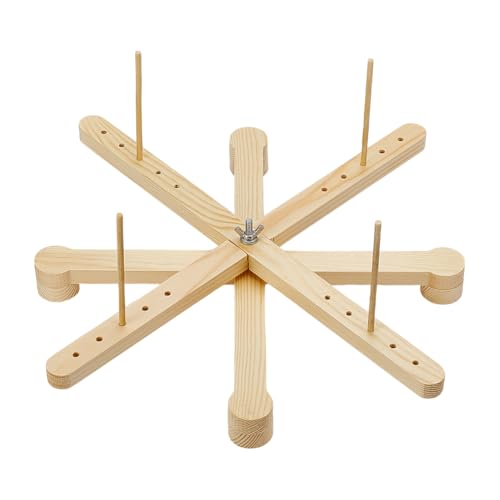
The Amish-style swift is a completely different mechanism, utilizing a horizontal, rotating cross-arm design rather than an umbrella-style expansion. It is incredibly popular because it is virtually indestructible and requires no clamping to a table edge.
Because it sits flat on your surface, it is often more stable for knitters who don’t have a deep table edge to accommodate a traditional clamp. It’s also very easy to disassemble, making it a favorite for traveling to knitting retreats.
One thing to note: these models are usually fixed in size or require manual adjustment of the pegs. If you work with a wide variety of skein sizes, you will need to move the pegs frequently, which can be slightly more tedious than the "pop-up" nature of an umbrella swift.
NDS Hand-Operated Wooden Swift: Best for Stability
Stability is the name of the game with the NDS swift, which is prized for its solid, heavy construction. If you are a fast winder, you need a base that won’t wobble or slide across your table as you crank the handle.
This model is particularly well-suited for knitters who work with slippery fibers like bamboo, Tencel, or silk. These fibers demand a consistent, controlled feed; if the swift jerks or stutters, your yarn ball will end up loose and prone to collapsing.
While it lacks the portability of the lightweight plastic models, its weight is its greatest asset. It stays put, allowing you to focus entirely on the tension of the yarn as it travels from the swift to the ball winder.
SkeinMate Automatic Yarn Swift: Best for Efficiency

For the knitter who considers winding a chore to be completed as quickly as possible, the SkeinMate is a game-changer. This motorized unit takes the manual labor out of the process, ensuring perfectly consistent tension every single time.
Automation is particularly useful when winding large quantities of yarn for a big project, like a king-sized blanket or multiple sweaters. By removing the human variable of "cranking speed," you ensure that the entire skein is wound with uniform density.
The trade-off is the price point and the mechanical complexity. If you are a hobbyist who only winds yarn occasionally, the manual options are likely sufficient, but for the prolific maker, the time saved is well worth the cost.
Understanding How a Swift Improves Yarn Tension
A swift is not just a holder; it is a tension-management tool. When you wind yarn by hand, you are often pulling it off your knees or a chair back, which introduces inconsistent tension and can lead to uneven stitch gauge in your finished fabric.
A properly functioning swift allows the yarn to release at a steady, constant rate. This is critical for fibers with little elasticity, such as linen or cotton, which can be permanently stretched if the winding process is too aggressive.
- Consistency: Prevents "stretching" the yarn during winding.
- Safety: Keeps the yarn off the floor and away from pets or dust.
- Efficiency: Allows for a smooth, uninterrupted feed into your ball winder.
Umbrella vs. Amish Style: Which Swift Suits You?
Choosing between an umbrella and an Amish-style swift depends largely on your workspace and your storage habits. Umbrella swifts are vertical and adjustable, making them better for varying skein circumferences, but they require a sturdy table edge for clamping.
Amish swifts are horizontal and generally more compact, making them ideal for small spaces or for knitters who prefer not to clamp things to their furniture. They are often quieter and have a lower profile, which some knitters find more aesthetically pleasing.
- Choose Umbrella if: You have a deep table edge and frequently wind many different sizes of hanks.
- Choose Amish if: You want a portable, stable unit that doesn’t require clamping and can be used on any flat surface.
Essential Tips for Winding Skeins Without Snags
Always inspect your skein for tangles before placing it on the swift. If the yarn is twisted or knotted in the hank, no swift in the world will save you from a mid-wind disaster.
Ensure the swift is centered and that the arms are expanded just enough to hold the yarn taut, but not so tight that you are stretching the fiber. If you are winding a delicate yarn, take it slow; the faster you spin the swift, the more likely you are to encounter a snag that you cannot stop in time.
Finally, keep your ball winder and swift aligned. The yarn should travel in a straight, unobstructed line from the swift to the winder to ensure the tension remains balanced throughout the entire process.
Maintaining Your Swift for Years of Smooth Winding
Most wooden swifts benefit from a light dusting and an occasional check of the screws or pegs. If your swift starts to squeak or feel "sticky," a tiny drop of food-safe wood oil on the moving joints can work wonders.
Avoid storing your swift in areas with high humidity, as wood can swell and cause the moving parts to bind. If you have an umbrella swift, always collapse it completely before storing it to prevent the arms from warping over time.
With basic care, a quality swift will last for decades. Treat it as a long-term investment in your knitting practice, and it will ensure that every skein you buy is ready to be transformed into your next masterpiece.
Choosing the right yarn swift is about balancing your specific workspace needs with the types of fibers you love to knit. Whether you opt for the versatility of an umbrella style or the rock-solid stability of an Amish design, you are making a commitment to better, more consistent projects. Take your time to select the model that fits your habits, and enjoy the process of turning those beautiful hanks into neat, ready-to-use cakes. Happy knitting, and may your yarn always wind smoothly.