6 Best Yarn Bowls For Weight Stability To Try
Discover 6 stable yarn bowls designed to prevent tipping. Our guide highlights weighted, non-slip picks that keep your yarn secure while you knit or crochet.
Every knitter knows the frustration of a yarn cake dancing across the floor or diving under the sofa during a complex lace project. A high-quality yarn bowl acts as a dedicated anchor, ensuring your tension remains consistent while your yarn stays clean and tangle-free. Choosing the right bowl isn’t just about aesthetics; it is about finding a functional weight that keeps your supplies stationary. These six selections are designed specifically to provide the stability required for hours of uninterrupted, meditative knitting.
Kept Studio Heavyweight Ceramic Yarn Bowl


The Kept Studio bowl is a masterclass in functional design, specifically engineered for those who work with heavy, bulky yarns. Its substantial base provides a low center of gravity, which is essential when you are pulling large amounts of yardage from a center-pull cake.
When you are working on a massive wool blanket, the drag on your yarn can easily tip over a flimsy bowl. This ceramic option stays firmly planted on your side table, even during aggressive long-tail cast-ons.
The smooth, high-fire glaze ensures that your yarn flows freely without catching on any surface imperfections. It is an investment piece, but the weight alone justifies the cost for anyone tired of chasing their yarn across the room.
Furls Crochet Alpha Series Wooden Yarn Bowl

Furls has built a reputation on ergonomic design, and their wooden bowls are no exception. While wood is inherently lighter than ceramic, the Alpha Series is crafted from dense, premium hardwoods that offer surprising stability.
The beauty of these bowls lies in the deep, curved walls that prevent your yarn from jumping out as you reach the end of a skein. If you are a fast knitter, you need a bowl that can handle the rapid motion of yarn being pulled through the guide.
Because these are handcrafted from natural wood, no two bowls are exactly alike. They provide a warm, tactile experience that complements the feel of natural fibers like alpaca or merino wool.
Nagina International Solid Rosewood Yarn Bowl
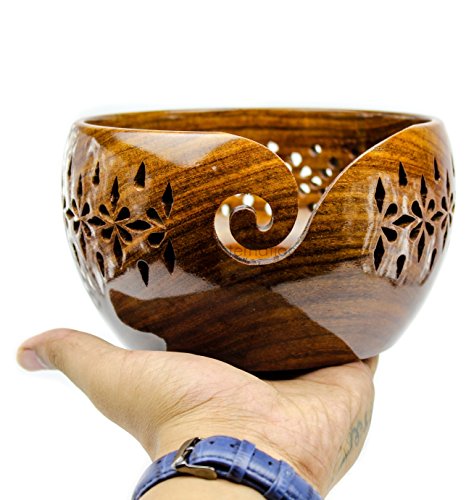
Nagina International specializes in traditional craftsmanship, and their rosewood bowls are incredibly dense. Rosewood is a naturally heavy timber, making this bowl a fantastic choice for knitters who prefer the look of wood but need the heft of stone.
The intricate carving on the exterior isn’t just for show; it adds a bit of grip for your hands when you need to reposition the bowl. The spiral cutout is polished to a high sheen, ensuring that even sticky, high-twist cotton yarns glide through without snagging.
If you enjoy knitting with slippery synthetic blends or silk, this bowl provides enough friction to keep the yarn controlled. It is a sturdy, reliable workhorse that looks stunning on any coffee table.
Yarn Valet Heavy Weighted Yarn Dispenser Bowl

The Yarn Valet is designed for the knitter who prioritizes pure utility over decorative flair. It features a weighted base specifically calibrated to prevent tipping, which is a common issue with lighter, plastic-based yarn holders.
This bowl is particularly effective for those working with "yarn barf"—that tangled mess that happens when a center-pull cake collapses. The internal design keeps the cake upright, allowing you to knit until the very last yard without interruption.
It is an excellent choice for traveling knitters who need something durable that won’t shatter if it takes a tumble. While it lacks the artisanal charm of ceramic, its performance in high-tension scenarios is unmatched.
Athena’s Elements Large Ceramic Yarn Bowl

Athena’s Elements bowls are known for their generous size and significant wall thickness. If you frequently work with large 400-gram cakes or multiple strands held together for colorwork, this bowl offers the internal volume you need.
The weight is distributed evenly across a wide footprint, which is the secret to true stability. Even when you are tugging on a stubborn strand of mohair, the bowl remains anchored to your workspace.
The finish is exceptionally smooth, which is critical when working with delicate fibers that are prone to pilling. A snagged yarn is a ruined row, and this bowl is designed to keep your fiber pristine.
Crafty Guild Artisan Stoneware Yarn Bowl

Stoneware is naturally heavier and more durable than standard earthenware, making it an ideal material for a yarn bowl. Crafty Guild pieces are fired at high temperatures, resulting in a dense, chip-resistant product that feels substantial in your hands.
These bowls are perfect for the knitter who wants a piece that will last a lifetime. Because of the weight of the stoneware, you don’t have to worry about the bowl sliding across a slick wooden surface while you work.
The deep spiral cut allows you to easily swap out colors during fair isle projects without removing the yarn from the bowl. It is a perfect marriage of form and function for the serious maker.
Why Weight Matters for Your Yarn Bowl Choice
Weight is the single most important factor in preventing the "yarn-walk" phenomenon. When you knit, you apply varying degrees of tension, and a light bowl will inevitably slide toward your hands as you pull the yarn.
- Low Center of Gravity: A wide base keeps the bowl from tipping.
- Material Density: Stone and dense hardwoods provide more natural stability.
- Surface Traction: A bowl with a slightly textured bottom will grip your table better than a polished one.
If you are a loose knitter, you might get away with a lighter bowl, but tight knitters require heavy anchors. Always consider the weight of the yarn ball itself; a heavy ball of wool in a light bowl creates a top-heavy situation that leads to spills.
Ceramic vs Wood: Stability and Durability Tips
Ceramic bowls offer superior weight, but they are fragile and can chip if dropped on a hard floor. Wood is warmer to the touch and more durable, but it requires periodic conditioning to keep the finish smooth.
- Ceramic: Best for stationary knitting at a desk or table.
- Wood: Ideal for knitters who move their projects between rooms.
- Maintenance: Use a light wood wax on wooden bowls to prevent the grain from drying out and snagging your yarn.
If you are prone to dropping your tools, a dense hardwood bowl is the safer bet. However, if you want the absolute maximum stability for heavy-duty projects, glazed ceramic remains the gold standard.
Essential Features for Anti-Tangle Yarn Bowls
The most critical feature is a smooth, well-rounded spiral opening. If the edges of the cutout are sharp or unfinished, they will fray your yarn, especially delicate singles or loosely plied wool.
Look for a "vertical" slot that allows you to lift the yarn out if you need to change colors or switch projects. A bowl that forces you to thread the end of the yarn through the hole every time is a frustration you don’t need.
The interior surface should be completely free of bumps or glazing drips. Even a tiny protrusion can catch on a mohair halo and create a knot that is nearly impossible to untangle.
How to Properly Care for Your Yarn Bowl Finish
To keep your yarn moving smoothly, you must keep the bowl clean of dust and lint. Over time, natural oils from your hands can build up on wood, while dust can settle in the grooves of ceramic.
For ceramic bowls, a simple wipe with a damp cloth is usually sufficient. Avoid abrasive sponges that could scratch the glaze and create tiny catch-points for your yarn.
For wooden bowls, check for "burrs" or rough spots every few months. If you find one, a light sanding with very fine-grit sandpaper followed by a coat of food-safe beeswax will restore the surface to like-new condition.
Investing in a heavy, well-designed yarn bowl is one of the best ways to elevate your knitting experience. By choosing a material and weight that matches your personal knitting style, you eliminate the physical distraction of managing your yarn supply. Whether you choose the heft of stoneware or the warmth of polished rosewood, your future projects will benefit from the added stability. Happy knitting, and may your yarn always flow smoothly from your bowl.