7 Best Pattern Books For Needle Felting Beginners
Master needle felting with our top 7 beginner pattern books. Learn essential techniques, build core skills, and create charming wool projects with ease.
Needle felting is the sculptural equivalent of working with a loose roving, offering a tactile satisfaction that knitters often find deeply grounding. Much like choosing the right needle size for a specific yarn weight, selecting the correct pattern book can make or break your initial experience with this fiber craft. These seven guides provide the foundational techniques you need to transform raw wool into charming, three-dimensional creations. Whether you are looking for quick projects or structural mastery, these books serve as your essential library.
Felted Animal Friends by Kurumi Fujita: Best Overall
This book is the gold standard for beginners because it treats wool like a sculptural medium rather than just a craft supply. Fujita’s approach mirrors how a knitter learns to read a pattern: she breaks down complex shapes into manageable, logical steps.
The beauty here lies in the clarity of the instructions. If you have ever struggled to visualize how a flat swatch becomes a shaped garment, you will appreciate how this book explains the anatomy of a felted figure. It demystifies the "why" behind every poke of the needle.
The projects are inherently rewarding, offering that "instant gratification" that keeps a new maker motivated. The bottom line: if you only buy one book, make it this one.
Little Needle Felted Projects by Gretel Parker


Gretel Parker understands that the biggest hurdle for beginners is the fear of "ruining" their materials. This book focuses on small, low-stakes projects that allow you to practice your technique without burning through your entire stash of wool.
Think of this as the "garter stitch scarf" of the felting world—accessible, repetitive, and deeply educational. You will learn how to control density and shape without the pressure of a large, complex assembly.
It is perfect for those evenings when you want to keep your hands busy while watching a show. Start here if you want to build muscle memory before attempting larger sculptures.
Needle Felting for Beginners by Roz Dace and Judy Balchin

This title is essentially the "knitting textbook" of the felting world. It covers the technical basics—how to hold your tools, how to manage your workspace, and how to avoid the common pitfall of over-felting.
The authors provide a rigorous look at the mechanics of the craft. They explain how different needle gauges behave, much like how a knitter learns the difference between a blunt-tipped bamboo needle and a sharp-tipped nickel one.
By understanding these tool mechanics, you won’t just follow a pattern; you will learn to troubleshoot your own work. Use this book to gain a professional-level understanding of the craft’s fundamentals.
Sweet Needle Felted Animals by Mia Underwood
Mia Underwood brings a charming, whimsical aesthetic to the craft that feels very much like modern fiber arts. Her patterns are less about strict anatomical correctness and more about capturing character and personality.
For the knitter who enjoys colorwork or intarsia, you will appreciate how she uses small tufts of different colored wool to create texture and detail. It’s a wonderful way to play with color theory on a 3D canvas.
The instructions are visually driven, which is a massive help for tactile learners. Choose this book if your goal is to create gifts with a distinct, artistic flair.
Needle Felted Dogs by Gretel Parker
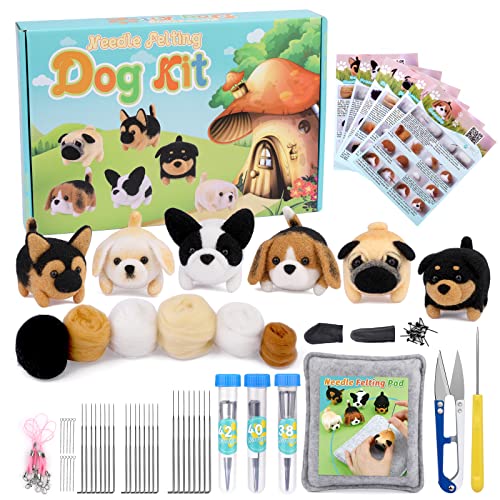
If you are a dog lover, you know that capturing the "soul" of a pet is a tall order. Parker excels at teaching you how to use wool to mimic different fur textures, from sleek coats to wiry scruff.
This book is a masterclass in observation. Much like learning to identify the twist of a yarn or the structure of a stitch, you’ll learn to identify the "grain" of the wool and how to manipulate it to suit a specific breed.
It is a more specialized focus, but it teaches invaluable lessons in shaping and detail work. Use this as your next step once you have mastered the basic sphere and cylinder shapes.
Whimsical Needle Felting by Susanna Wallis
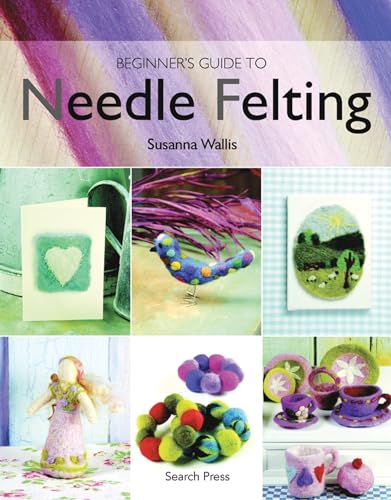
Wallis leans into the creative, imaginative side of the craft. Her projects encourage you to experiment with embellishments and unconventional shapes, which is a refreshing change of pace from standard animal patterns.
This book is for the knitter who is ready to move beyond the "pattern" and start designing. It provides the framework for you to experiment with your own ideas, much like a knitter who learns to modify a sweater pattern to better fit their body.
Don’t be afraid to deviate from her instructions once you understand the basic principles. This is your gateway to becoming a designer rather than just a crafter.
Needle Felting Masterclass by Judy Balchin

Don’t let the word "Masterclass" intimidate you; it is simply a more advanced look at construction and finishing. Think of this as the point where you move from basic scarves to complex, cabled sweaters or lace shawls.
Balchin focuses on structural integrity. If you have ever had a felted piece fall apart or lose its shape, this book will show you the "tension" techniques required to make your work last a lifetime.
It emphasizes the importance of firm, consistent felting. Invest in this book when you are ready to refine your technique and create professional-quality, durable pieces.
Essential Tools for Your First Needle Felting Project
Just as you wouldn’t use a size 10 needle for lace-weight yarn, you must match your felting tools to your project. You will need a variety of needles, but you don’t need a massive collection to start.
- Felting Needles: Start with a multi-needle tool for bulk and a fine-gauge needle for detail work.
- Felting Mat: A foam pad or a dense wool mat is essential to protect your needles from snapping.
- Finger Guards: These are the "thimbles" of the felting world—do not skip them, as you will inevitably prick your fingers.
- Work Surface: Keep your workspace clean and well-lit to ensure you aren’t missing stray fibers.
Pro-tip: Treat your needles like delicate knitting needles; they are brittle and will snap if you bend them or hit them against a hard surface.
How to Choose the Right Wool for Needle Felting
Not all wool is created equal, and the fiber you choose dictates the outcome of your project. Beginners often make the mistake of using "top" or "roving" that is too slippery or too coarse, which makes felting a chore.
- Corriedale: The best all-around choice; it felts quickly and holds its shape beautifully.
- Merino: Soft and luxurious, but it can be finicky to felt; save this for surface details.
- Batts: These fibers are carded in all directions, making them much faster to felt than long, combed top.
Bottom line: Always feel the wool before you buy it. If it feels "sticky" or has a bit of "crimp," it will likely felt well.
Troubleshooting Common Needle Felting Mistakes
If your piece feels soft and squishy, you haven’t felted it enough. Just as a loose knit will lose its shape, a loosely felted piece will sag over time; you need to keep poking until the fiber is dense and firm.
If your needle keeps snapping, you are likely working at an angle. Always enter and exit the wool at the same 90-degree angle to keep the needle shaft straight and prevent breakage.
If you find yourself stuck, take a break. Much like walking away from a dropped stitch, stepping back for an hour often gives you the perspective needed to fix the shape or smooth out a lumpy surface.
Needle felting is a journey of patience, much like any other fiber art. By starting with these books and understanding the properties of your wool, you will quickly move from simple shapes to complex, beautiful sculptures. Embrace the process, keep your fingers protected, and enjoy the meditative rhythm of the needle. Happy crafting!