6 Best Portable Irons For Steam Blocking To Own
Discover the top 6 portable irons for steam blocking. Learn how these compact tools ensure professional results and precise shaping for your fiber projects.
Proper blocking is the secret bridge between a pile of yarn and a professional-grade garment. While many knitters rely on cold soaking, steam blocking offers unparalleled control for shaping lace, smoothing out uneven stitches, and relaxing stubborn fibers. Choosing the right tool for this process can be the difference between a crisp, finished edge and a scorched disaster. Here are the best portable irons to help you achieve that perfect, polished look.
Rowenta Effective Compact Steam Iron: Best Overall


This iron hits the sweet spot between professional power and manageable size. It delivers a consistent, high-pressure steam burst that is essential for relaxing natural fibers like wool and alpaca.
For those of us working on large-scale projects like sweaters or blankets, the consistent steam output prevents the need for constant refilling. The stainless steel soleplate glides effortlessly over delicate lace, ensuring you don’t snag any precious yarn overs.
The main trade-off here is the weight; it’s a bit heftier than a travel-specific iron. However, if you want a tool that can handle everything from heavy aran-weight wool to delicate mohair blends, this is your workhorse.
Conair ExtremeSteam Handheld Steamer: Best Value

If you are intimidated by the idea of putting a hot iron directly onto your hand-knit fabric, this handheld steamer is your best friend. It allows you to hover over your work, letting the steam do the heavy lifting without ever touching the yarn.
This is particularly useful for delicate fibers like silk or bamboo that can easily lose their loft if crushed by a heavy iron. It is incredibly affordable and stores away easily in a project bag.
Just remember that steamers lack the "pressing" capability of an iron. If you need to flatten a curling stockinette edge or define a crisp seam, you might find yourself wishing for a traditional soleplate.
Oliso M3Pro Project Iron: Best For Precision Work

The Oliso is a favorite among quilters, but it is an absolute game-changer for knitters focused on intricate finishing. Its standout feature is the "iTouch" technology, which lifts the iron automatically when you let go of the handle.
This prevents the iron from sitting on your fabric and scorching it while you adjust your pins. The precision tip is perfect for getting into small corners of a shawl or blocking individual motifs before seaming.
It is a premium investment, but for the knitter who spends weeks on a complex lace pattern, the safety and control it offers are worth every penny. You won’t have to worry about accidental heat damage during those long blocking sessions.
Steamfast SF-717 Mini Steam Iron: Best Portability
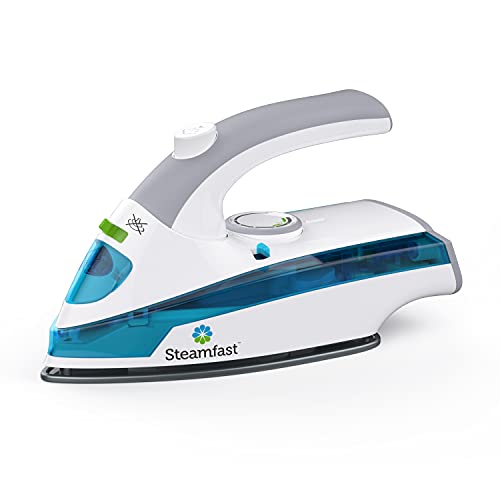
This little iron is a staple at knitting retreats and workshops for a reason. It is exceptionally small, making it perfect for blocking socks or hats without taking up your entire kitchen table.
Despite its size, it packs a surprising amount of heat. It is perfect for the knitter who travels frequently and needs to block a garment on the go to ensure it fits perfectly for a special event.
The downside is the tiny water tank, which requires frequent refilling. It’s not meant for blocking a full-sized adult sweater, but for smaller accessories, it is an unbeatable, space-saving tool.
PurSteam Portable Fabric Steamer: Best For Travel

This is the ultimate "toss in your suitcase" option for the knitter who refuses to leave their needles at home. It is lightweight, compact, and heats up in seconds.
It excels at "refreshing" a garment that has been squashed in a suitcase. If your finished shawl looks a bit limp after travel, a quick pass with this steamer will bring the stitch definition right back to life.
It isn’t designed for heavy-duty blocking, so don’t expect it to reshape a garment that has lost its structure. Think of it as a maintenance tool rather than a primary blocking iron.
Black+Decker Easy Steam Iron: Best Budget Option

Sometimes you just need a basic, reliable iron that gets the job done without any bells and whistles. This model is straightforward, easy to use, and very affordable for the beginner knitter.
It features a non-stick soleplate that glides smoothly over most yarns. It is a great "starter" iron for someone who is just beginning to explore the world of steam blocking and doesn’t want to break the bank.
While it lacks the advanced precision of the Oliso or the power of the Rowenta, it handles the basics of steam blocking perfectly well. It is a solid, no-nonsense tool that will serve you well for years.
Factors To Consider When Buying A Portable Iron
When selecting your iron, the most important feature is the steam control. You want an iron that allows you to vary the output, as different fibers react differently to moisture and heat.
Consider the weight of the iron as well. If you have arthritis or hand fatigue, a heavy iron will make the blocking process feel like a chore rather than a satisfying finish to your project.
- Soleplate material: Stainless steel or ceramic is generally better for preventing snags.
- Cord length: A longer cord gives you more freedom to move around your blocking board.
- Safety features: Auto-shutoff is essential for those of us who get distracted by a new pattern repeat.
Essential Steam Blocking Techniques For Knitwear
Steam blocking is all about "hovering" rather than "pressing." You want to introduce moisture and heat to the fibers to allow them to relax and bloom, not to flatten them into a stiff, lifeless board.
Always pin your work to your desired dimensions before you start. Use rust-proof T-pins to ensure your edges are straight and your corners are sharp, especially when working with lace.
Keep the iron about an inch above the fabric. If you find the steam isn’t enough, you can lightly touch the iron to the fabric, but never leave it in one place for more than a second or two.
Fiber Safety: Preventing Heat Damage To Yarn
Not all yarns are created equal, and heat can be a destructive force if you aren’t careful. Acrylic and other synthetics can melt or become permanently flattened if they get too hot, so always use a low setting and plenty of steam.
Natural fibers like wool are more resilient, but they can still be over-steamed, which causes them to lose their "crimp" and elasticity. Always do a test swatch first to see how your specific yarn reacts to the heat.
- Superwash wool: Can be prone to stretching, so don’t over-manipulate it while it’s hot and damp.
- Mohair/Angora: Be very careful; these fibers can lose their signature halo if they are pressed too hard.
- Plant fibers (Cotton/Linen): These actually benefit from a bit of heat and pressure to help them soften up.
Frequently Asked Questions About Steam Blocking
Can I steam block directly on my knitting needles? It is generally better to remove the needles and use pins, as the heat can sometimes warp plastic or wooden needles.
How long should I let the garment dry? Even if it feels dry to the touch, let it sit for at least an hour. The fibers need time to "set" in their new shape as they cool down.
Is steam blocking permanent? It is semi-permanent. The garment will hold its shape until it is washed again, at which point you will need to re-block it.
Steam blocking is a transformative skill that elevates your hand-knits from "homemade" to "handmade heirloom." By choosing the right iron for your specific needs—whether you prioritize portability, precision, or value—you gain total control over the final drape and fit of your work. Take your time, test your swatches, and enjoy the satisfying process of watching your stitches settle into their perfect, permanent home. Happy knitting!