7 Best Felted Wool Patches For Repairs Worth Trying
Extend your clothing’s lifespan with these 7 top-rated felted wool patches. Discover durable, stylish options perfect for seamless, eco-friendly garment repairs.
We have all felt that sharp pang of heartbreak when a favorite hand-knit sweater snags on a stray nail or falls victim to a hungry moth. Rather than relegating these pieces to the back of the closet, needle felting offers a beautiful, structural way to breathe new life into worn fabric. By merging loose wool fibers directly into your existing stitches, you can create seamless, artistic repairs that honor the garment’s history. These seven tools and materials represent the gold standard for restoring your knitwear with precision and longevity.
Clover Needle Felting Tool: Best All-Rounder Kit


The Clover tool is the industry standard for a reason: its ergonomic design and replaceable needles make it an essential for any fiber artist’s kit. When you are working on a delicate sweater, the spring-loaded action helps control the depth of your punch, preventing you from accidentally felting through to the other side of the garment.
This tool typically holds five needles, which allows you to cover a larger surface area quickly. However, for precise repairs, you can easily remove needles to use just one or two. This flexibility is vital when you are trying to navigate the tight, intricate cables of a wool cardigan.
My advice is to always keep a pack of spare needles on hand. Even the best steel needles will eventually dull or snap, and there is nothing more frustrating than having to stop a repair mid-flow because of a broken tip.
Woolfiller Repair Set: Best for Moth Holes
Woolfiller is a genius solution for those tiny, maddening moth holes that seem to appear overnight. Instead of trying to darn a hole with a needle and thread—which can often create a bulky, unsightly lump—this system uses a specialized felting brush and a coarse needle to "lock" wool fibers into the surrounding knit structure.
The beauty of this method is that it mimics the natural density of the original yarn. Because it doesn’t require a backing, it is perfect for areas where you want the repair to remain flexible, such as the elbows or the underarms of a sweater.
The kit comes with a variety of colors, allowing you to either match your yarn perfectly or create a bold, visible mending contrast. It is a fantastic entry point for those who are intimidated by traditional darning techniques.
Ashford Wool Felting Batts: Best Color Variety

When you are matching the color of a hand-dyed yarn, standard craft store wool just won’t cut it. Ashford’s batts are prized for their consistent texture and an expansive color palette that covers everything from natural heathers to vibrant, saturated tones.
These batts are carded, meaning the fibers are already aligned in a light, fluffy cloud. This makes them incredibly easy to pull apart and layer into your repair. If you are mending a sweater with a complex heathered look, you can blend two different colors of batt together to achieve a custom match.
Remember that felting involves significant shrinkage of the raw fiber. Always start with more wool than you think you need, as the needles will compress the batt into a much denser, smaller patch as you work.
Hamanaka Felted Patches: Best Pre-Cut Shapes

Sometimes, you don’t want to freehand a patch; you want a clean, professional finish. Hamanaka offers pre-cut felted shapes that act as a "blank canvas" for your repair. These are particularly useful if you are covering a large, irregularly shaped wear spot on a sleeve or cuff.
Because these patches are already felted, they provide a stable, reinforced base that won’t stretch out of shape with wear. You simply place the patch over the damaged area and use your felting needle to "tack" the edges down into the fabric of the garment.
These are a lifesaver for beginners who struggle with managing loose fiber. They take the guesswork out of building a patch from scratch and ensure your repair looks like a deliberate design choice rather than an afterthought.
Living Felt Merino Wool: Best Fiber Quality

If you are repairing a high-end cashmere or fine merino garment, you cannot use coarse, scratchy wool. Living Felt’s Merino top is incredibly soft and fine, which allows it to integrate seamlessly into the tight gauge of luxury knitwear.
The fiber quality here is exceptional, meaning it felts quickly and creates a very smooth, pill-resistant surface. When you are working on a garment that sits close to the skin, the softness of the repair material is just as important as the strength of the hold.
Be aware that because this wool is so fine, it requires a higher-gauge (thinner) needle to avoid damaging the surrounding stitches. Take your time, and use short, shallow strokes to ensure the patch is secure without distorting the knit.
Dimensions Needle Felting Mat: Best Base Tool

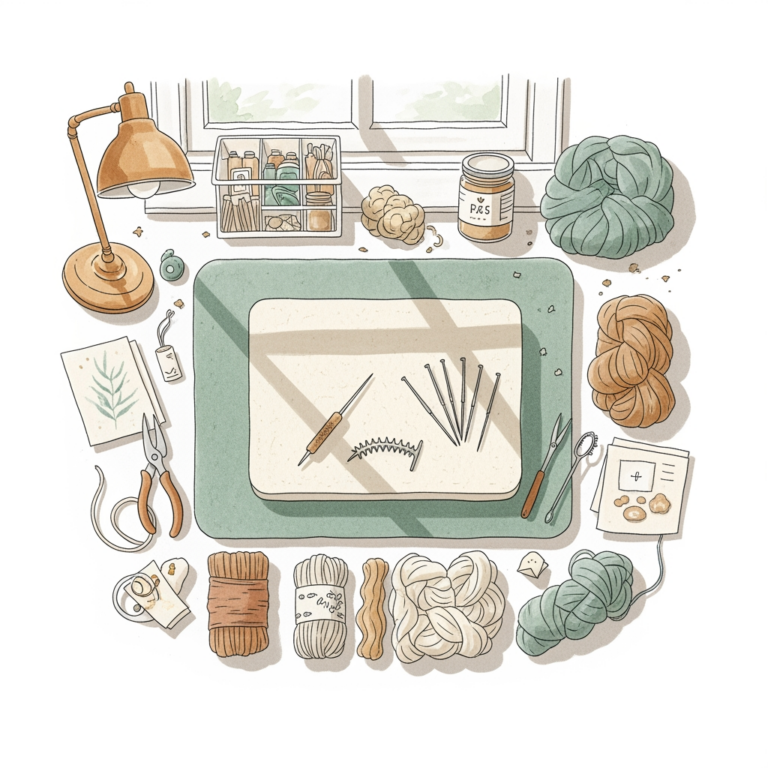
A good felting mat is the unsung hero of the repair process. You need a base that is dense enough to support the fabric but soft enough to allow the needles to penetrate without snapping. The Dimensions mat is firm, durable, and won’t shed foam particles into your beautiful wool.
When repairing a sweater, you will place this mat inside the garment, directly behind the hole. This prevents you from felting the front and back of the sweater together—a mistake that is nearly impossible to fix once it happens.
Always ensure your mat is larger than the area you are repairing. If you are working on a sleeve, use a small, cylindrical foam insert or a rolled-up towel inside the sleeve to provide a stable surface for the mat to sit against.
Namaste Wool Repair Squares: Best Durability

Namaste squares are essentially pre-felted, heavy-duty fabric patches designed for high-friction areas. If you are repairing a pair of wool socks or the heels of a favorite pair of knit slippers, these are your best bet.
They are significantly thicker than hand-felted wool, providing a physical barrier between the wearer and the floor or shoe. They don’t just bridge a hole; they reinforce the structure of the knit to prevent future wear in the same spot.
While they are stiffer than loose wool, they are incredibly long-lasting. If you are a knitter who spends hours in your hand-knits, prioritize this kind of structural reinforcement over purely decorative mending.
How to Select the Right Wool for Felted Patches
The golden rule of felting is to choose a wool that matches the fiber content of your garment as closely as possible. If you are repairing a 100% wool sweater, use 100% wool roving or batts. If you use a synthetic blend, it will not felt correctly and will eventually peel away from the natural fibers.
- Check the micron count: Finer wools (like Merino) work best for delicate items; coarser wools are better for heavy-duty patches.
- Consider the spin: Avoid using plied yarn for the patch itself; loose, unspun fibers (roving or batts) will always felt more effectively.
- Color matching: When in doubt, go a shade darker than your garment; a lighter patch will often look more obvious against a dark background.
Essential Felting Techniques for Fabric Repair
The most important technique is the "tacking" phase. Start by laying your wool over the hole and using a single needle to lightly stab the edges, pinning the wool in place. Once secured, move to a multi-needle tool to firmly integrate the fibers.
Always work from the center of the patch toward the edges. This prevents the wool from bunching up and ensures a flat, smooth transition between the patch and the original fabric.
If you are working on a very loose-gauge knit, be extremely careful. You want to catch the "legs" of the stitches with your needle, pulling the repair wool into the structure of the knit rather than just stabbing through the gaps.
Caring for Your Felted Patches After Washing
Once you have finished your repair, treat the garment with the same care you would any other wool item. Avoid aggressive agitation in the wash, as this can cause the patch to continue felting and potentially shrink or stiffen further.
Hand washing in cool water with a gentle wool wash is the best way to maintain the integrity of your repair. Lay the garment flat to dry, and gently reshape the patched area with your hands while it is still damp.
If you notice any loose fibers popping up after the first wash, simply use your felting needle to tuck them back into the patch. A repair is a living part of your garment, and a quick "tune-up" every few washes will keep it looking pristine for years.
Mending your knitwear is a powerful act of sustainability that connects you more deeply to the items you have spent hours creating. By selecting the right wool and tools, you transform a potential tragedy into a unique, custom detail that tells a story. Don’t be afraid to experiment with these techniques, as the most beautiful repairs are often the ones that show the care of the maker. Embrace the process, trust your hands, and keep those stitches going for a lifetime.