6 Best Fiber Shears For Clean Trimming Worth Owning
Discover the 6 best fiber shears for precise, clean trimming. This guide highlights top-tier tools that ensure professional results for every fiber project.
Every knitter knows the frustration of a dull blade snagging a delicate strand of hand-dyed merino or fraying a silk blend during a final weave-in. A clean snip isn’t just about aesthetics; it is essential for the structural integrity of your finished garment. Investing in quality shears transforms your finishing work from a chore into a precise, satisfying ritual. Here are six reliable tools that will keep your fiber projects looking professional from cast-off to blocking.
Gingher 4-Inch Featherweight Embroidery Scissors


These scissors are a classic staple in many knitting bags for a reason. Their compact size makes them perfect for trimming yarn ends on stranded colorwork projects where you need to get close to the work without nicking your tensioned stitches.
The blades are ground to a needle-sharp point, which is vital when you are working with fine lace-weight yarns. Because they are so lightweight, they won’t add unnecessary bulk to your project bag when you’re traveling to a knitting circle.
However, keep in mind that the small finger loops may feel cramped if you have larger hands. They are best suited for light trimming rather than heavy-duty cutting of thick, worsted-weight wool.
Kai 7230 9-Inch Professional Dressmaking Shears

When you are working with large-scale projects like a heavy wool coat or a felted bag, you need a shear that can handle bulk. The Kai 7230 is an industry favorite for its incredibly smooth cutting action.
The vanadium stainless steel blades provide a consistent, clean cut along the entire length of the blade. This is particularly helpful when you are trimming excess fabric or thick interfacing that often accompanies complex knitting projects.
Be aware that these are large, professional-grade tools that require a bit of space on your crafting table. They are an investment piece, so treat them with care by keeping them exclusively for your fiber work to prevent the blades from dulling on paper or cardboard.
Westcott Titanium Bonded Sewing Scissors 5-Inch

If you want a versatile tool that balances durability with a manageable size, these are a top contender. The titanium-bonded blades are significantly harder than standard stainless steel, meaning they stay sharp through many months of daily use.
These are excellent for the "everyday" knitter who switches between various yarn weights, from fingering to bulky. They cut cleanly through synthetic fibers like acrylic, which can sometimes dull standard blades faster than natural wool.
One minor tradeoff is that they can feel a bit stiffer than premium forged shears when they are brand new. A drop of sewing machine oil in the pivot screw will smooth out the action perfectly.
LDH Scissors Midnight Edition Fabric Shears
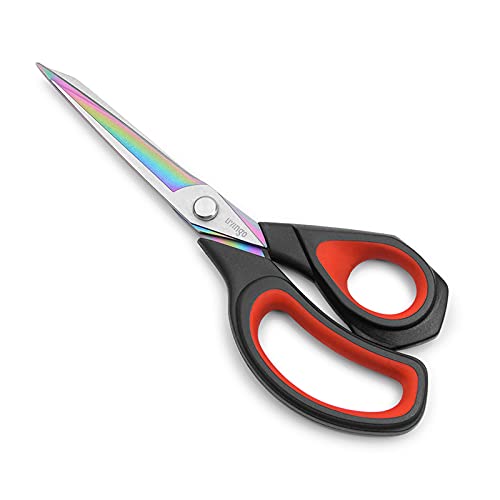
These shears are as beautiful as they are functional, featuring a matte black finish that hides fingerprints and lint. Beyond the aesthetics, the craftsmanship is genuinely high-end, providing a crisp, satisfying "snip" that never feels mushy.
They are particularly effective for knitters who work with slippery fibers like bamboo or silk-mohair blends. The precision of the blade alignment ensures that the yarn doesn’t slide away from the cut, preventing those annoying frayed ends.
Because these are high-carbon steel, they are prone to rust if left in a damp environment or near a humid steam iron. Always store them in a dry place to maintain their integrity.
Fiskars Micro-Tip Easy Action Craft Scissors

The spring-action design of these scissors is a game-changer for knitters who suffer from hand fatigue or arthritis. You don’t have to strain your fingers to open the blades; the spring does the work for you.
The micro-tip allows for surgical precision when you are performing "afterthought" techniques, such as cutting a steek. Being able to see exactly where your blade is entering the fabric is critical for avoiding accidental dropped stitches.
While they are fantastic for precision, they are not intended for cutting through thick layers of fabric. Use them for your fine-tuning and detail work, and keep a heavier pair of shears for your larger cutting tasks.
Havel’s Serrated Snips for Precision Trimming

Serrated blades are a knitter’s secret weapon, especially when working with slippery or "fuzzy" yarns. The micro-serrations grip the fiber, preventing it from sliding out of the blades before the cut is completed.
These are perfect for trimming mohair or angora, where the halo of the yarn often makes it difficult to get a clean, straight edge. You will find that these snips leave a much cleaner finish on high-twist yarns as well.
Because of the serrated edge, they can be difficult to sharpen at home. Treat them as a specialized tool for your most difficult-to-cut fibers, and they will serve you well for years.
Essential Features for Quality Fiber Shears
When shopping for shears, look for a "full tang" construction, where the metal of the blade extends into the handle. This provides balance and prevents the handle from snapping off during heavy use.
Consider the finger loop size carefully; you want a snug fit that provides control, but not one that causes friction or blisters during long finishing sessions. An adjustable pivot screw is also a major plus, as it allows you to tighten or loosen the tension as the tool wears in.
- Blade Alignment: The blades should meet perfectly from the pivot to the tip.
- Weight: Heavier shears provide more leverage; lighter shears offer more portability.
- Material: High-carbon steel holds an edge longer but requires rust prevention.
Maintaining Sharpness in Your Cutting Tools
The golden rule of fiber shears is simple: never, ever use them to cut paper. Paper contains kaolin clay and other abrasives that will dull high-quality steel blades in a matter of minutes.
Use a dedicated "paper" pair of scissors for your patterns and labels, and keep your fiber shears exclusively for yarn and fabric. If you notice your scissors starting to "chew" the yarn rather than slicing through it, it is time for a professional sharpening.
Cleaning your blades after a project is also vital. Use a soft, dry cloth to wipe away any residual fiber dust or lanolin that may have accumulated, as these can build up and interfere with the blade tension.
Why Blade Material Matters for Clean Edges
The chemical composition of your blade dictates how it interacts with different yarn fibers. Stainless steel is resistant to corrosion and is an excellent all-purpose choice for most knitters.
High-carbon steel is the professional standard because it can be ground to a much finer, sharper edge than stainless steel. However, it is more brittle and susceptible to rust, so it requires a bit more "babysitting" in your knitting bag.
Titanium-bonded or coated blades offer a middle ground, providing a hardened surface that resists wear while maintaining a lightweight feel. If you work primarily with synthetic or highly processed yarns, these coatings can help reduce friction during the cut.
Safety Tips for Storing Your Fiber Scissors
Always store your shears with a protective sheath or in a dedicated case. This not only protects the sharp tips from damage but also protects your hands when you are digging through a crowded project bag.
If you have curious pets or children, keep your shears in a zippered pouch or a high shelf. A sharp pair of shears is a precision tool, but it can be a hazard if left open on a sofa or near where you are knitting.
Finally, keep your shears in a dry environment. If you live in a humid climate, consider placing a small silica gel packet in your sewing kit to prevent rust from forming on your blades while they are in storage.
Choosing the right shears is a personal process that depends as much on your hand strength as it does on the type of yarn you prefer. By investing in a quality pair and protecting them from non-fiber materials, you ensure that every project ends with a clean, professional finish. Treat your tools with the same respect you give your hand-knits, and they will reward you with years of reliable performance. Happy knitting, and may your ends always be trimmed with precision.