6 Best Ball Winders For Uniform Cakes Worth Owning
Find the perfect yarn ball winder with our top six picks. We compare features to help you create uniform, tangle-free cakes for your next knitting project.
There is nothing quite as satisfying as watching a tangled, unruly hank of hand-dyed wool transform into a perfectly uniform, center-pull cake. For those of us who spend hours at the wheel or the needles, a reliable ball winder is not just a luxury; it is a vital tool for maintaining sanity during yarn prep. Choosing the right one depends heavily on your stash size and the weight of the fibers you typically handle. This guide breaks down the best options to help you find the perfect partner for your knitting journey.
Stanwood Needlecraft Large Metal Ball Winder


If you frequently work with bulky, hand-spun yarns or massive 400-gram cakes of lace weight, the Stanwood Large Metal winder is the industry gold standard. Its heavy-duty construction means it won’t skip or wobble across your table when you’re winding at top speed.
The gear system here is incredibly smooth, providing a consistent tension that prevents the yarn from stretching while it’s being wound. Stretching is a common, often overlooked issue that can ruin your gauge later on, especially with delicate fibers like merino or alpaca.
Because of its size, this winder is a bit of an investment, but the durability is unmatched. It is the kind of tool you buy once and pass down to the next generation of knitters in your family.
KnitPicks Ball Winder: Best Budget-Friendly Pick
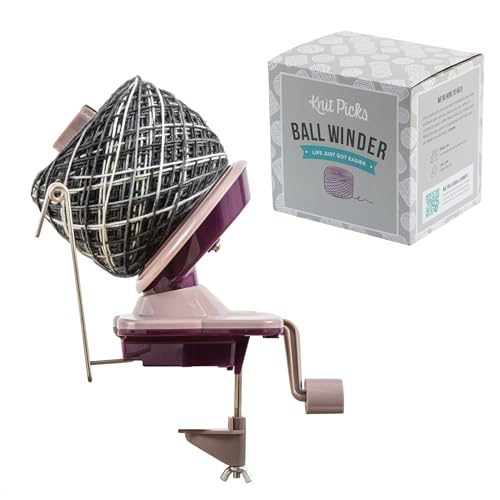
The KnitPicks winder is the quintessential "first winder" for most knitters, and for good reason. It is compact, affordable, and gets the job done efficiently for standard 100-gram hanks.
While it is made of plastic, it is surprisingly resilient if you don’t force the gears. It is perfect for the knitter who mostly works with worsted or DK weight yarns and doesn’t need to tackle massive project quantities all at once.
The trade-off here is the noise level and the occasional tendency to shift if your table surface is too slick. A simple silicone mat underneath usually solves the stability issue, making this a fantastic entry-level choice.
Lacis Wooden Hand-Operated Yarn Ball Winder
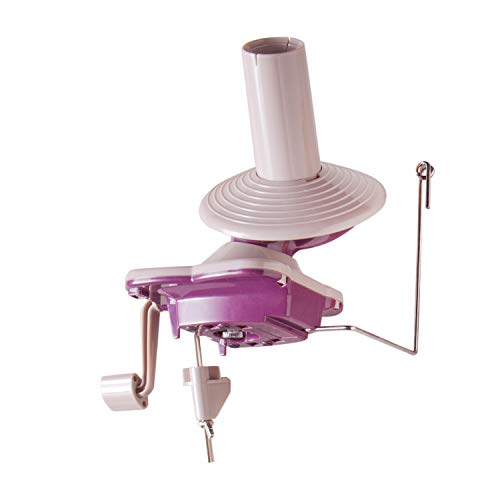
For those who appreciate the aesthetic of a classic craft room, the Lacis wooden winder is a beautiful, functional piece of equipment. It operates with a satisfying mechanical feel that plastic models simply cannot replicate.
The wooden construction isn’t just for show; it offers a sturdy weight that keeps the unit grounded during operation. It handles a variety of yarn weights with grace, provided you maintain a steady hand while turning the crank.
Keep in mind that wood requires a bit more care than plastic or metal. You’ll want to keep it in a dry environment to ensure the gears and body don’t warp over years of heavy use.
Nancy’s Knit Knacks Heavy Duty Ball Winder

Nancy’s Knit Knacks has long been respected for engineering tools that solve the specific frustrations of serious knitters. Their heavy-duty winder is designed for those who wind yarn daily, such as shop owners or prolific designers.
The internal mechanism is built to handle significant torque without stripping the gears. This is critical if you are winding high-twist yarns that have a tendency to "jump" or tangle during the winding process.
While it is a more expensive option, the precision of the cake shape is superior. A perfectly shaped cake sits flat on the table, which is vital for preventing the yarn from collapsing into a "yarn barf" mess mid-project.
ChiaoGoo Hand-Operated Yarn Ball Winder

ChiaoGoo is a brand synonymous with quality, and their winder reflects the same attention to detail found in their famous red-cord needles. It is a reliable, mid-range option that balances durability with ease of use.
The design is intuitive, making it easy to set up even if you’ve never used a winder before. It creates a nice, firm cake that is easy to store and stack in your stash bins.
If you are a knitter who likes to coordinate your tools, this winder is a great addition to a collection that already includes their stainless steel needles. It is a workhorse that rarely requires maintenance beyond a quick dusting.
U-nitt Large Capacity Metal Yarn Ball Winder
The U-nitt is a beast of a machine for the knitter who buys yarn by the cone. If you are doing a lot of machine knitting or large-scale colorwork, the large capacity of this winder is a game-changer.
Its metal construction provides the stability needed for larger, heavier cakes that would tip over a smaller plastic winder. The extra height of the spindle also allows for a more even distribution of yarn, which minimizes the risk of tangles.
Be aware that because it is a larger tool, it takes up more permanent space on your workspace. If you have a dedicated knitting corner, this is a fantastic piece of equipment to keep clamped down and ready.
Essential Features to Look for in a Ball Winder
When shopping, prioritize the stability of the clamp and the smoothness of the gear rotation. A winder that wiggles is a winder that will eventually frustrate you by causing uneven tension.
Consider the following features:
- Gear Material: Metal gears generally offer longer life than plastic ones.
- Capacity: Ensure the spindle size matches your typical project needs.
- Tension Guide: A high-quality tension arm helps keep the yarn taut without over-stretching it.
Always look for a winder that is easy to disassemble for cleaning. Yarn dust and fiber bits can accumulate in the gears over time, which will eventually cause the crank to stick.
Plastic vs Metal Gears: Durability Considerations
The debate between plastic and metal gears usually comes down to the frequency of use. Plastic gears are perfectly fine for the occasional hobbyist who winds a few hanks a month.
However, if you are a professional or a high-volume knitter, metal gears are non-negotiable. Plastic teeth can wear down or snap under the tension of heavy, textured yarns like mohair or thick wool blends.
Metal gears are more expensive to manufacture, which is reflected in the price. Consider it an investment in the longevity of your craft; a metal-geared winder will often last a lifetime with proper care.
How to Properly Set Up Your Winder for Success
The most common mistake knitters make is failing to secure the winder properly to the table. Use a sturdy, flat surface and ensure the clamp is tightened securely before you even think about putting yarn on the spindle.
Next, make sure your yarn is properly placed on a swift. Never attempt to wind from a loose hank placed on the floor; the tension will be inconsistent, and you will almost certainly end up with a tangled mess.
Finally, start slowly. You don’t need to win a race to wind a ball; a steady, rhythmic pace ensures that the yarn lays onto the cake evenly without creating tight spots or loose loops.
Troubleshooting Common Yarn Winder Tension Issues
If your yarn is coming off the winder with irregular tension, check the path of the yarn through the tension guide. Sometimes, the yarn is simply catching on a small burr or a poorly aligned guide loop.
If the yarn is winding too tightly, you may be pulling it too hard through the guide. Let the winder do the work; your only job is to guide the yarn from the swift to the winder without adding resistance.
If the cake is lopsided, check that the spindle is perfectly vertical and that the yarn isn’t bunching at the base. Sometimes, re-positioning the yarn guide or adjusting the angle of the feed can correct the shape immediately.
Investing in a quality ball winder is one of the best decisions you can make to protect your fiber and your time. By choosing a model that matches your usage frequency and yarn preferences, you ensure that your prep work is as enjoyable as the knitting itself. Remember that even the best tools require a steady hand and a bit of patience to produce the perfect cake. Happy winding, and may your stash always be organized and ready for your next cast-on.