6 Best Needle Sizing Rulers For Worn Labels Reviewed
Lost your needle labels? Our guide reviews the 6 best sizing rulers to help you identify gauge and diameter accurately. Keep your craft stash organized today.
We have all been there: reaching into a project bag to find a pair of needles with the size markings completely rubbed away by years of friction. Without a reliable gauge, you are essentially guessing your stitch density, which can turn a perfectly fitted sweater into a wearable disaster. A high-quality needle sizing ruler is the most essential insurance policy for your stash. Here are the best tools to ensure your needle collection remains accurate and ready for your next cast-on.


ChiaoGoo Needle Gauge: The Precise Metal Standard
The ChiaoGoo gauge is a favorite among serious makers because it is built to survive a lifetime of abuse. Crafted from durable, lightweight metal, it resists the warping that often plagues cheaper plastic alternatives.
When you slide a needle into the hole, the metal-on-metal contact provides a distinct, crisp feel. This is particularly helpful when you are distinguishing between fractional sizes like 2.25mm and 2.50mm, where even a slight variance can shift your final project gauge.
Because it is thin and flat, it slides easily into any notions pouch or project bag. If you prioritize longevity and consistent accuracy, this is the gold standard for your knitting kit.
Susan Bates Knit Chek: The Classic Plastic Choice
The Knit Chek is a staple that many of us grew up using, and for good reason. It is a multi-functional tool that combines a needle gauge, a crochet hook sizer, and a ruler into one inexpensive package.
While the plastic can eventually show wear or minor warping if left in a hot car, it remains an incredibly accessible tool for beginners. The clearly printed white-on-black markings are easy to read even in lower light conditions.
It is the perfect "workhorse" tool to keep in your primary knitting bag. Just be aware that over many years, the plastic edges might develop tiny nicks that could snag delicate yarns if you aren’t careful.
Cocoknits Maker’s Keep: Sleek Modern Precision
Cocoknits has redefined the aesthetic of knitting tools, and their gauge is no exception. It is made from a sturdy, eco-friendly material that feels substantial and premium in the hand.
The design is intentionally minimalist, focusing on clarity and ease of use. It includes both US and metric sizing, which is vital if you frequently switch between patterns written for different international audiences.
If you appreciate tools that are as beautiful as they are functional, this is a top-tier choice. It is a sophisticated addition to any maker’s workspace that doesn’t sacrifice precision for style.
Addi Needle Gauge: The Reliable German Essential
Addi is renowned for their precision manufacturing, and their gauge reflects that commitment to quality. It is designed to be extremely rigid, ensuring that the sizing holes remain perfectly circular over time.
This gauge is particularly useful for those who use a variety of needle materials, from slick nickel-plated brass to grippy bamboo. The smooth finish on the gauge ensures that you won’t accidentally catch or scratch your needles while checking them.
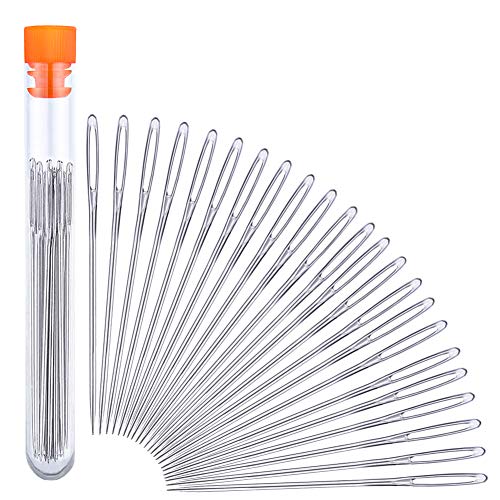
If you invest in high-end needles, you want a gauge that treats them with respect. This tool is a reliable, no-nonsense choice for the discerning knitter.
Clover Knitting Needle Gauge: Simple and Sturdy
Clover tools are famous for their consistency, and their needle gauge is a textbook example of "it just works." It is made from a durable, flexible plastic that stands up well to daily handling.
The layout is intuitive, making it very easy to move through your needles quickly when you are sorting a disorganized stash. It is lightweight, making it an excellent choice for travel knitting kits where every ounce counts.
It lacks the bells and whistles of more expensive models, but it excels at its primary job. For the knitter who wants a reliable tool without overthinking the purchase, Clover is a perfect fit.
Knitter’s Pride Gauge: The Affordable Solution

Knitter’s Pride offers a straightforward gauge that is often bundled with their needle sets, but it is also a fantastic standalone purchase. It is compact and features clearly marked sizes that are easy to identify at a glance.
The plastic is durable enough for regular use, and the holes are accurately sized to industry standards. It is an ideal "backup" gauge to keep in a secondary location, like your office or a travel bag.
You don’t always need a luxury tool to get professional results. This gauge proves that affordability doesn’t have to mean a compromise in accuracy.
Why Worn Needle Markings Are a Common Problem
Needle markings are typically laser-etched or printed onto the surface of the needle shaft. Over time, the natural oils from your hands, combined with the constant friction of yarn sliding back and forth, slowly erase these labels.
This is especially common with wooden or bamboo needles, where the finish can wear down, or with aluminum needles where the ink simply fades. Once the number is gone, you are left to rely on your own eyes, which is rarely a reliable metric for sizing.

Relying on "feel" is a dangerous game for any knitter. Even a small discrepancy in needle diameter can lead to a significant change in your stitch gauge, potentially ruining the fit of a garment.
How to Test Needle Accuracy With a Digital Caliper

If you want to be absolutely certain of a needle’s size, a digital caliper is the ultimate professional tool. By measuring the diameter of the needle shaft directly, you remove any margin for human error or gauge hole variance.
Simply place the needle between the jaws of the caliper and tighten until you feel a light resistance. This is particularly useful for vintage needles or hand-carved wooden needles that may not adhere to modern standardized sizing.
While a caliper is overkill for a beginner, it is an invaluable asset for a seasoned knitter who collects antique tools. It provides the empirical data needed to ensure your project gauge is spot-on.
Material Matters: Plastic vs Metal Gauge Rulers

Choosing between plastic and metal gauges often comes down to personal preference and how you store your tools. Metal gauges are generally more durable and less prone to environmental changes like heat or moisture.
Plastic gauges, however, are often lighter and can be more gentle on delicate needle tips. Some knitters find that the slight "give" in a plastic gauge is more forgiving when inserting needles made of softer materials.
Consider your storage habits: if you toss your tools into a crowded bag, metal is the safer bet. If you have a dedicated notions case, a high-quality plastic gauge will serve you just as well for years.
Best Practices for Maintaining Your Tool Collection
To keep your needles and gauges in top shape, start by storing them in a cool, dry place away from direct sunlight. High temperatures can cause plastic gauges to warp, while humidity can affect natural wood needles.
Periodically clean your needles with a soft, slightly damp cloth to remove skin oils and yarn residue. This prevents the buildup that can make needles feel "sticky" and helps preserve the printed size markings for as long as possible.
Finally, keep your gauge in a dedicated pocket or sleeve within your knitting bag. Treating your tools with care ensures they remain accurate, reliable, and ready for your next project.
Investing in a reliable needle gauge is a small step that yields massive dividends in the quality of your finished work. Whether you choose a sleek metal option or a classic plastic ruler, the goal is to eliminate uncertainty from your process. Take the time to audit your collection today, and you will save yourself countless hours of frustration down the road. Happy knitting!