7 Best Cutting Mats For Workspace Protection To Use
Protect your desk with our top 7 cutting mats. Discover durable, self-healing surfaces that ensure precise cuts while keeping your workspace pristine and safe.
A dedicated cutting mat is the silent partner to every fiber artist who moves beyond simple knitting into the realms of sewing, quilting, and garment construction. Whether you are trimming excess fabric for a lining or squaring up blocks for a custom project bag, your workspace surface determines the longevity of your tools. Protecting your table is not just about aesthetics; it is about ensuring your blades stay sharp and your cuts remain precise. These seven mats represent the gold standard for maintaining a professional-grade studio environment.
Fiskars Self-Healing Rotating Mat: Best Overall
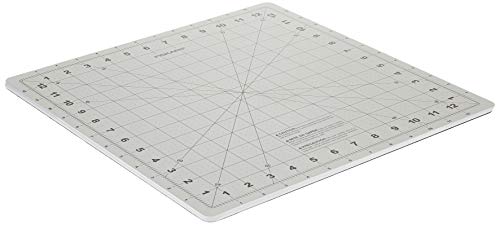

This mat is a game-changer for anyone who frequently pivots between fabric cutting and pattern drafting. The integrated rotating base allows you to turn your material without shifting your body, which is essential when you are working on tight, repetitive cuts for quilt squares.
Because the surface is self-healing, it absorbs the impact of your rotary cutter, preventing deep grooves that could snag delicate fabrics like silk or rayon. It is the perfect middle-ground tool for a knitter who occasionally dabbles in sewing linings for their hand-knit sweaters.
The 360-degree rotation eliminates the need to reach across your workspace, reducing strain on your shoulders during long sessions. Just keep in mind that the rotating mechanism adds a bit of height, so ensure your desk height is comfortable for your posture.
OLFA Double-Sided Rotary Mat: Best for Precision

Precision is everything when you are working with expensive wool blends or delicate lace-weight fabrics that require exact measurements. OLFA mats are renowned for their high-quality grid lines that do not fade, even after years of heavy use.
The double-sided feature is a clever design choice for those who switch between dark and light fabrics. Using the high-contrast grid ensures you aren’t squinting to find your measurements, which saves your eyes for the intricate stitch work waiting for you later in the day.
While these mats are incredibly durable, they are sensitive to extreme heat. Avoid placing your hot steam iron directly on the surface, as it will warp the material and ruin your perfectly flat cutting plane.
Dahle Vantage Self-Healing Mat: Best Durability
If you are the type of maker who keeps a project on the table for months, you need a mat that won’t curl or crack under the weight of heavy yarn stash bins. The Dahle Vantage is built with a multi-layered construction that feels substantial and firm.
The "self-healing" claim here is actually backed by performance; the surface fibers close back up after a cut, leaving no trace behind. This is vital when you are cutting bias tape or fabric strips, as any uneven surface on the mat can cause your cutter to skip and ruin your fabric.
These mats are slightly heavier than the competition, which means they won’t slide around on your table. It is a robust, professional-grade tool that handles the wear and tear of a busy studio better than almost anything else on the market.
Arteza Self-Healing Cutting Mat: Best Value Pick
You don’t need to break the bank to get a reliable surface that protects your furniture. The Arteza mat offers a professional-grade experience at a price point that leaves more room in your budget for high-quality, hand-dyed wool.
The grid markings are clear and accurate, featuring both metric and imperial measurements. It provides a solid, non-slip base that is perfect for those who are just starting to build their sewing and cutting toolkit.
While the surface is excellent, it is slightly thinner than the premium industrial options. If you are a high-volume cutter, you might notice it wearing down a bit faster, but for the occasional project, it provides unbeatable value.
Creative Grids Rotating Mat: Best for Quilting
Quilting and knitting often go hand-in-hand, especially when you are finishing off a heavy winter blanket. This mat is specifically designed for squaring up blocks, and its non-slip backing is arguably the best in the industry.
The rotating feature is exceptionally smooth, allowing for seamless transitions when you are cutting long strips of fabric. It is a favorite among quilters because it feels stable even when you are applying significant pressure with your rotary cutter.
Because it is designed for quilting, the grid is optimized for common block sizes. If your fiber arts projects involve complex patchwork or geometric construction, this mat will shave significant time off your preparation process.
Westcott Self-Healing Mat: Best for Large Spaces
When you are working on a large garment or a full-sized quilt, a tiny mat will only lead to frustration. The Westcott series offers generous dimensions that allow you to lay out entire pattern pieces without having to reposition your work constantly.
The surface is treated to be anti-glare, which is a massive help if you are working under bright studio lights. It prevents that annoying reflection that can make it hard to align your ruler with the grid lines.
The trade-off for a large mat is storage. Since you shouldn’t roll these mats up, you need a dedicated space where they can lay flat. If you have the table space, however, the convenience of a large, uninterrupted cutting surface is unmatched.
Alvin Professional Cutting Mat: Best for Stability
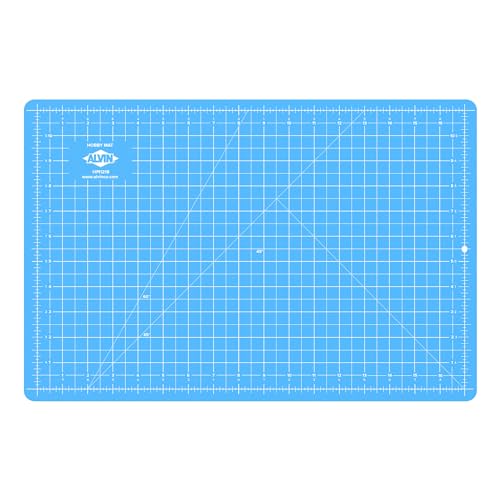
The Alvin Professional mat feels like it belongs in an architect’s office, which is exactly why it’s so good for the fiber arts. It is incredibly dense and heavy, providing a rock-solid foundation for any task.
When you are cutting thick materials like felted wool or heavy canvas, you need a mat that doesn’t "give" under the blade. The Alvin mat stays perfectly flat, ensuring your cuts are clean and your fabric edges remain straight.
It is an investment piece that is built to last for decades. If you are serious about your craft and want a tool that will grow with your skills, this is the one to choose.
How to Choose the Right Size Mat for Your Workspace
- Measure your table: Always leave at least two inches of buffer between the edge of the mat and the edge of your desk to prevent accidental slips.
- Consider your project scale: If you only make socks or hats, a 12×18 inch mat is plenty. If you are sewing full-sized quilts, you need at least a 24×36 inch surface.
- Think about storage: Can you leave the mat out permanently? If not, ensure you have a flat, vertical space to store it, as rolling a mat will permanently damage its flatness.
Essential Tips for Maintaining Your Cutting Surface
- Rotate your cutting areas: Don’t always cut in the center of the mat; move your work around to distribute the wear and tear evenly across the entire surface.
- Avoid heat: Never, ever set a hot iron or a cup of boiling tea on your mat, as the heat will warp the self-healing layers.
- Clean gently: Wipe the surface with a damp cloth and mild soap occasionally to remove fabric lint and thread debris that can dull your blades.
- Check your blades: A dull rotary cutter blade will force you to press harder, which creates deeper, more permanent grooves in your mat. Change your blades regularly.
Why Self-Healing Mats Are Vital for Fiber Crafters
Self-healing mats are essential because they preserve the integrity of your fabric and the sharpness of your tools. In fiber arts, a single snag from a deep groove in a mat can ruin a piece of high-end silk or hand-spun wool, leading to wasted time and money. By providing a consistent, smooth, and resilient surface, these mats allow you to focus on the precision of your pattern rather than the limitations of your workspace. They are the foundation of a professional studio, ensuring that every cut is as clean as the stitches in your finished garment.
Investing in a quality cutting mat is a commitment to the longevity of your craft and the health of your workspace. By choosing a surface that matches your specific project needs, you ensure that your tools remain sharp and your fabric remains pristine. Take the time to maintain your mat, and it will serve as a reliable foundation for your creative work for years to come. Happy making, and may your cuts always be as precise as your gauge.