7 Best Fabric Shavers For Yarn Care That Actually Work
Keep your knits looking new with our top 7 fabric shavers. We tested these effective tools to ensure they safely remove pilling and restore your favorite yarn.
There is nothing quite as heartbreaking as pulling your favorite hand-knit sweater out of storage only to find it covered in unsightly, fuzzy pills. As knitters, we spend dozens of hours crafting our garments, so maintaining that pristine stitch definition is an essential part of the process. While pilling is often a natural byproduct of fiber friction, choosing the right tool can make the difference between a revived heirloom and a ruined project. These seven fabric shavers represent the best options for protecting your hard work and keeping your knits looking fresh for years.
Philips Fabric Shaver: The Gold Standard Choice
The Philips Fabric Shaver is widely regarded as the industry benchmark for a reason. Its large shaving head and high-speed blades make quick work of sweaters that have seen heavy seasonal wear.
When you are dealing with a large-surface project like a worsted-weight cardigan, this tool saves you significant time. It manages to clear away surface fuzz without pulling at the structural integrity of your stitches.
The primary tradeoff is its power consumption, as it eats through batteries quite quickly. However, the consistent, reliable performance on everything from wool blends to acrylic makes it a staple in any serious knitter’s toolkit.
Conair Fabric Shaver: Best Budget-Friendly Pick


If you are a student or a new knitter building your stash on a budget, the Conair model is a reliable workhorse. It is compact, inexpensive, and widely available at most local retailers.
It handles standard pilling on everyday garments with ease, though it lacks the sheer power of more expensive, specialized units. It is perfect for those who want to maintain their store-bought basics alongside their hand-knits.
Keep in mind that the motor can struggle if you press too firmly against the fabric. Always use a light, circular motion to let the blades do the work rather than forcing the tool into the yarn.
Gleener Ultimate Fuzz Remover: Best for Delicate Knits
The Gleener is unique because it is entirely manual, meaning you have total control over the pressure applied to your yarn. It features three interchangeable edges designed for different fabric weights.
For delicate lace shawls or fine-gauge cashmere, this is the safest option available. You can gently remove pills from luxury fibers without the risk of an electric blade catching a loose strand and causing a snag.
It requires more physical effort than an electric shaver, but the peace of mind is worth it. It is the best choice for protecting the long-term health of your most precious, hand-dyed fibers.
Beautural Fabric Shaver: Best High-Capacity Option
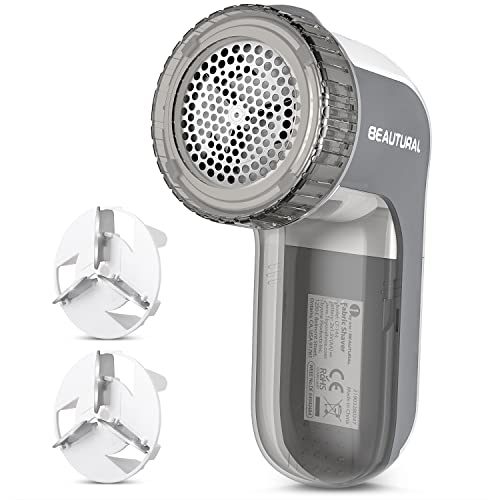
The Beautural shaver stands out for its large, easy-to-clean lint container. If you are de-pilling a large-format project like a heavy wool blanket, you won’t have to stop every thirty seconds to empty the bin.
It features adjustable height settings, which are crucial for preserving the loft of your yarn. By setting the guard higher, you can remove surface fuzz without flattening the beautiful texture of your cables or bobbles.
It is a powerful, mains-powered or rechargeable option that excels at heavy-duty maintenance. Just be mindful of the settings; always start on the highest guard to ensure you aren’t cutting too close to the fiber.
Bymore Rechargeable Shaver: Best for Travel Use
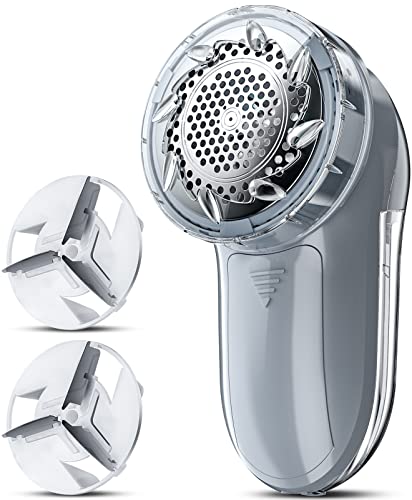
For the knitter who never leaves home without a project in their bag, the Bymore is a fantastic travel companion. Its USB-rechargeable battery eliminates the need to carry spare AA batteries across borders.
The slim, ergonomic design makes it easy to tuck into your knitting notions bag alongside your stitch markers and tapestry needles. It is surprisingly quiet, making it ideal for hotel rooms or long train rides.
While it is compact, it is surprisingly robust for its size. It provides enough power to touch up a sweater before a special event, ensuring you always look as polished as your knitting.
Rowenta Lint Shaver: Best Ergonomic Design Tool

The Rowenta shaver is built with an ergonomic grip that feels comfortable in the hand for extended periods. If you suffer from hand fatigue after long sessions of knitting, this tool is designed with your comfort in mind.
The shaving head is angled specifically to reach those tricky areas, like under the arms or along the side seams of a garment. It glides over the fabric smoothly, minimizing the risk of accidental pulls.
It is a slightly more premium tool, but the build quality reflects the price. If you maintain a large wardrobe of hand-knits, the comfort factor alone makes this a worthwhile investment.
House of Wonderful Sweater Stone: Best Manual Tool
The Sweater Stone is a completely non-electric, natural option that functions like a pumice stone for your clothes. It is surprisingly effective at grooming natural fibers like wool and mohair.
Because it works by gently grabbing the fibers, it is incredibly safe for your hand-knits. It doesn’t cut the yarn; instead, it lifts the pills away, which helps maintain the natural "bloom" of high-quality wool.
It does create a bit of dust as it works, so use it over a flat surface. It is the most "organic" way to care for your garments, aligning perfectly with the ethos of slow, handmade fashion.
How to Safely De-pill Your Hand-Knitted Garments
When de-pilling any hand-knit, always lay the garment perfectly flat on a hard surface. Stretching the fabric over your knee or a rounded surface can cause the needles to catch and potentially slice a stitch.
Start by testing the tool on an inconspicuous area, such as the inside of a hem or the underside of a sleeve. This allows you to check how the blades interact with your specific yarn tension and fiber type.
Never press the shaver into the fabric; let the tool hover or glide lightly across the surface. If you feel resistance, stop immediately, as you may be catching a stray loop or a decorative element like a cable twist.
Understanding Fiber Types and Pilling Tendencies
Not all yarns pill at the same rate, and understanding your fiber is key to long-term care. Generally, softer, shorter-staple fibers like cashmere or loosely spun wool are more prone to pilling than tightly plied, long-staple wools.
- Superwash Wool: Often smoother, but can still pill if the yarn is loosely twisted.
- Alpaca and Mohair: These fibers have a natural halo that can easily tangle and create pills.
- Synthetic Blends: Often pill more aggressively due to the high-friction nature of the plastic fibers.
Always consider the "twist" of your yarn when choosing a shaver. A high-twist, tightly plied yarn is much more resistant to damage than a soft, single-ply roving-style yarn, which requires a very gentle touch.
Essential Maintenance Tips for Fabric Shavers
The most common cause of a shaver "snagging" a garment is a buildup of lint inside the blade housing. Always clear the collection bin after every use to ensure the blades can spin at full speed.
If your electric shaver starts to sound sluggish, check for fibers wrapped around the blade spindle. Use a small pair of tweezers to carefully remove any trapped yarn, as these fibers can eventually stall the motor.
Finally, keep your blades sharp by avoiding heavy-duty use on abrasive surfaces. If you notice the shaver is pulling rather than cutting, it is time to replace the blade head, as dull blades are more likely to damage your precious hand-knits.
Caring for your hand-knits is a labor of love that extends the life of your creative efforts. By choosing the right tool and using a gentle, informed technique, you can keep your sweaters looking as beautiful as the day you bound off. Remember that a little maintenance goes a long way in ensuring your projects remain staples in your wardrobe for years to come. Happy knitting, and may your stitches always remain smooth and pill-free.