6 Best Blocking Frames For Circular Doilies
Achieve perfectly shaped lace with our top 6 blocking frames for circular doilies. Discover durable, adjustable tools to ensure professional, flat finishes.
Blocking is the final, transformative act that turns a crumpled piece of lace into a professional-grade heirloom. For circular doilies, the challenge lies in maintaining perfect radial symmetry while tensioning delicate yarn across every point. Without the right frame, your hard work can easily become lopsided or unevenly stretched. This guide explores the best tools to ensure your circular projects achieve their intended, breathtaking geometry.
Knitter’s Pride Lace Blocking Mats and Pins Set


These mats are the industry standard for a reason, offering a modular approach to blocking that adapts to any doily size. The grid lines printed directly onto the foam surface act as a built-in ruler, which is vital when you are trying to ensure your doily is truly circular rather than oval.
The included T-pins are sturdy, but they can be a bit thick for very fine lace threads. If you are working with a gossamer-weight silk or thin linen, you might find yourself needing to supplement these with thinner, stainless steel lace pins to avoid distorting your stitches.
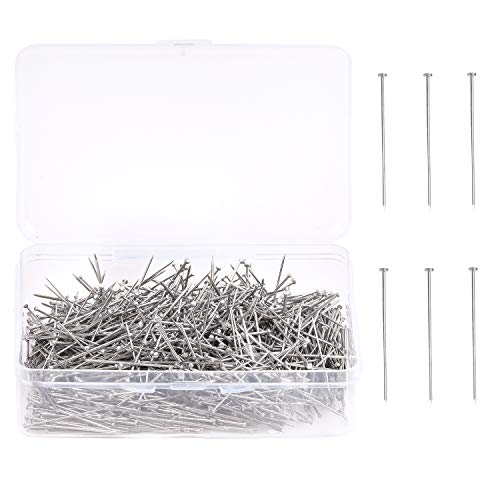
Ultimately, these mats are excellent for the knitter who values versatility over a fixed shape. Because they interlock, you can build a workspace as large or as small as your current project requires.
Clover Blocking Board for Circular Projects

If you struggle with maintaining an even radius on large doilies, this board is a game-changer. It features a series of pre-drilled holes arranged in concentric circles, which takes the guesswork out of measuring.
The primary advantage here is consistency; you simply place your pins into the corresponding holes to create a perfectly balanced tension. It eliminates the "eyeballing" method that often leads to distorted lace motifs.
However, the fixed hole spacing can be a limitation if your doily doesn’t fit the exact dimensions of the board. It is best suited for standard sizes, so consider your typical project diameter before investing in this specific tool.
Boye Adjustable Wooden Blocking Board System

Wooden boards provide a level of structural rigidity that foam mats simply cannot match. This system is particularly useful for heavy cotton threads that require significant tension to open up the lace pattern.
The adjustable pegs allow you to move your anchor points as the fiber relaxes during the blocking process. This is a massive benefit when working with natural fibers like wool or linen, which may "spring back" slightly as they dry.
Just be aware that wood can be sensitive to moisture over time. Always ensure your doily is damp, not dripping, and consider using a protective barrier if you are using a heavy starch or stiffening agent.
Lacis Circular Blocking Frame for Fine Lace
This frame is designed specifically for the serious lace knitter who works with ultra-fine threads. Its minimalist design keeps the focus entirely on the delicate fiber, allowing for maximum airflow which speeds up the drying time.
The frame is lightweight, making it easy to rotate as you pin your work. This is a major ergonomic win if you have a large doily that requires careful, tedious pinning around the entire circumference.
It is a more specialized tool, so it may feel like overkill for a casual knitter. But if you are working on intricate, heirloom-quality lace, the precision it offers is well worth the steeper learning curve.
KnitIQ Extra Thick Blocking Mats for Doilies

Thickness matters when you are pinning a doily, as it prevents your pins from poking through to the table or floor underneath. These mats are exceptionally dense, providing a secure grip for even the most stubborn pins.
The extra thickness also helps with heat retention if you choose to steam block your project. By creating a stable, elevated surface, you allow air to circulate underneath the doily, which prevents the center from staying damp longer than the edges.
These are an ideal choice for the knitter who wants a "set it and forget it" solution. They are durable, easy to clean, and provide a professional-grade foundation for any circular project.
Beadsmith Professional Circular Blocking Jig
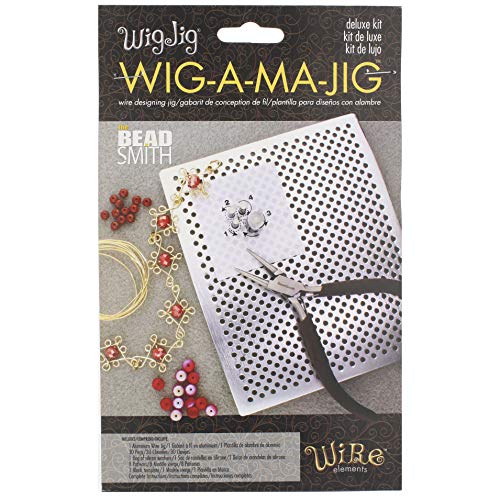
While often marketed for jewelry, this jig is a secret weapon for small-to-medium circular doilies. The precision of the metal pegs allows for an incredibly tight, uniform stretch that is perfect for stiffened lace.
The jig is compact, making it ideal for those with limited workspace. If you are working on delicate motifs or small centerpieces, the control you get here is far superior to standard foam mats.
The trade-off is the size limit; you won’t be blocking a tablecloth on this. It is a precision tool for the knitter who focuses on high-detail, smaller-scale circular lace.
How to Choose the Best Frame for Circular Lace
Choosing the right frame comes down to the scale of your project and the nature of your fiber. A large, thick wool doily needs the stability of a heavy mat, while a fine silk lace piece benefits from the precision of a jig.
- Size: Measure the diameter of your largest potential project.
- Fiber: Natural fibers (wool, cotton, linen) need high-tension frames, while synthetic blends can be more forgiving.
- Space: Consider where you will leave your project to dry for 24-48 hours.
Don’t be swayed by the most expensive option. Often, a simple set of grid mats is more useful for a beginner than a complex, specialized jig that only fits one size.
Essential Tools for Precision Doily Blocking
Beyond the frame, your toolkit should include a few non-negotiable items for circular work. A high-quality measuring tape is essential, as is a set of rust-proof T-pins or lace pins.
- Rust-proof pins: Never risk staining your hard work with cheap, non-coated metal pins.
- Measuring tape: Use a soft, flexible tape to check the distance from the center to the edge at multiple points.
- Blocking wires: These are thin, flexible wires you thread through the edges of the doily to create smooth, even curves between pins.
Using blocking wires in conjunction with a mat is the single best way to avoid the "scalloped" look that occurs when you pin only at individual points. It creates a professional, continuous edge.
Techniques for Perfect Circular Tensioning
The secret to a perfect circle is starting from the center and working outward. Pin the center point first, then work in quarters, then eighths, to ensure the tension is distributed evenly around the entire circumference.
If you find the doily is pulling too hard in one direction, stop and reset. Forcing the lace into shape will only result in distorted motifs and uneven stitch density once the pins are removed.
Remember that blocking is not just about stretching; it is about relaxing the fibers. Use a gentle misting bottle rather than soaking the piece, and let the yarn "breathe" into its new shape slowly.
Expert Tips for Setting Delicate Fiber Blends
When working with delicate blends, such as silk-wool or alpaca-nylon, be mindful of how much heat and tension you apply. These fibers have a "memory" and can be permanently stretched if you pull them too aggressively while wet.
If you are using a stiffening agent, apply it lightly and evenly. Too much starch can make the lace brittle, while too little will leave it limp and prone to losing its shape after the first wash.
Finally, always let your project dry completely before unpinning. If you remove the pins even an hour too early, the residual moisture will cause the lace to shrink back, undoing all your careful alignment.
Blocking is the bridge between a handmade craft and a finished piece of art. By selecting the right frame and mastering the tensioning techniques outlined here, you ensure your circular doilies remain perfectly symmetrical and crisp. Take your time with the pinning process, respect the properties of your chosen fiber, and enjoy the satisfaction of seeing your design truly come to life. Your patience at this final stage is what defines the longevity and beauty of your lace.