7 Best Needle Threaders For Arthritic Hands To Use
Struggling with sewing? Discover the 7 best needle threaders designed for arthritic hands. Improve your comfort and precision with these ergonomic tools today.
Threading a needle is often the most frustrating hurdle for makers dealing with the stiffness and pain of arthritis. When your joints struggle with the fine motor control required for tiny needle eyes, your creative flow comes to a grinding halt. Finding the right mechanical aid can transform your experience from a painful chore into a seamless part of your craft. These seven tools are designed to bridge the gap between your vision and the fine details of your work.
Clover Desk Needle Threader: The Best Overall Pick


This device sits sturdily on your table, removing the need to hold a tiny tool while simultaneously trying to aim your thread. It is a game-changer for those who find that holding small objects causes cramping or tremors during long sessions.
The mechanism is simple: you place your needle in the slot, lay the thread across the guide, and press a large button. Because the machine does the heavy lifting, you don’t need the steady hands of a surgeon to get the job done.
While it is bulkier than a handheld tool, its stability is its greatest asset. If you are working on a complex embroidery project or finishing a sweater, having this reliable station on your desk ensures you aren’t fighting your own hands just to re-thread.
Dritz Deluxe Needle Threader: Best for Ergonomics

The Dritz Deluxe features a wider, contoured grip that fits naturally into the palm rather than requiring a pinch-grip. For anyone with osteoarthritis in the thumb, this shift in how you hold the tool is significant.
It uses a reliable wire-loop system that is easy to see, even on days when your eyes feel a bit tired. The ergonomic handle provides enough leverage that you won’t need to apply excessive pressure to push the thread through the eye.
Keep in mind that the wire loop can be delicate; it’s meant for standard sewing needles rather than heavy-duty upholstery needles. It is a fantastic bridge tool for those who want portability without sacrificing comfort.
Bohin Extra Large Needle Threader: Best for Ease

Bohin’s extra-large design is essentially a scaled-up version of the classic wire threader, making it much easier to manipulate. The larger handle offers a generous surface area for your fingers to grasp, which is vital when dexterity is low.
This is an excellent option for beginners or those who prefer a low-tech solution that doesn’t require batteries or complex alignment. It’s simple, effective, and fits easily into any notions pouch.
Because it is larger, it is much harder to lose in the depths of your project bag. It’s a straightforward, no-nonsense tool that respects the limitations of arthritic fingers by simply being easier to hold.
Singer Automatic Needle Threader: Best for Speed
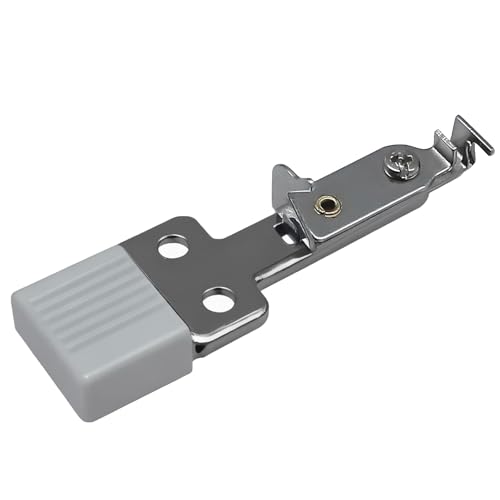
If you find that your hands fatigue quickly, the speed of this automatic threader is a major advantage. It is designed to handle the threading process in a single motion, minimizing the time your hands spend in a strained position.
It works exceptionally well for those who switch colors frequently, such as when you are working on stranded colorwork and need to weave in ends constantly. The efficiency here means you spend less time struggling and more time actually stitching.
Be aware that it works best with standard-sized needles. If you are using very fine lace-weight needles or specialized quilting needles, you may find the alignment process requires a bit more patience.
Colonial Needle Threader: Best for Fine Needles
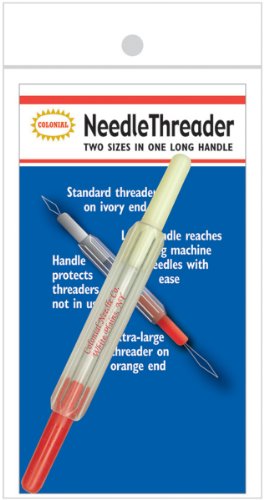
Threading fine needles for delicate lace work can be a nightmare when your fingers lack precision. The Colonial threader is engineered to handle these tiny eyes with surprising grace, providing a stable guide for the thread.
It is particularly useful when working with slippery silk or fine cotton threads that tend to fray. By providing a clear path, it prevents the thread from snagging or splitting before it even enters the needle eye.
It is a more specialized tool, but for the knitter or embroiderer who loves fine detail, it is indispensable. It turns a high-stress task into a quiet, manageable one.
Hemline Easy Threader: Best for Low Visibility

The Hemline Easy Threader is designed with high-contrast elements, making it perfect if you are struggling with both dexterity and vision. It’s easier to see exactly where the thread needs to go, which saves you from squinting and leaning over your work.
The handle is shaped to be held with a full hand grip rather than a pinch, which is much kinder to your knuckles. It’s a very practical choice for those who do most of their work in the evening under lamp light.
While it isn’t as "automatic" as some, the tactile feedback it provides is excellent. You can feel when the needle is properly seated, which is a huge help when your hands aren’t giving you the sensory feedback they used to.
Tulip Needle Threader: Best for Delicate Hands
Tulip is known for high-quality craftsmanship, and their threader is no exception. It is lightweight and smooth, designed to avoid any sharp edges that might irritate sensitive skin or painful joints.
This tool is ideal for those who have very sensitive hands and need a tool that feels "soft" to hold. It is beautifully balanced, ensuring that it doesn’t feel like an extra burden on your grip.
It is a premium choice, but the comfort it provides is worth the investment. It’s a tool that feels like it was designed with the maker’s physical well-being as the top priority.
Key Features to Prioritize for Arthritic Hands
When shopping for tools, look for ergonomic handles that allow for a full-hand grip. Pinching is the enemy of arthritic joints, so any tool that forces a "pincer grasp" should be avoided.
Weight and balance are also critical. A tool that is too heavy will tire your wrist, while one that is too light might feel unstable; aim for something that feels substantial without being cumbersome.
- High-contrast colors: Easier to see against your yarn or fabric.
- Non-slip textures: Rubberized grips prevent the tool from sliding out of your hand.
- Stationary options: Tools that sit on a table are always superior to handheld ones for those with severe stiffness.
How to Maintain Your Threader for Longevity
Most mechanical threaders rely on thin wires or small metal plates that can bend or break over time. Always store your threader in a dedicated case or a hard-sided notions box to prevent it from being crushed in your bag.
If the wire loop becomes slightly bent, try to gently realign it with tweezers rather than forcing it into the needle eye. If you are using a desk model, keep the internal gears free of lint, as fibers from your yarn can easily clog the mechanism.
Treat your threader like a precision instrument rather than a disposable item. A little bit of care will keep your threader working smoothly for years, preventing the frustration of a mid-project breakdown.
Common Threading Mistakes and How to Avoid Them
The most common mistake is trying to force the thread when it doesn’t slide through easily. If you encounter resistance, stop immediately; forcing it will only bend the wire or damage the needle eye.
Another error is using the wrong size thread for the needle eye, which causes fraying and frustration. Always ensure your thread weight matches your needle size, especially when working with natural fibers like wool or linen that can be more prone to splitting.
- Check for burrs: If a needle is old, it may have a rough eye that shreds thread; discard it.
- Don’t over-thread: Use a shorter length of thread to reduce the chance of tangles.
- Patience is a tool: If your hands are having a particularly bad day, step away for ten minutes before trying again.
Managing arthritis shouldn’t mean giving up the fiber arts you love. By selecting the right tools, you can minimize physical strain and keep your focus on the joy of creating. Remember that your comfort is the most important factor in your workspace, so don’t hesitate to experiment with these aids. With the right support, you can keep stitching comfortably for years to come.