7 Best Steaming Irons For Finished Garments Reviewed
Find your perfect match with our review of the 7 best steaming irons. We compare performance, steam output, and durability to ensure your clothes look crisp.
Achieving a professional finish on your hand-knitted garments is the final, crucial step that transforms a "homemade" item into a stunning piece of wearable art. While many knitters focus exclusively on yarn choice and stitch tension, the right steam iron acts as the ultimate equalizer for uneven stitches and curling edges. Selecting the correct tool depends on whether you are blocking delicate lace shawls or pressing heavy wool sweaters. This guide explores the best irons on the market to ensure your finished projects look exactly as you envisioned.
Rowenta Focus Excel: Best Overall Steam Iron


The Rowenta Focus Excel is a workhorse that consistently delivers the high-volume steam required for dense, heavy-weight wools. When you’ve spent forty hours on a cabled sweater, you need an iron that provides consistent moisture to relax the fibers without requiring constant refilling.
Its precision tip is particularly useful for maneuvering around complex necklines or button bands. Because it features a high-quality stainless steel soleplate, it glides over finished fabric without snagging on delicate stitches or loose ends.
However, keep in mind that this iron is relatively heavy. If you have wrist fatigue from long hours of knitting, the weight might be a drawback during marathon blocking sessions.
Oliso M3Pro Project Iron: Best for Quilters

The Oliso M3Pro is a game-changer for knitters who need a compact tool that doesn’t sacrifice steam power. Its standout feature is the "iTouch" technology, which lifts the iron off the board automatically when you let go of the handle.
This is a brilliant safety feature for the craft room, as it prevents accidental scorching if you get distracted by a pattern chart. It’s small enough to store easily, yet it packs enough punch to handle the vertical steaming of a sweater hung on a dress form.
The main trade-off is the smaller water reservoir, which will require more frequent refills during large-scale blocking. It is the perfect choice for the knitter who values convenience and safety over raw, industrial-strength steam output.
CHI Steam Titanium Iron: Best for Durability
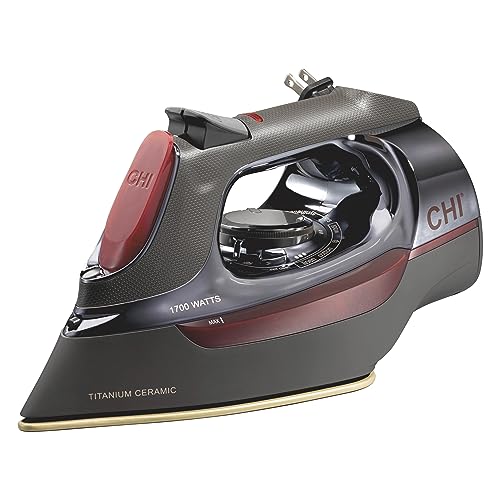
If you are tired of irons that leak or lose their steam pressure after a year, the CHI Steam Titanium Iron is designed for the long haul. The titanium-infused soleplate is incredibly scratch-resistant, which is vital when you are pressing around metal zippers or heavy buttons on cardigans.
The iron heats up rapidly, allowing you to start your blocking process almost immediately. Its steam distribution is exceptionally even, which is essential for ensuring that a gauge swatch or a finished garment blocks uniformly.
While it is robust, it lacks some of the finer precision controls found in more expensive models. If you prioritize a tool that will last through dozens of sweaters, this is your best investment.
Sunbeam Steammaster: Best Budget-Friendly Pick
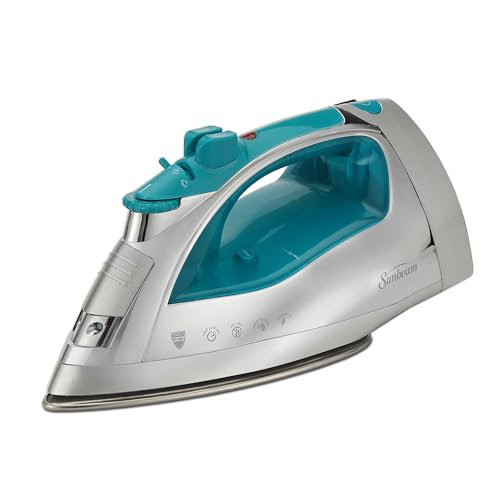
The Sunbeam Steammaster proves that you don’t need a professional-grade price tag to achieve a beautiful finish on your knits. It provides a generous amount of steam and includes a retractable cord, which is a massive plus for keeping a clutter-free workspace.
It is lightweight and easy to handle, making it a great choice for beginners who are still learning the art of steam blocking. It handles basic blocking tasks—like opening up the stitch definition on a simple stockinette scarf—with ease.
Don’t expect the longevity of a high-end iron, though. It is a functional, no-frills tool that gets the job done without breaking the bank.
Black+Decker Digital Iron: Best Precision Steam

The Black+Decker Digital Iron offers precise temperature control, which is critical when working with diverse fiber contents. If you are blocking a blend of alpaca and silk, you need to be certain your temperature settings won’t melt or damage the delicate fibers.
The digital display removes the guesswork, allowing you to select the exact heat level for your specific yarn. This level of control is invaluable when you are working with luxury hand-dyes that might be sensitive to high heat.
It is a fantastic middle-ground option for the intermediate knitter. It bridges the gap between basic irons and professional equipment by offering reliable, repeatable results.
Reliable Velocity 230IR: Best Professional Tool

For the serious knitter who views blocking as a core part of the design process, the Reliable Velocity 230IR is the gold standard. It uses a patented steam generator technology that creates pressurized steam, which is far more effective at penetrating thick, multi-ply wool than a standard iron.
This iron is designed to stay hot and steam-ready, meaning you won’t experience that annoying spitting of water that can ruin a finished garment. It is an investment, but for those who produce garments for sale or high-end gifts, the time saved is worth every penny.
The trade-off is the size and the learning curve associated with its powerful steam output. You must be careful to use a proper pressing cloth to avoid over-steaming your work.
Hamilton Beach 14101: Best Compact Travel Iron
The Hamilton Beach 14101 is the companion every knitter needs for retreats, workshops, or knitting cruises. It is small, portable, and surprisingly capable of handling small blocking tasks like refreshing a cowl or a pair of socks.
While it lacks the massive steam output of a full-sized iron, it is perfectly adequate for touch-ups. It fits easily into a project bag, ensuring you can keep your knits looking crisp even when you are away from home.
Never expect this to replace your primary blocking tool for large garments. Treat it as a specialized travel companion for finishing smaller accessories on the go.
How to Steam Block Your Finished Hand Knits
Steam blocking is all about relaxing the fibers, not "ironing" the fabric. Always use a pressing cloth—a simple piece of white cotton or linen—between the iron and your garment to protect the yarn from direct contact with the soleplate.
- Pinning: Secure your garment to blocking mats using rust-proof T-pins to achieve your desired measurements.
- Hovering: Hold the iron about an inch above the garment, allowing the steam to penetrate the fibers without touching the iron to the knitting.
- Cooling: Never move the garment while it is still damp and warm from the steam; let it sit until completely cool to lock in the shape.
Remember that steam blocking is permanent for animal fibers like wool and alpaca, but it can be less effective on plant fibers like cotton or linen. Always perform a test on a swatch first to see how your specific yarn reacts to the heat.
Essential Safety Tips for Steaming Delicate Fibers
Steam can be dangerous, not just to your hands, but to the integrity of your knitting. Synthetic fibers, such as acrylic or nylon, are prone to "killing"—a process where the heat causes the fibers to permanently lose their elasticity and drape.
- Test First: Always steam a swatch to see if the fiber melts or flattens undesirably.
- Ventilation: Ensure your workspace is well-ventilated to avoid inhaling steam or potential chemical finishes from the yarn.
- Direction: Always steam away from your body to prevent steam burns.
If you are working with superwash wool, be aware that it can stretch significantly when steamed. Use gentle pressure and avoid pulling the fabric while it is damp.
Maintaining Your Iron for Long-Term Garment Care
A well-maintained iron is essential for preventing water spots and mineral buildup on your finished knits. Always empty the water reservoir after every session to prevent stagnant water from clogging the internal steam vents.
If you live in an area with hard water, use distilled water to prevent scale buildup. Periodically use the iron’s self-clean function as recommended by the manufacturer to keep the steam passages clear.
Finally, keep the soleplate clean by wiping it down with a damp cloth after it has cooled. A clean soleplate ensures that your iron glides smoothly and keeps your beautiful hand-knits free from accidental snags or stains.
Investing in a quality steam iron is an essential step toward elevating your knitting from a hobby to a refined craft. By choosing a tool that matches your project needs and practicing proper blocking techniques, you ensure your hard work is presented in its best possible light. Take your time, test your fibers, and enjoy the satisfaction of seeing your stitches bloom into a professional-grade garment. Happy knitting, and may your blocking sessions be as rewarding as the time spent at the needles.