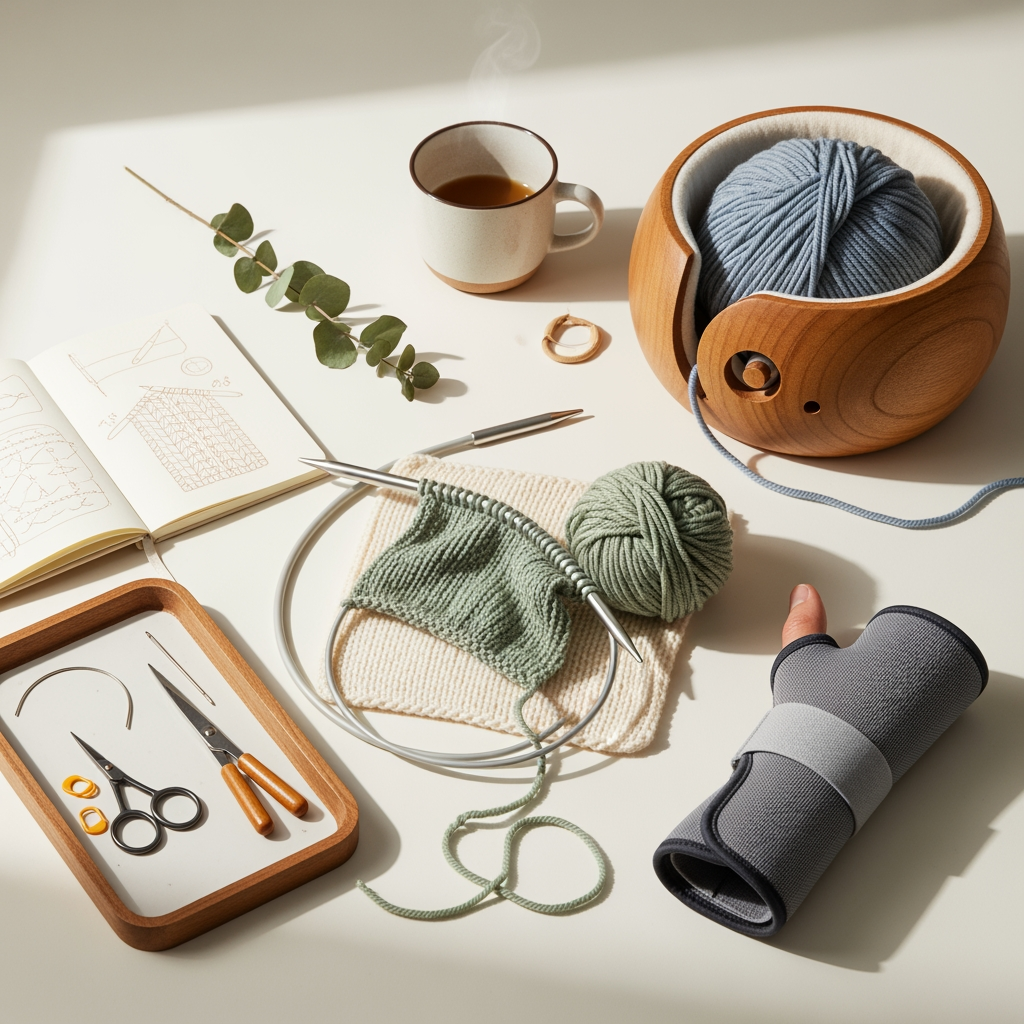
6 Best Crochet Gloves For Grip Enhancement To Try
Boost your craft with these top 6 crochet gloves. Discover ergonomic designs that enhance grip, reduce hand strain, and improve tension for better projects.
If you’ve ever found yourself mid-row on a complex lace pattern, only to realize your hands are stiffening and your grip on those tiny steel hooks is slipping, you aren’t alone. Even the most seasoned makers deal with the physical toll of repetitive motion, which is why choosing the right support gear is as vital as picking the perfect yarn. These six glove options are designed to keep your hands nimble and your tension consistent throughout your longest sessions. Let’s look at how the right pair can transform your crochet experience from painful to productive.
Clover Amour Crochet Gloves: Best for Comfort


Clover is a household name for a reason, and their gloves reflect the same attention to ergonomic detail found in their famous hook line. These gloves are designed specifically for the fiber artist who values a soft, lightweight feel that doesn’t feel like a medical brace.
The fabric is breathable, which is a massive plus when you’re working with wool or acrylics that tend to hold heat against your palms. If you are prone to sweaty hands while working with slippery bamboo hooks, these provide just enough friction to keep your tools from sliding out of place.
The downside is that they offer minimal compression compared to medical-grade options. However, for a long afternoon of granny square assembly, they are the gold standard for pure, unadulterated comfort.
KnitPal Compression Gloves: Best for Support

KnitPal understands the specific mechanics of hand fatigue because they live in the world of yarn. These gloves provide a gentle, consistent squeeze that helps stabilize the base of your thumb and wrist, which are the first areas to ache during long sessions of tight tensioning.
When you are working with non-elastic fibers like linen or cotton, your hands often have to do more "heavy lifting" to maintain even gauge. The structure of these gloves helps alleviate that strain, allowing you to maintain your rhythm without needing to shake out your hands every ten minutes.
While they are excellent for support, the fabric can be slightly thicker than others on this list. If you are doing highly intricate work with fine-gauge thread, you might find them a bit bulky, but for standard worsted or bulky weight projects, they are a fantastic structural aid.
Vive Arthritis Gloves: Best for Joint Relief

These gloves are a staple for those who find that the repetitive "hook-and-pull" motion of crochet triggers joint inflammation. They feature an open-finger design that allows you to maintain full tactile sensitivity, which is essential when you need to feel the "yarn over" or navigate a tricky stitch pattern.
The compression is targeted, focusing on the knuckles and the carpometacarpal joint. This is exactly where most crocheters feel the "burn" after a few hours of working on a complex project like a temperature blanket or a dense tapestry piece.
One thing to keep in mind is the seam placement. Because they are designed for therapeutic relief, the seams can sometimes feel prominent; if you have sensitive skin, you may want to wear them inside out to avoid any irritation against your skin while you work.
Dr. Arthritis Copper Gloves: Best for Grip

If your primary struggle is the hook sliding out of your hand—or the yarn slipping through your fingers too quickly—these copper-infused gloves are a game changer. The material often includes a subtle, textured grip pattern that adds a layer of "tack" to your hold.
Copper-infused fabric is often marketed for its anti-inflammatory properties, but for the crocheter, the real benefit is the increased friction. When you are working with slippery materials like silk or superwash merino, having that extra bit of grip can save you from having to "death-grip" your hook, which is the fastest way to cause hand cramping.
Be aware that these are typically more snug than standard compression gloves. You’ll want to measure your hand carefully, as a fit that is too tight will actually increase fatigue rather than reduce it.
CompressionZ Therapeutic Gloves: Best Fit

CompressionZ offers a range of sizes that actually cater to the anatomical variations in hand shape, which is rare in the world of "one-size-fits-all" craft accessories. If you have long, slender fingers or wider palms, you won’t feel like you’re fighting the fabric to get a good fit.
The material is high-quality, moisture-wicking spandex-nylon blend that mimics a second skin. This is ideal for those who don’t want to feel like they are wearing "gloves" at all, but rather just a light layer of support that keeps the blood flowing.
The main tradeoff is that because they are so thin, they provide less "cushion" than the thicker, more padded varieties. They are best suited for the crocheter who needs a bit of extra blood flow and structural alignment rather than heavy padding for joint pain.
IMAK Compression Gloves: Best for Stamina

IMAK gloves are widely considered the gold standard for those who crochet for a living or are working on massive, long-term projects like king-sized afghans. They are designed to be worn for extended periods without cutting off circulation or leaving deep indentations on your skin.
The design is remarkably simple, focusing on mild compression that helps reduce swelling after hours of repetitive motion. By keeping the hands warm and slightly compressed, they help you maintain your stamina, allowing you to reach the end of a row without that dreaded "claw" feeling in your hand.
Because they are so effective at maintaining warmth, they can get a bit hot during the summer months. If you are working in a non-air-conditioned space, you might find yourself needing to take them off after an hour or two, but the relief they provide during that time is well worth it.
How to Select the Right Glove Size for Crochet
Choosing the right size is the most critical step, as a glove that is too loose provides zero support, and one that is too tight will restrict your movement. You should measure the circumference of your hand just below the knuckles, excluding your thumb.
- Consult the manufacturer’s chart: Never assume your size based on standard glove sizing.
- Check for "stretch": If you are between sizes, opt for the smaller size only if the fabric is highly elastic; otherwise, go up.
- Test your range of motion: Once on, you should be able to fully extend your fingers and make a tight fist without the fabric pulling or bunching.
If you find that your hands swell significantly after a long session, try measuring your hand in the evening after a project to ensure the fit remains comfortable even when you are at your most tired.
Managing Hand Fatigue During Long Projects
Even with the best gloves, your hands need a break. The "20-20-20" rule—every 20 minutes, look 20 feet away for 20 seconds—is helpful, but you should also incorporate hand stretches.
Try gentle wrist circles and finger extensions between every row or round. If you are working on a heavy project, like a wool-blend blanket, place the weight of the project on your lap or a side table rather than letting it hang from your hands.
Remember that your hook choice matters, too. If you are using a thin, metal hook, switching to an ergonomic handle with a soft grip can work in tandem with your gloves to significantly reduce the pressure on your joints.
Why Compression Enhances Your Crochet Grip
Compression works by applying gentle, even pressure to the soft tissues of the hand, which helps reduce minor swelling and improves circulation. When your hands are less swollen, the tendons have more room to glide, which directly translates to smoother, more consistent tension.
Improved circulation also means your muscles stay warmer and more pliable. When muscles are cold, they are more prone to micro-tearing and fatigue; by keeping them warm, you are effectively keeping your hands in a "ready state" for longer periods.
Finally, the added texture of the glove material provides a tactile advantage. It creates a slight barrier between your skin and the smooth surface of the hook, which prevents the hook from slipping out of your grip when your hands are slightly damp.
Essential Tips for Maintaining Glove Hygiene
Since you are wearing these gloves while handling yarn, they will inevitably pick up lint, skin oils, and dust. Most compression gloves are machine washable, but you should always place them in a mesh laundry bag to prevent the fabric from snagging on other items.
- Avoid fabric softeners: These can leave a residue that makes the gloves feel tacky or "gummy" when you handle your yarn.
- Air dry only: The heat from a dryer can break down the elastic fibers, causing the gloves to lose their compression over time.
- Rotate your pairs: If you crochet daily, having two pairs to rotate allows one to air out while you use the other, extending the life of both.
If you notice the gloves starting to lose their "snap" or if they feel loose around the wrist, it’s time to replace them. A worn-out compression glove offers no more support than a regular pair of cotton gloves.
Finding the right support gear is a personal journey that depends as much on your unique anatomy as it does on your favorite yarn weights and hook styles. By focusing on compression, grip, and comfort, you can extend your crafting longevity and keep the joy in your stitches for years to come. Don’t be afraid to experiment with different brands until you find the pair that makes your hands feel as energized as your creative spirit. Happy hooking, and may your tension always be perfectly even.