7 Best Ball Winders For Stash Organization To Try
Organize your yarn stash efficiently with these 7 top-rated ball winders. Discover durable, easy-to-use options that keep your fiber collection tangle-free.
Transforming a tangled, unruly hank of yarn into a neat, center-pull cake is one of the most satisfying rituals in a knitter’s life. A quality ball winder saves you from the frustration of mid-project knots and helps you see the true color and texture of your stash. Choosing the right tool depends on your yarn volume, budget, and how much time you want to spend at your workstation. Whether you are a casual hobbyist or a dedicated stash-builder, the right winder makes every project start off on the right foot.
Stanwood Needlecraft Large Metal: Best Overall Pick
When you are ready to graduate from entry-level gear, the Stanwood Needlecraft Large Metal winder is the gold standard. It features a heavy-duty cast iron base and metal gears that provide a smooth, consistent winding experience that plastic models simply cannot replicate.


This winder is built to handle heavy, bulky-weight yarns that would cause smaller models to seize up or skip gears. Because it is so stable, you won’t find yourself chasing the unit across the table while winding a large 400-yard skein of worsted wool.
The trade-off here is the initial investment and the weight of the unit itself. It is not a tool you will want to haul to your weekly knitting group, but for your home studio, it is an investment that will last for decades.
KnitPicks Ball Winder: Best Value for Beginners
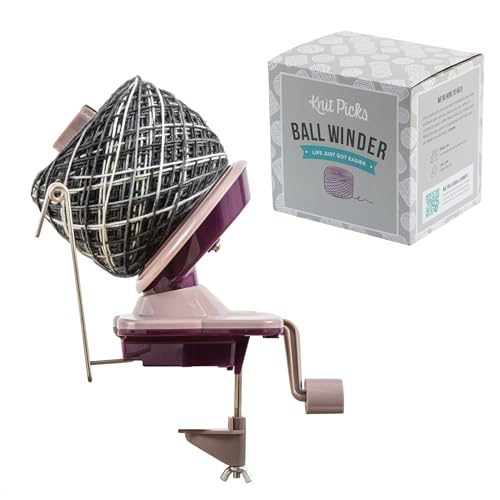
If you are just starting your journey and aren’t ready to drop a large sum on equipment, the KnitPicks winder is a reliable workhorse. It is lightweight, intuitive, and gets the job done for standard fingering or DK weight yarns.
This winder is perfect for the knitter who mostly buys commercial hanks and needs to turn them into cakes for immediate use. It is small enough to tuck into a project bag or a drawer when you aren’t using it, which is ideal if your crafting space doubles as your dining table.
The main limitation is the plastic gear mechanism, which can wear down over time if you try to force it through thick, chunky yarn. Treat it gently, keep the yarn tension light, and it will serve you well for many years of sock knitting.
Lacis Jumbo Yarn Winder: Best for Large Skeins

Every knitter eventually encounters those massive 200-gram "jumbo" skeins that are too large for standard winders. The Lacis Jumbo Winder features an extra-wide bobbin designed specifically to accommodate these large volumes without creating a precarious, top-heavy cake.
Using a smaller winder for a large skein often results in a cake that collapses halfway through, leading to a tangled mess. The Lacis provides the structural capacity to keep your yarn secure from the first wrap to the last.
Be aware that this winder requires a sturdy table edge for clamping, as its size creates more torque during operation. It is a specialized tool, but for those who love working with large quantities of lace or fingering weight yarn, it is an absolute lifesaver.
Nancy’s Knit Knacks Heavy Duty: Best Professional
For the serious fiber enthusiast or the small-scale indie dyer, Nancy’s Knit Knacks offers a level of precision that is unmatched. This winder is built for heavy, repetitive use and features high-quality components that prioritize longevity and smooth operation.
The standout feature is the precision engineering, which ensures that your yarn cakes are perfectly tensioned every single time. If you are winding delicate hand-dyed silk or slippery mohair blends, this winder handles them with a level of care that prevents stretching or snagging.

It is priced at a professional level, which may be overkill for the occasional hobbyist. However, if you find yourself winding yarn multiple times a week, the time saved and the quality of the resulting cakes make it worth every penny.
U-nitt Metal Yarn Winder: Best Durability Choice
The U-nitt Metal Yarn Winder is designed for the knitter who is tired of replacing plastic parts every few years. With its robust metal construction, it feels substantial and secure, providing a tactile satisfaction that plastic alternatives lack.
This winder excels at handling a wide variety of yarn weights, from gossamer-thin lace to heavy, rustic wool. Because the gears are metal, there is significantly less "play" in the handle, meaning you get a tighter, more uniform wind with less effort.
While it is more durable, it does require occasional maintenance, such as a drop of machine oil on the gears to keep it running silently. It is a fantastic choice for the knitter who wants one tool that will survive the test of time.
ChiaoGoo Hand-Operated Winder: Best for Travel
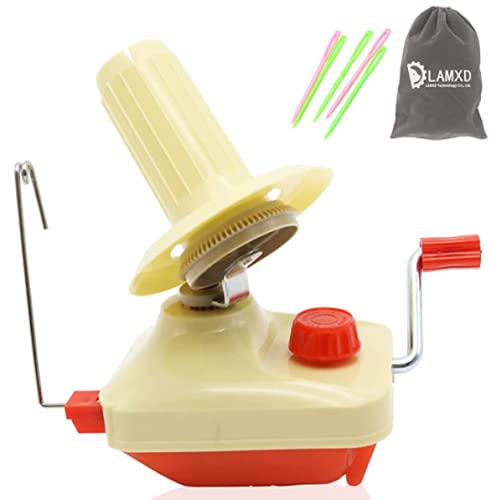
ChiaoGoo is a brand synonymous with quality, and their hand-operated winder is a compact marvel. It is specifically designed to be portable, making it the perfect companion for retreats, knitting cruises, or even just moving from the living room to the porch.
Despite its small footprint, it is surprisingly capable of creating neat, stable cakes. It doesn’t have the high-volume capacity of a jumbo winder, but for standard 50g or 100g hanks, it performs flawlessly.
The key to this winder is its simplicity; it is easy to assemble and disassemble in seconds. If you value flexibility and a minimalist stash setup, this is the winder that will fit perfectly into your lifestyle.
Windspun Wooden Winder: Best Aesthetic Option

Sometimes, the tools we use should be as beautiful as the yarn we are knitting. The Windspun Wooden Winder is a stunning piece of craftsmanship that looks like a piece of art sitting on your desk, rather than a utilitarian plastic gadget.
Beyond its looks, wood has a natural, grippy quality that can be quite pleasant to handle. It is a slower, more deliberate winding experience, which many knitters find meditative and relaxing after a long day.
Because it is made of wood, it requires a bit more care than a metal or plastic winder. Keep it away from extreme humidity or direct sunlight to prevent warping, and it will remain a beautiful, functional heirloom in your knitting collection.
How to Choose the Right Winder for Your Stash
Selecting the right winder comes down to two main factors: the volume of yarn you process and the fiber types you prefer. If you primarily knit with fingering weight yarn for socks, a compact winder is perfectly sufficient.
However, if you are a fan of chunky sweaters or large-scale blankets, you need a winder with a wider bobbin and a sturdier base. Always check the maximum capacity of the winder against the size of the skeins you typically purchase.
Consider the following before you buy:
- Table thickness: Ensure your table edge is compatible with the winder’s clamp.
- Storage space: Do you need something portable or a permanent fixture?
- Fiber sensitivity: Slippery fibers like silk or bamboo require a winder with a smooth, snag-free path.
Manual vs Electric: Which Winder Do You Need?
Manual winders are the standard for most knitters, offering total control over the winding speed and tension. By using your hand, you can feel if the yarn is snagging or if there is a knot in the skein before it gets pulled into the mechanism.
Electric winders, while faster, can sometimes be too aggressive, especially with delicate fibers that might stretch if pulled too tightly. They are a great choice if you have a massive stash to process or if you suffer from wrist fatigue or arthritis.
Ultimately, the choice depends on your physical comfort and your desired workflow. Most knitters find that manual winding is a therapeutic part of their process, but don’t hesitate to go electric if it makes your knitting more accessible and enjoyable.
Essential Tips for Perfect Yarn Cake Tension
Achieving the perfect yarn cake is as much about technique as it is about the machine. Always use a yarn swift to hold your hank; trying to wind from a loose pile on the floor is a recipe for tangles and uneven tension.
Keep your yarn path straight and clear, ensuring the yarn feeds smoothly from the swift into the winder. If the yarn is too tight, it can stretch the fibers, which will permanently alter your gauge once you start knitting.
- Start slow: Don’t rush the first few wraps; this establishes the core of the cake.
- Guide the yarn: Use your hand to gently guide the yarn onto the bobbin, moving it up and down slightly to create an even, stable shape.
- Watch for knots: If you feel a knot or a section of thick-and-thin yarn, slow down to ensure it passes through the tensioner safely.
Investing in a quality ball winder is a commitment to the longevity of your yarn and the quality of your finished projects. By choosing a tool that matches your specific needs, you turn a tedious chore into a seamless part of your creative process. Remember that the best winder is the one that makes you excited to cast on your next project. Happy winding, and may your yarn always flow freely.