6 Best Yarn Guides For Fair Isle For Better Tension
Master Fair Isle knitting with our top 6 yarn guides. Learn how these essential tools improve tension, ensure consistent gauge, and simplify colorwork projects.
Mastering Fair Isle requires more than just patience; it demands a deep understanding of how different yarns behave under the tension of stranded colorwork. Choosing the right fiber can be the difference between a puckered, uneven mess and a smooth, professional-looking garment. In this guide, we explore the best yarns to help you achieve consistent tension and beautiful, defined stitches. Whether you are a novice or a veteran, these selections will elevate your colorwork practice.
Jamieson’s of Shetland Spindrift: The Gold Standard
If you are looking for the quintessential Fair Isle experience, look no further than Jamieson’s of Shetland Spindrift. This 100% Shetland wool is sticky, grippy, and incredibly lightweight, which is exactly what you want for stranded work.
The "stickiness" of the fiber is its greatest asset. Because the individual strands cling to one another, your floats stay exactly where you put them, preventing the dreaded "traveling" that ruins the look of your color transitions.
However, be warned: this yarn is not soft to the touch in the skein. It blooms significantly after a good soak and block, transforming into a soft, cohesive fabric that locks in your tension. It is the gold standard for a reason, but it requires a leap of faith before the final wash.
Rauma Finull PT2: Best for Crisp, Defined Stitches
Rauma Finull PT2 is a Norwegian classic that offers a slightly firmer hand than Shetland wools. If your goal is to see every single stitch pop with geometric precision, this is the yarn to reach for.
The twist in this yarn is remarkably consistent, providing a crisp stitch definition that makes complex motifs stand out. It is slightly less "hairy" than Shetland wool, which means your colorwork patterns will look sharp and clean rather than soft and blended.
Because it has a bit more structure, it behaves beautifully on both wooden and metal needles. If you find your tension tends to loosen up during long sessions, the natural grip of this fiber will help you maintain an even gauge throughout your project.
Brooklyn Tweed Loft: Best for Soft Colorwork Projects
For those who find traditional wools too scratchy, Brooklyn Tweed Loft offers a sophisticated alternative. This woolen-spun yarn is airy and lightweight, providing a lovely, soft drape that is rarely seen in traditional stranded colorwork.
Because it is woolen-spun, it is full of trapped air, which makes for a very warm finished garment without the bulk. It fills in the gaps between stitches exceptionally well, creating a cohesive fabric that hides minor tension irregularities.
Keep in mind that this yarn is more delicate than the others on this list. It is not designed for high-friction areas like the soles of socks or heavy-duty outdoor gear, but for a sweater or a cowl, it is a luxurious choice.
Rowan Felted Tweed: Best for Beginners to Fair Isle
Rowan Felted Tweed is perhaps the most forgiving yarn a beginner could choose. It is a blend of wool, alpaca, and viscose, which gives it a unique texture that masks uneven tension better than almost any other yarn.
The "felted" nature of the fiber means the strands have a slight fuzziness that acts like Velcro. When you carry your floats across the back of your work, the yarn naturally settles into place, making it much easier to keep your tension consistent.
While it is labeled as a DK weight, it often behaves more like a heavy fingering weight. Always swatch first, as this yarn tends to grow slightly after blocking. It is the perfect training ground for learning how to manage two colors at once.
Holst Garn Supersoft: Best Value for Large Projects
If you are planning an intricate, multi-colored sweater that requires a dozen different shades, Holst Garn Supersoft is your best friend. It is an incredibly economical choice that doesn’t sacrifice the essential "grippy" qualities needed for Fair Isle.
This is a raw, unwashed wool that feels somewhat dry on the needles. Do not let that deter you; it is designed to be washed after the knitting is complete. Once it hits the water, the spinning oils wash away, and the yarn softens into a beautiful, uniform fabric.
Because it is so affordable, it is the ideal choice for practicing your colorwork techniques without the anxiety of "wasting" expensive fiber. Just be aware that it can be a bit more fragile than other options, so handle your ends with care.
Sandnes Garn Peer Gynt: Best for Sturdy Outerwear
When you are knitting a heavy-duty cardigan or a traditional Norwegian sweater meant for the elements, you need a yarn with backbone. Sandnes Garn Peer Gynt is a classic, sturdy wool that holds its shape through years of wear.
This is a round, smooth yarn that resists pilling and maintains its stitch definition even after heavy use. It is less "sticky" than Shetland wool, so it requires a bit more focus on your tension, but the results are incredibly durable and professional.
If you are a knitter who tends to have loose tension, this yarn is a great choice because its natural structure provides a bit of resistance. It is the gold standard for heirloom-quality garments that you expect to pass down to the next generation.
Why Wool Content Matters for Fair Isle Consistency
The secret to perfect Fair Isle is choosing a yarn that "clings." When you are working with two colors, you are essentially creating a double layer of fabric, and you need the fibers to interlock to create a stable, non-stretchy structure.
Synthetic fibers like acrylic are generally poor choices for Fair Isle because they are slippery and don’t "bloom" or felt into each other. This often results in a fabric that looks loose, uneven, and lacks the structural integrity required for colorwork.
Always look for 100% wool or high-wool blends for your stranded projects. The natural scales on the wool fiber act like tiny hooks, gripping the neighboring stitches and holding your floats in a stable, consistent position.
Mastering Tension When Working With Two Colors
Tension issues in Fair Isle usually stem from the transition between the two colors. If you pull the second color too tightly, the fabric will pucker; if you leave it too loose, the stitches will look sloppy.
A great trick is to spread your stitches out on the right-hand needle after every few color changes. This ensures that you aren’t accidentally pulling the floats too tight, which is the most common cause of a "tight" or "shrunken" colorwork project.
If you find that one color is consistently tighter than the other, try changing how you hold your yarns. Many knitters find that holding one color in the left hand (continental style) and one in the right (English style) helps balance the tension naturally.
Proper Yarn Floats and Preventing Puckered Fabric
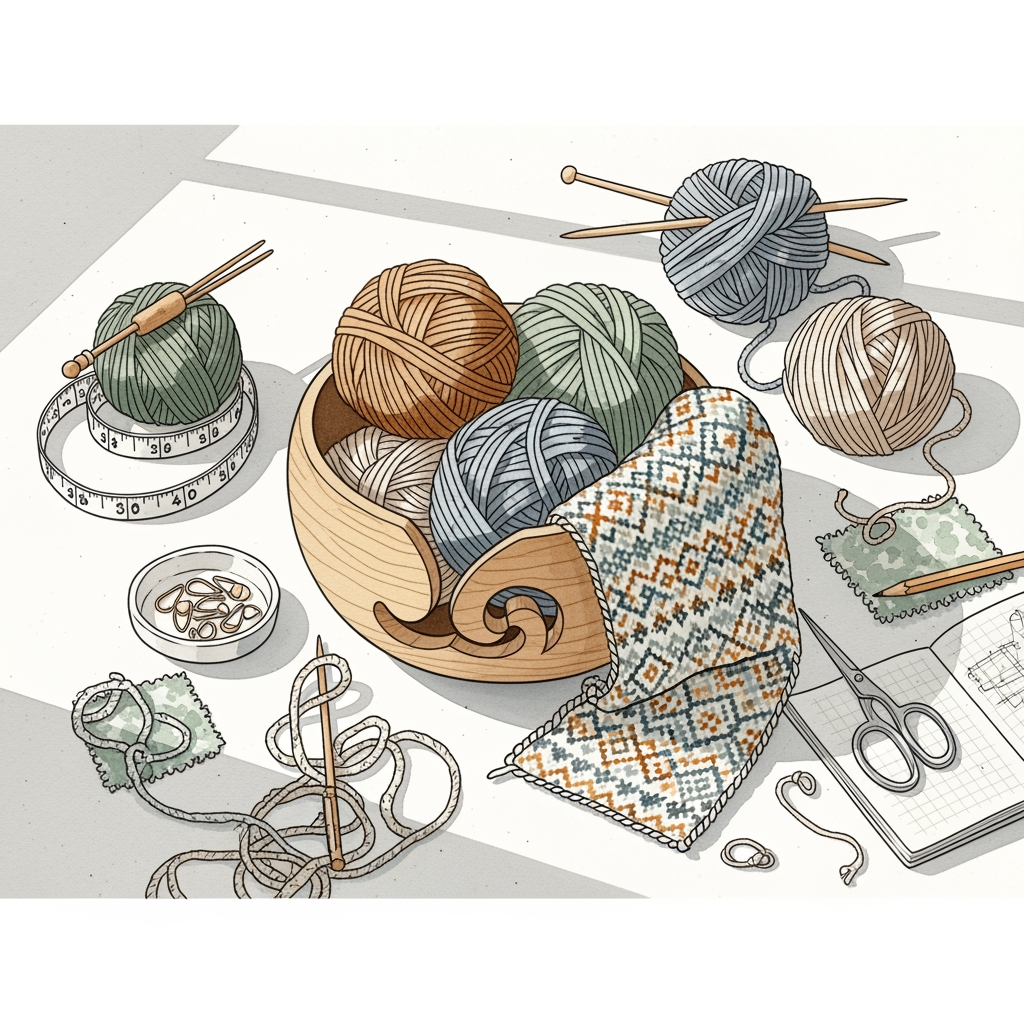
The floats—the strands of yarn carried across the back of the work—are the backbone of your colorwork. If they are too short, your garment will lose its stretch; if they are too long, they will snag on your fingers or jewelry.
A good rule of thumb is to "trap" your floats if you are carrying a color for more than three or four stitches. This involves twisting the carried yarn around the working yarn, effectively securing the float into the back of the fabric.
Be careful not to over-trap, however, as this can create a thick, stiff fabric. Aim for a balance where the floats are secure but still allow the fabric to retain its natural drape and elasticity.
Essential Tips for Choosing Consistent Yarn Weights
Never assume that two yarns labeled as "fingering weight" are actually the same thickness. Always check the Wraps Per Inch (WPI) if you are mixing different brands or types of yarn in a single project.
If you are using two different yarns, try to ensure they have similar fiber characteristics. Mixing a very slick, superwash wool with a grippy, non-superwash wool can lead to an uneven, lumpy fabric because the two fibers will react differently to blocking.

If you are a tight knitter, consider going up half a needle size for your colorwork sections. The act of carrying two yarns often forces a tighter gauge than knitting with a single strand, and a larger needle can help compensate for that natural tendency.
Successful Fair Isle knitting is a journey of understanding how your tools and materials interact. By selecting the right fiber, managing your floats, and being mindful of your tension, you can create garments that are as durable as they are beautiful. Remember that every knitter has a unique tension, and your goal is simply to find the yarn that makes your stitches look their best. Happy knitting, and enjoy the process of watching your patterns come to life.