6 Best Point Gauge Tools For Needle Identification
Identify knitting needles accurately with our top 6 point gauge picks. We compare features to help you choose the best tool for your craft and precision needs.
We have all been there: staring at a pair of unlabeled metal needles, wondering if they are a 3.5mm or a 3.75mm. As your collection grows, those tiny laser-etched sizes inevitably wear away, leaving you guessing during your next cast-on. A reliable needle gauge is the unsung hero of the knitting bag, ensuring your tension stays consistent across every project. Here are the best tools to keep your stash organized and your gauge accurate.
ChiaoGoo Needle Gauge: The Precise Gold Standard
When precision is non-negotiable, the ChiaoGoo needle gauge is the tool I reach for most often. It is made from high-quality, durable plastic that resists warping, which is vital when you are measuring delicate lace needles.
This gauge covers a massive range of sizes, from the tiny 1.5mm needles used for sock heels up to large 10mm needles for chunky cowls. The holes are cleanly punched, meaning you won’t struggle with burrs catching on your needle tips.
The real beauty here is the accuracy of the sizing holes. If you are working on a project where a half-millimeter difference determines whether your sweater fits or ends up as a doll-sized garment, this is the tool you want.
Cocoknits Maker’s Keep: Stylish Magnetic Gauge
The Cocoknits Maker’s Keep is more than just a gauge; it is a wearable workstation for the organized knitter. It features a magnetic slap bracelet that holds your needles or stitch markers, with a small, sturdy gauge integrated directly into the design.
This tool shines when you are knitting on the go or moving between rooms. You can keep your current needle size locked onto the magnetic surface, preventing the "where did I put that needle?" panic mid-project.
While it is a higher investment, the convenience of having your gauge attached to your wrist is unmatched. It is a brilliant solution for knitters who tend to misplace their tools in the depths of a yarn bag.
Susan Bates Knit Chek: The Classic Budget Pick
The Susan Bates Knit Chek is the tool that has been in every knitting bag for generations for a good reason. It is a simple, no-frills metal plate that includes a needle gauge, a crochet hook sizer, and a handy ruler.
Because it is made of aluminum, it won’t snap in your bag like plastic alternatives might. It is incredibly slim, making it the perfect companion for a minimalist project pouch or a travel kit.
Don’t let the low price point fool you; it is highly accurate and does exactly what it needs to do. If you are prone to losing your tools, buying a few of these is a smart, cost-effective strategy.
Clover Knitting Needle Gauge: Durable Plastic
Clover tools are famous for their consistency, and their needle gauge is no exception. It is made from a thick, rigid plastic that feels substantial in the hand and provides a clear, high-contrast view of the size markings.
This gauge is particularly helpful for beginners because the sizing labels are large and easy to read. You won’t be squinting under poor lighting to distinguish between a US 6 and a US 7.
The smooth edges ensure that you won’t damage your bamboo or wood needles when testing them. It is a reliable, workhorse tool that will likely last you a lifetime if you treat it with basic care.


Katrinkles Wooden Gauge: Sustainable Crafting
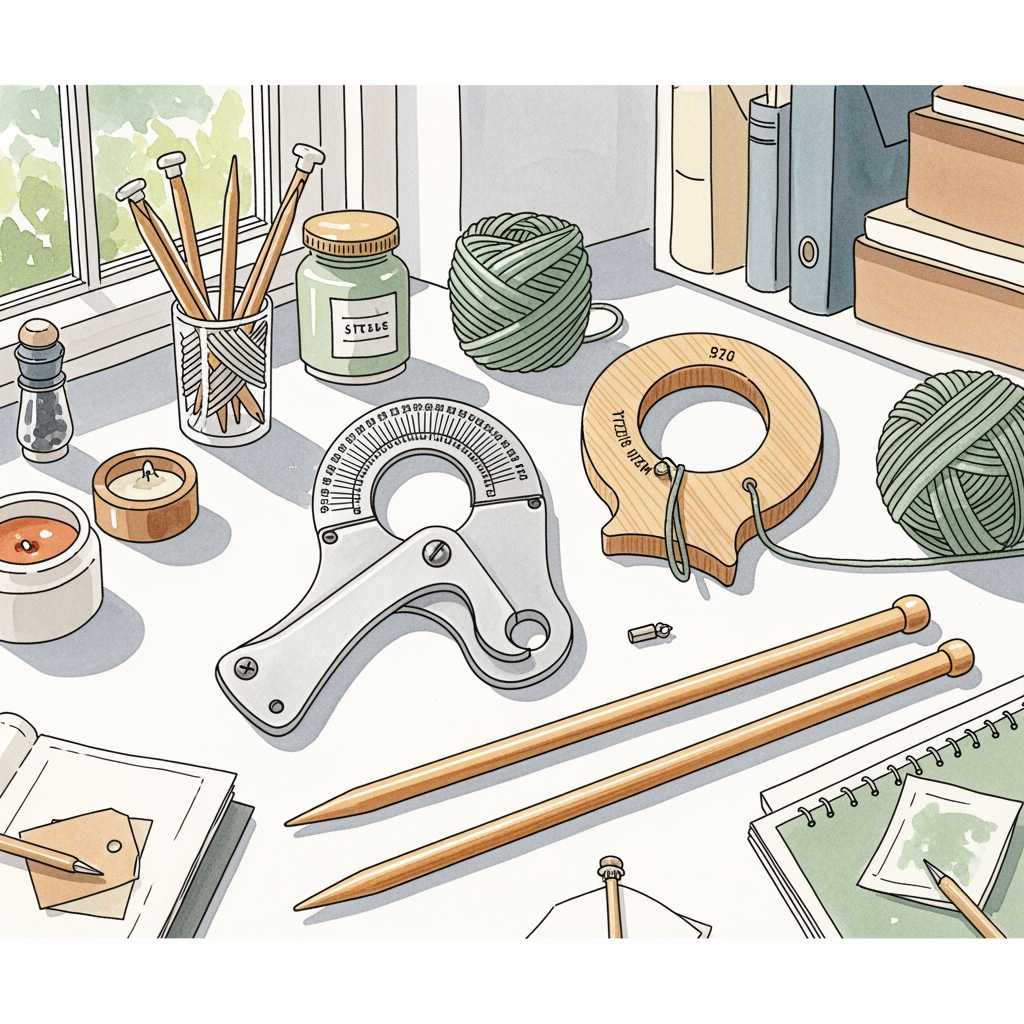
For those who appreciate the tactile feel of natural materials, Katrinkles offers beautiful, laser-cut wooden gauges. These are often crafted from sustainable birch plywood and feature unique, artistic designs.
Beyond aesthetics, wood is gentle on your needles. If you have a collection of handcrafted or vintage needles, a wooden gauge provides a softer contact point than metal or hard plastic.
Keep in mind that wood can be slightly more susceptible to environmental changes than metal. However, for everyday measuring, they are perfectly functional and bring a touch of joy to your knitting kit.
Knitter’s Pride View Sizer: Best for Beginners

The Knitter’s Pride View Sizer is designed with a "viewing" window that makes it incredibly easy to confirm the size of your needle. It is a great choice if you find standard gauges confusing or difficult to read.
This tool is especially useful when you are working with interchangeable needle sets. It helps you verify the size of the tip before you attach your cable, saving you from having to restart a project because you grabbed the wrong size.

It is lightweight and portable, making it an excellent addition to any beginner’s starter kit. It removes the guesswork and builds confidence as you learn the nuances of different needle diameters.
Why Needle Gauges Are Essential for Your Stash
Your needle gauge is the bridge between your pattern requirements and your physical knitting. Even if your needles have markings, years of friction against yarn fibers—especially abrasive wools—will eventually wear those numbers away.
If you don’t gauge your needles, you risk "gauge creep," where your tension changes because you accidentally used a needle that was slightly smaller or larger than the pattern called for. This is the fastest way to end up with a sweater that doesn’t fit the intended recipient.
Think of your gauge as a calibration tool. Just as a chef calibrates their oven, a knitter must calibrate their needles to ensure the resulting fabric meets the project’s design intent.
How to Measure Needle Sizes Without Markings

When you find a mystery needle, the first step is to gently slide it into the holes of your gauge. You are looking for the smallest hole that the needle can pass through without force.
- Do not force it: If you have to push, the needle is too large for that hole.
- Check for "wiggle": If the needle rattles significantly, it is too small for that hole.
- The Goldilocks Rule: The perfect fit is when the needle slides through with just a hint of friction.
If you find a needle that seems to fall between two sizes, it might be an older metric needle or a non-standard size. In these cases, rely on your swatch to determine if the fabric density is correct.
Understanding Metric vs US Sizing Standards
Knitting sizing can be confusing because the US system uses arbitrary numbers, while the Metric system uses the actual diameter of the needle in millimeters. Most modern patterns provide both, but international patterns often stick to Metric.
- US Sizes: Often skip sizes or use half-sizes (like 2.25mm being a US 1).
- Metric Sizes: Provide a clear, universal measurement that is consistent across all brands.
Always prioritize the Metric measurement when you are in doubt. A 4mm needle is a 4mm needle, regardless of whether the manufacturer calls it a US 6 or a US 7.
Tips for Preventing Needle Size Label Fading
The laser etching on many metal needles is prone to fading, especially if you have acidic skin oils or knit with high-lanolin wools. To preserve your labels, avoid cleaning your needles with harsh solvents or abrasive scouring pads.
If you have a favorite pair of needles, you can apply a tiny drop of clear nail polish over the size marking to seal it. Just ensure the surface is clean and dry before you apply the sealant.
Alternatively, store your needles in labeled pouches or use a small piece of painter’s tape to mark the size on the end of the needle. This simple step saves you from having to reach for your gauge every single time you start a new row.

Investing in a quality needle gauge is one of the most practical decisions you can make as a knitter. Whether you choose a classic metal tool or a stylish wooden one, having a consistent way to measure your gear will save you hours of frustration. Keep your tools organized, trust your measurements, and enjoy the process of creating beautiful, well-fitted garments. Happy knitting!