6 Best Row Trackers For Complex Cable Charts
Master complex cable charts with these 6 top-rated row trackers. Discover tools designed to streamline your knitting workflow and prevent costly stitch errors.
Knitting complex cables requires an almost meditative focus, yet one missed cross can derail an entire project. When you are navigating a 20-row repeat with shifting cable crosses, a reliable tracking system is as essential as your needles. These tools bridge the gap between human error and a flawless finished fabric. Here are the best trackers to ensure your cables stay perfectly aligned from cast-on to bind-off.
Cocoknits Maker’s Keep: Best Wearable Tracker
The Maker’s Keep is essentially a magnetic slap bracelet that keeps your notions within arm’s reach at all times. For a knitter working on a complex cabled sweater, having the ability to snap a magnetic row counter or a set of stitch markers right onto your wrist is a game-changer.
It eliminates the frantic search for your tools hidden under a pile of yarn cakes or tucked away in a project bag. Because it stays on your body, you never have to worry about knocking your row counter off the arm of the couch.


However, be mindful that the magnet is quite strong. If you are working with delicate, high-twist luxury fibers like silk or fine mohair, ensure your yarn doesn’t snag on the magnetic plate. It is a fantastic tool for those who tend to wander while they knit.
KnitIQ Magnetic Chart Board: Best for Large Charts
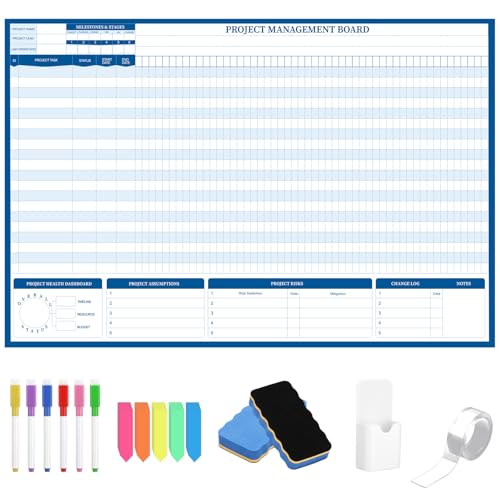
When you are tackling a pattern with a massive, multi-page cable chart, a standard row counter often isn’t enough. The KnitIQ board uses magnetic strips to hold your pattern in place while acting as a visual guide for the exact row you are currently working.

This is particularly useful for cables because you can place the magnetic strip directly under the row of symbols you are knitting. It forces your eyes to focus on one line at a time, preventing the "row-skipping" that leads to misplaced cable crosses.
The trade-off here is portability. This board is not something you’ll easily throw into a small project bag for knitting on the bus. It is best suited for a dedicated knitting chair or a stationary home setup where your complex projects live.
Row Counter App by Cotton & Bourbon: Best Digital
Digital apps have revolutionized how we track progress, especially when they offer features like multiple counters for different sections of a project. The Cotton & Bourbon app is clean, intuitive, and designed by someone who clearly understands the rhythm of knitting.
The major benefit of a digital app is the ability to save your place across multiple devices. If you start a cable project at home but want to check your progress while waiting in line at the grocery store, your count is right there in your pocket.
Some knitters find that the "screen time" aspect breaks their flow, but the precision is unmatched. If you are prone to forgetting to click your manual counter, the ability to set reminders or keep the phone screen awake can be a lifesaver.
Clover Kacha-Kacha Clicker: Best Manual Tracker
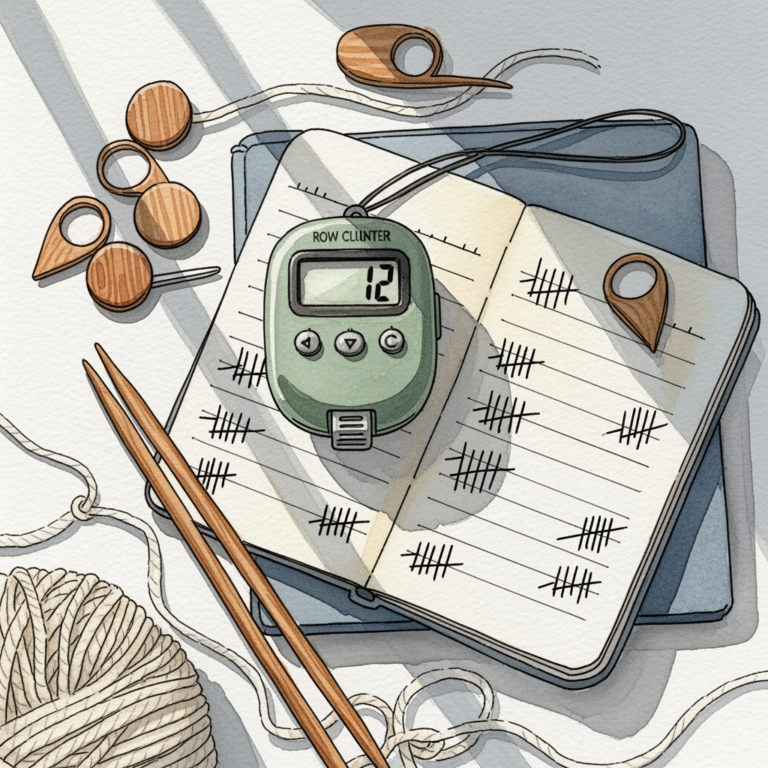
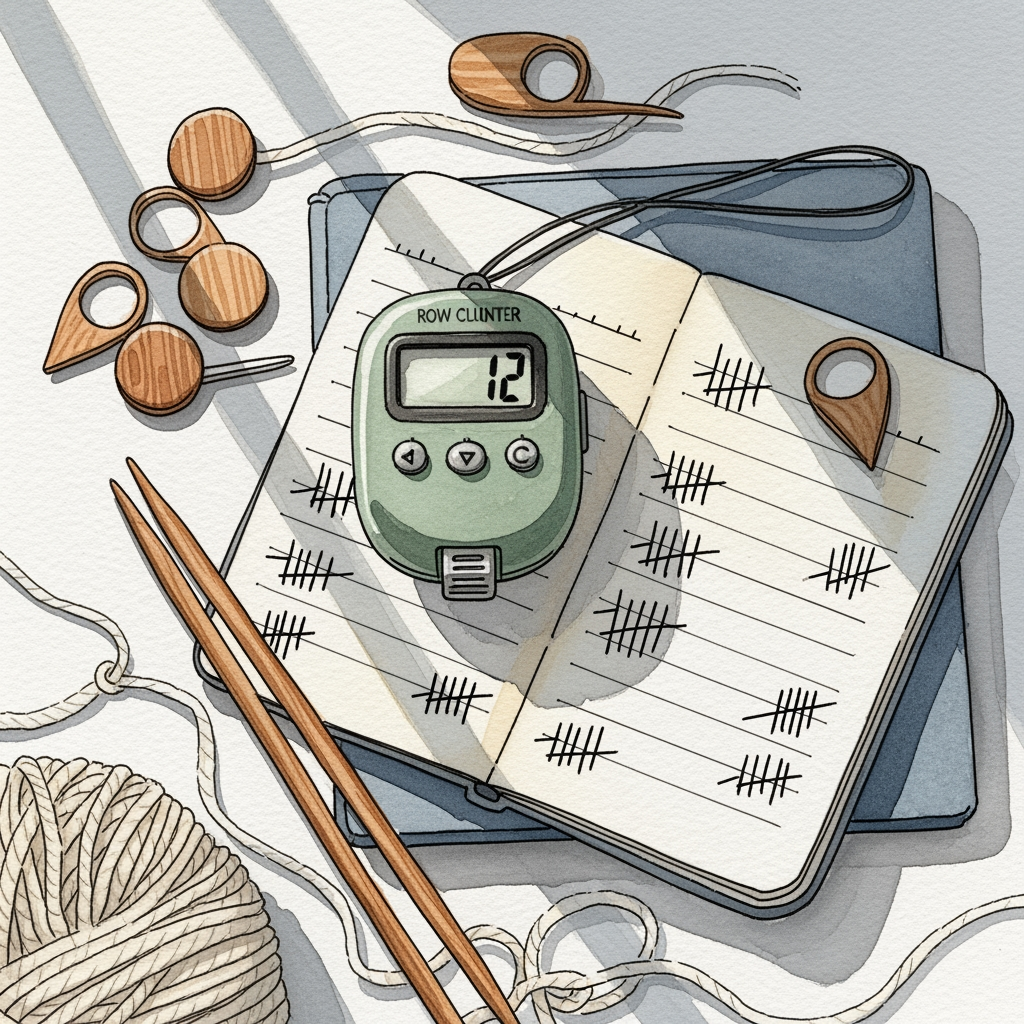
The Clover Kacha-Kacha is the gold standard for a reason: it is tactile, reliable, and incredibly satisfying to use. There is a distinct mechanical "click" that provides sensory feedback, confirming that you have indeed moved to the next row.
This is perfect for the knitter who enjoys the analog nature of the craft. It doesn’t require batteries, it doesn’t need an update, and it can survive being dropped on a hardwood floor without losing your place.
The downside is that it is easy to accidentally bump the button if it’s loose in your project bag. I always recommend keeping it on a locking stitch marker attached to your project bag’s interior to prevent "ghost clicks" that can throw off your entire cable sequence.
Knitter’s Pride Mindful Collection: Best Counter
The Mindful Collection counter is designed with a sleek, minimalist aesthetic that fits perfectly into the modern knitter’s kit. It is often worn as a ring or kept on a chain, making it a subtle way to track your progress without bulky plastic tools.
Because it is designed for comfort, you can wear it for hours without even noticing it’s there. This is ideal for long sessions of knitting dense, cabled wool that requires constant, steady row counting.
The ring-style counters can be a bit finicky depending on your finger size, so it’s worth testing the fit before committing to a long-term project. If it’s too loose, you might find yourself accidentally spinning the dial while you maneuver your needles.
Susan Bates Knit Count: Best Budget Option

Sometimes the simplest tool is the most effective. The traditional Susan Bates plastic dial counter is an inexpensive, no-frills solution that has helped generations of knitters finish their most intricate cable work.
It is lightweight and slides easily onto your needles, which means your row count is literally attached to your work. If you are knitting on fixed circular needles, this is a very convenient way to ensure you never lose your place.
The main drawback is that these can be fragile; the plastic tabs can snap if you’re too aggressive with them. However, at their price point, they are easily replaced, making them a great "backup" tool to keep in every single project bag you own.
Why Accurate Row Tracking Saves Complex Cables
Cables are essentially a series of mathematical intersections; if you miss a row, the entire geometry of the pattern collapses. A cable cross is a specific event that happens at a specific time, and if you are off by even one row, the crossing point will look "off" to the eye.
Tracking isn’t just about finishing the project; it’s about maintaining the tension and consistency of the fabric. When you know exactly where you are, you can knit with confidence rather than constantly second-guessing your work.
Furthermore, accurate tracking allows you to identify a mistake immediately. If you notice a cable looks wrong, you can look at your counter, check your chart, and perform a surgical "tink" (knitting backward) to fix the error before you’ve knit three more inches.
How to Choose the Best Tracker for Your Project
Choosing the right tracker depends entirely on your knitting environment and your personal habits. If you knit primarily on the go, a wearable tracker or a simple clicker is usually the best choice.
- For large, complex charts: Use a magnetic board or a digital app that allows for visual highlighting.
- For stationary, home-based knitting: A larger board or a dedicated desk counter works well.
- For tactile learners: A manual clicker provides the sensory confirmation needed to stay on track.
Always consider your gauge and fiber. If you are working with a dark, fuzzy yarn like an alpaca blend, you need a tracking method that doesn’t require you to squint at your work to see where you are.

Digital vs. Analog: Which Tracking Method Wins?
Digital tools win on convenience and data management, while analog tools win on reliability and tactile satisfaction. Digital apps can store dozens of projects, but they can also be prone to glitches or battery failures.
Analog trackers are "dumb" tools in the best way possible; they don’t need updates and they don’t have a learning curve. However, they are prone to human error—if you forget to click, the tool cannot help you.
Ultimately, the best method is the one you actually remember to use. If you find yourself reaching for your phone, use an app. If you find yourself reaching for your notions pouch, use a manual clicker.
Tips for Staying Consistent With Row Counting
The most common mistake knitters make is waiting until the end of the row to click. I strongly advise clicking your counter the moment you complete the final stitch of the row, before you even move your needles.
Make it a ritual. If you are knitting a complex cable, try to associate the click with a specific physical action, like turning your work or sliding your stitches to the other end of the needle.
If you do lose your place, don’t panic. Use the "cable count" method: look at your fabric, count how many rows exist between your last cable cross and your current needle, and adjust your counter accordingly.
Finding the right row tracker is a deeply personal part of your knitting journey. Whether you prefer the satisfying click of a manual counter or the digital precision of an app, the goal is to reduce the friction between you and your cables. Choose a tool that fits your rhythm and you will find your knitting becomes far more enjoyable. Happy knitting, and may your cable crosses always be perfectly aligned.