6 Best Portable Timers For Dye Bath Duration
Achieve precise color consistency with our top 6 portable timers. These reliable tools ensure perfect dye bath durations for professional-grade results every time.
Achieving the perfect depth of shade in your fiber dyeing requires more than just high-quality pigments; it demands rigorous control over immersion time. Whether you are working with delicate silk or robust wool, even a few minutes of deviation can lead to uneven color saturation or unintended muddy tones. Using a reliable portable timer ensures that your dye bath stays consistent from the first skein to the last. This guide explores the best tools to keep your studio workflow precise and professional.
Time Timer MOD: Best Visual Dye Bath Monitor


The Time Timer MOD is a game-changer for those of us who prefer to visualize time rather than reading digits. Its signature red disk shrinks as time elapses, providing an intuitive sense of how much longer your fiber needs to simmer.
When you are busy prepping a secondary dye bath or rinsing finished yarn, you don’t always want to squint at a digital screen. This visual cue allows you to glance across the room and instantly know if you have five minutes or fifty left in the soak.
The protective silicone case is a massive benefit in a dye studio. It offers a layer of durability against accidental bumps and is much easier to wipe clean if a rogue drop of dye splashes onto the housing.
ThermoWorks TimeStack: Best Multi-Channel Timer
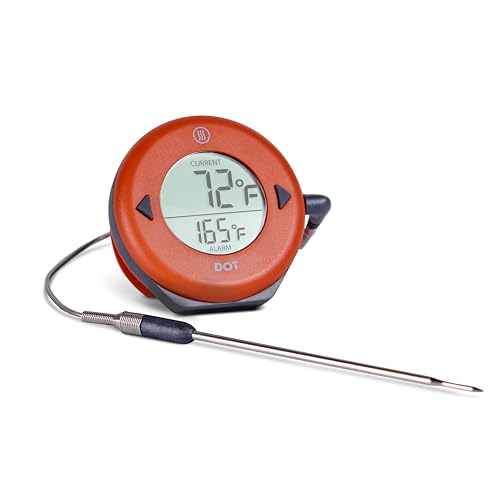
If you are a serious dyer running multiple pots simultaneously—perhaps one for a gradient and another for a solid color—you need the ThermoWorks TimeStack. It allows you to track three separate timers on a single, highly legible display.
Managing multiple dye baths can quickly become chaotic, especially when different fiber types require different immersion times. If you are dyeing a blend of superwash wool and nylon, you need to be precise to avoid over-exhausting the bath or damaging the fiber structure.
This unit is built to withstand the rigors of a professional environment, featuring a high-quality, tactile interface. While it is an investment, the ability to monitor three distinct processes at once prevents the common "forgotten pot" disaster that ruins expensive fiber.
Habor Digital Kitchen Timer: Best Budget Option
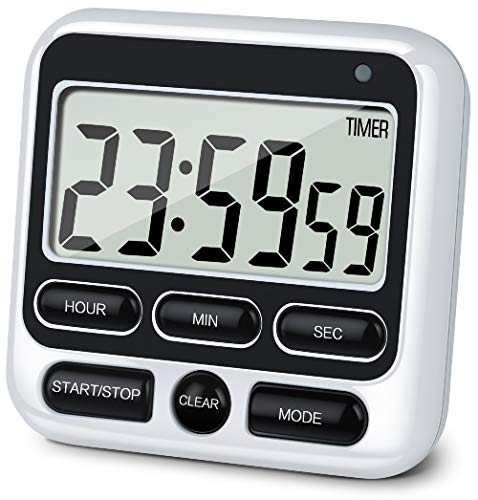
The Habor Digital Kitchen Timer is the workhorse of the budget-friendly studio. It is incredibly simple, featuring a large screen and a loud, clear alarm that cuts through the hum of a ventilation fan or a running water tap.
For someone just starting to experiment with acid dyes or natural mordants, you don’t need a high-tech solution. You need a tool that tells you when it’s time to move the fiber to the rinse cycle without fuss or complicated programming.
The magnet on the back is strong enough to stick to most metal surfaces in a studio. Just be careful not to place it directly above steam vents, as the excess moisture can eventually compromise the internal electronics.
Wrenwane Magnetic Timer: Best Simple Interface

The Wrenwane Magnetic Timer is designed for those who value a clean, distraction-free interface. It features a straightforward count-up and count-down function that is perfect for timing repetitive dyeing tasks like checking the pH of a bath.
I often recommend this to knitters who find modern digital gadgets overwhelming. Sometimes, the best tool is the one that doesn’t require a manual; you simply set your time and go back to your spinning wheel or knitting project.
It is compact and lightweight, making it easy to tuck away in a project bag if you are traveling to a workshop. While it lacks some of the bells and whistles of more expensive units, its reliability is hard to beat for basic, daily dyeing tasks.
Casio HS-30W Stopwatch: Best For Durability

While technically a stopwatch, the Casio HS-30W is a secret weapon for fiber artists who work in damp or messy conditions. Its water-resistant construction means it can handle the occasional splash better than almost any kitchen timer on the market.
If you are dyeing in a basement studio or a garage where humidity is high, standard electronics often fail due to corrosion. This stopwatch is built for the elements, giving you a level of peace of mind that delicate, screen-heavy devices simply cannot provide.
The buttons are tactile and responsive, which is vital when your hands might be covered in gloves or dye residue. It is a rugged, "set it and forget it" tool that will likely outlast your favorite pair of knitting needles.
IKEA STÄM Timer: Best Minimalist Dyeing Tool

The IKEA STÄM timer is a masterclass in simplicity for the minimalist dyer. It uses a simple rotating bezel to set the time, which feels much more natural than hunting for tiny buttons with wet or gloved hands.
Because it has so few moving parts and no complex digital menus, there is very little that can go wrong with it. It is the perfect choice for the dyer who wants a tool that works every time without requiring a battery change every few months.
It is small enough to keep right next to your dye pot without cluttering your workspace. While it isn’t waterproof, its simple, smooth surface is very easy to wipe down after a long day of dyeing.
Why Precision Timing Matters for Fiber Dyeing
Precision is the difference between a professional-looking, repeatable colorway and a happy accident that you can never recreate. Fiber types like silk, wool, and alpaca all absorb dye at different rates, and timing is the primary variable you control.
- Exhaustion rates: Timing determines how much dye is left in the water.
- Fiber integrity: Leaving natural fibers in a heat-set bath for too long can weaken the protein structure.
- Color consistency: Uniform timing ensures that all skeins in a batch look cohesive.
Many beginners assume that "longer is better," but this often leads to dull, over-saturated colors. By using a timer, you learn the exact window required to achieve the saturation you want, which is essential for large projects like sweaters or blankets.
Essential Features for Dye Studio Timers
When choosing a timer, look for features that specifically address the realities of a dye studio. A loud alarm is non-negotiable; you need to hear it even if you are in another room or wearing ear protection while using a steamer.
- Magnetic backing: Essential for attaching to metal pots or studio shelving.
- Large, backlit display: Necessary for reading the time in dim lighting or from a distance.
- Water resistance: A critical feature for any tool used near boiling dye baths.
- Count-up function: Useful for timing how long it takes for a bath to reach a boil.
Avoid timers that rely solely on smartphone apps. While convenient, your phone is a fragile, expensive device that has no place near a steaming, bubbling pot of dye.
Protecting Your Timer From Dye Bath Splashes
Even a water-resistant timer can be ruined by a direct splash of concentrated dye. The best practice is to mount your timer on a wall or a shelf at least two feet away from the edge of your dye pot.
If you must have the timer closer, consider placing it inside a clear, sealable plastic bag. This creates a protective barrier against steam and splashes while still allowing you to see the screen and press the buttons through the plastic.
Never leave your timer sitting on the same surface as your dye pots. Vibrations from a burner or a hot plate can cause small devices to slide, potentially leading to a disaster if they fall into the bath.
How to Calibrate Your Timing for Fiber Arts
Calibration in fiber arts means knowing how your specific equipment behaves. Start by timing how long it takes for your specific dye pot and burner setup to reach a simmer, as this "ramp-up" time is part of the dyeing process.
Keep a notebook in your studio where you record the total immersion time for every project. Note the fiber content, the dye brand, and the final color outcome, and compare this to your timer logs to refine your process over time.
Over time, you will develop a "feel" for the process, but the timer remains your objective baseline. Treat your timer as a scientific instrument, not just a kitchen gadget, and your results will become significantly more consistent.
Investing in a dedicated timer is one of the most cost-effective ways to improve the quality of your hand-dyed yarn. By removing the guesswork from your immersion times, you ensure that your precious fibers are treated with the care they deserve. Choose the tool that best fits your studio layout, keep it protected from the elements, and enjoy the confidence that comes with professional-grade precision. Happy dyeing, and may your skeins always emerge exactly the color you envisioned.