7 Best Blocking Frames For Sweaters To Use
Discover the 7 best sweater blocking frames to perfect your knitwear. Learn which materials and designs ensure professional shaping and consistent results.
Blocking is the single most transformative step in the knitting process, turning a lumpy, uneven fabric into a professional-looking garment. Choosing the right blocking frame or board can make the difference between a frustrating afternoon and a meditative finishing session. Whether you are working with delicate lace or heavy wool, the right surface provides the structure needed to set your stitches permanently. This guide explores the best tools available to help you achieve that perfect, store-bought finish.
Knitter’s Pride Knit Blockers: Best Overall Pick
These are not traditional boards, but rather a revolutionary way to secure your knitting without hundreds of individual pins. They feature a series of stainless steel pins molded into a plastic base, allowing you to anchor long stretches of fabric in a single motion.
For those of us who have spent hours wrestling with dozens of tiny T-pins, these blockers are a revelation. They are particularly effective for straight edges, such as the hem of a sweater or the side seams of a cardigan.
However, they are less effective for highly curved areas like armscyes. I recommend using these in conjunction with a standard foam mat to get the best of both worlds.
Boye Adjustable Blocking Board: Best for Versatility


The Boye board is a classic for a reason, offering a grid-based system that helps maintain symmetry on your garments. If you are prone to "eyeballing" your measurements, the printed grid on this board acts as a vital sanity check.
This tool is ideal for knitters who bounce between different sweater sizes and styles. Because it is adjustable, you can expand or contract the frame to fit everything from a toddler’s pullover to an adult’s oversized tunic.
The trade-off here is the setup time, which is more intensive than simply laying a piece on a foam mat. If you value precision over speed, this is a fantastic investment for your knitting toolkit.
Cocoknits Knitter’s Block Kit: Best Modular System

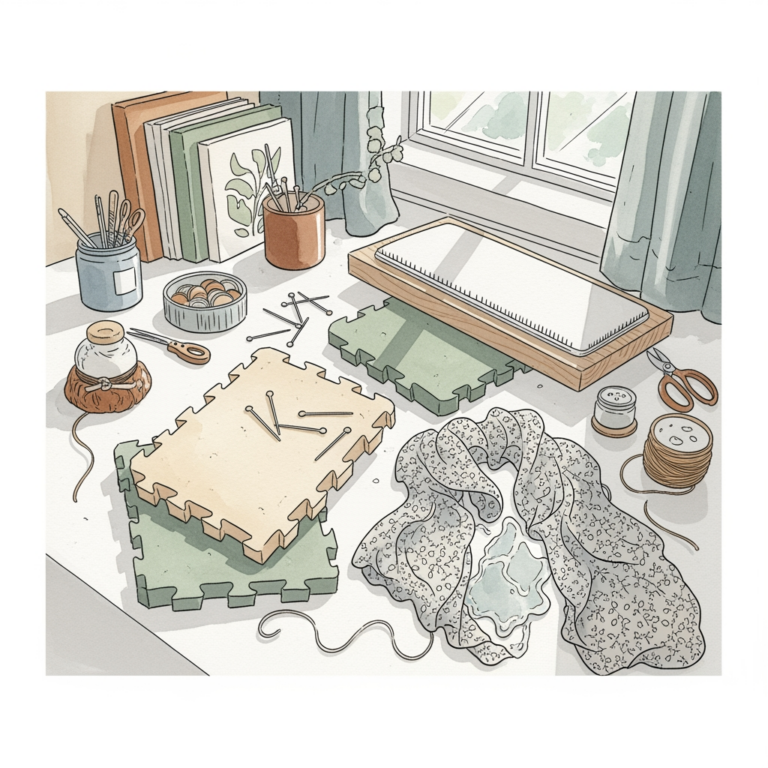
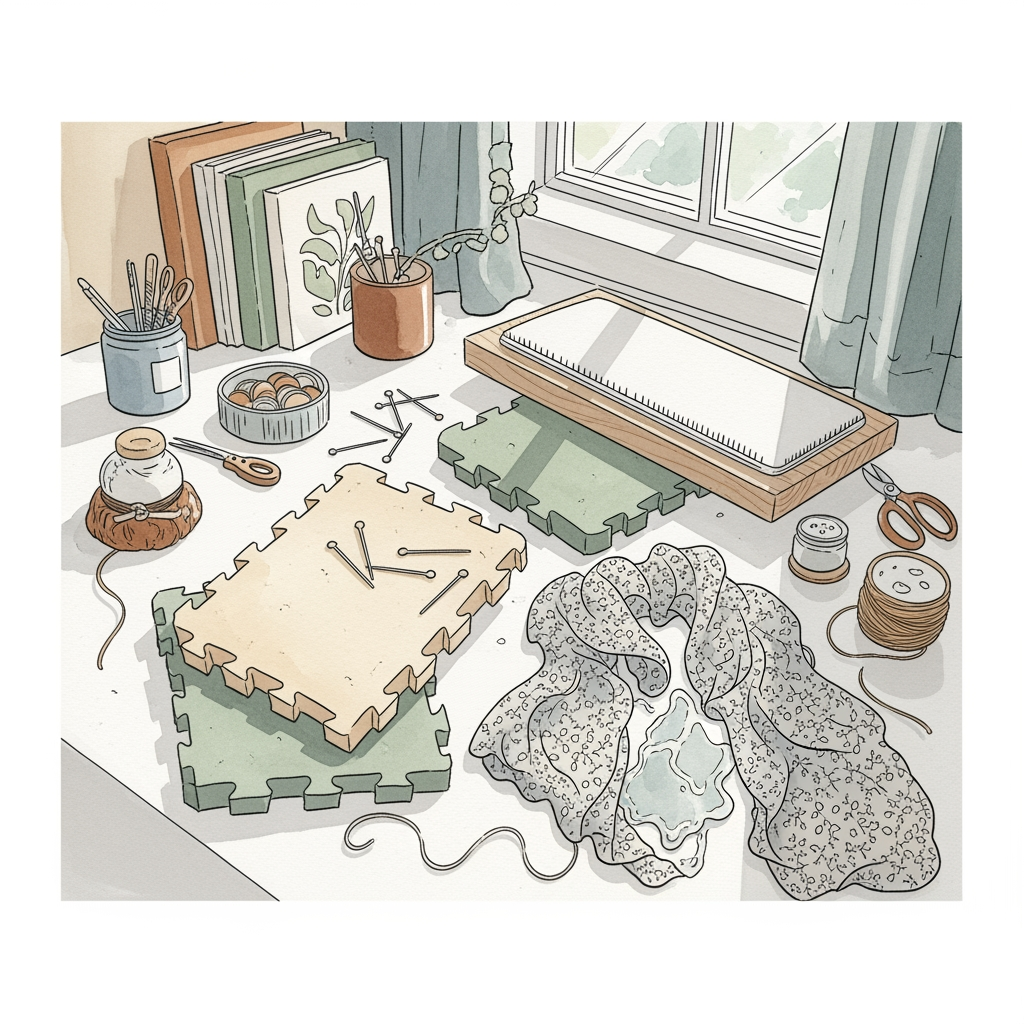
This system is designed for the modern knitter who values both aesthetics and functionality. It consists of interlocking foam tiles that feature a unique, heat-resistant surface, making it safe for steam blocking.
The standout feature is the included pins and T-pins, which are specifically chosen to work with the tiles without damaging the foam. It feels like a premium experience, and the modular nature means you can configure it into a long rectangle for scarves or a wide square for sweaters.
Keep in mind that the initial investment is higher than basic foam mats. If you knit frequently, the durability and modularity will pay for themselves over time.
Clover Blocking Mats: Best for Delicate Garments

Clover mats are known for their high-density foam, which provides a firm, reliable base for delicate yarns like silk or fine mohair. These fibers are notoriously slippery, and a soft, cheap mat can lead to uneven tension during the drying process.
These mats are lightweight and easy to store, making them perfect for knitters with limited space. Because they are gentle on your fingers, they are also a great choice if you suffer from hand fatigue after a long knitting session.
Be aware that they are not as thick as some heavy-duty alternatives. If you are blocking a very heavy, water-logged wool sweater, you may need extra support underneath to prevent sagging.
Magma Blocking Boards: Best for Heavy Sweaters

If you specialize in knitting with heavy, worsted-weight wools or bulky alpaca, you know the struggle of keeping a heavy garment in place. Magma boards are built for weight, providing a sturdy, non-slip surface that won’t buckle under a damp, heavy sweater.
The surface friction is excellent, which helps keep your stitches from "creeping" while you are trying to pin them. This is essential for maintaining the integrity of complex cables or intricate stitch patterns that might distort under their own weight.
They are less portable than other options, so consider these if you have a dedicated space for blocking. They are the workhorses of the knitting world.
Susan Bates Knit-N-Block: Best for Precision Work

This tool focuses on the details, offering a grid that is incredibly accurate for measuring gauge and dimensions. It is a fantastic choice for the perfectionist who wants to ensure that every sleeve is exactly the same length.
It is particularly useful when blocking intricate lace panels or stranded colorwork where pattern alignment is paramount. You can see exactly where the motif should sit, preventing the "skewing" that often happens with hand-knitted pieces.
While it excels at precision, it may feel restrictive for those who prefer a more organic, free-form blocking style. Use this when your project demands absolute accuracy.
T-Pin Blocking Boards: Best Budget-Friendly Option

Sometimes, the simplest approach is the best. A basic set of foam blocking mats paired with a box of stainless steel T-pins is all you truly need to get professional results.
This setup is incredibly flexible, allowing you to pin anywhere you like without being limited by grids or pre-set holes. It is the most affordable route, leaving you more money for high-quality yarn.
The only downside is the lack of guidance; you will need a measuring tape to ensure your pieces are symmetrical. For the knitter who is confident in their measurements, this is the most practical choice.
How to Choose the Right Blocking Frame for You
Your choice should be dictated by the types of projects you tackle most often. If you exclusively knit lace shawls, you need a large, pin-friendly surface; if you knit fitted sweaters, a grid-based system is non-negotiable.
Consider your storage space as well. Modular systems like Cocoknits are easy to tuck away, whereas large, rigid boards require a dedicated closet or under-bed space.
Finally, think about your patience level. If you hate the pinning process, invest in "Knit Blockers" or similar tools that speed up the workflow.
Essential Blocking Tools Every Knitter Needs
Beyond the board itself, your kit should include a few non-negotiable items:
- Rust-proof T-pins: Never use pins that might oxidize and leave marks on your light-colored wool.
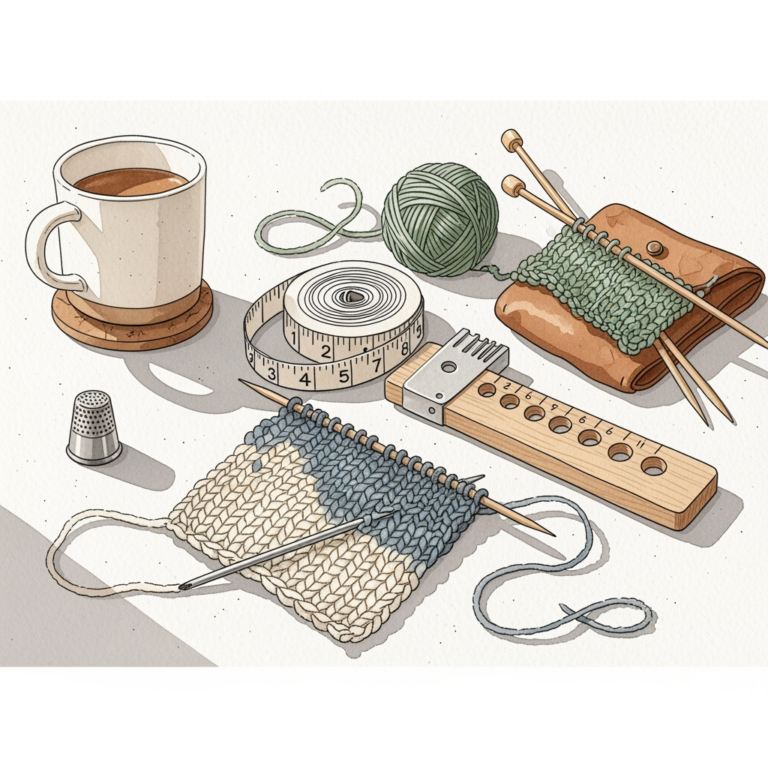
- A flexible tape measure: Essential for checking dimensions while the garment is pinned.
- A spray bottle or a wool wash basin: For dampening your garment before pinning.
- Blocking wires: These are a game-changer for straight edges and lace, as they distribute tension evenly along the entire length of the fabric.
Expert Tips for Perfect Sweater Blocking Results
Always block your swatch before you block your sweater; it gives you a preview of how the yarn will react to moisture and heat. When pinning, start from the center of the garment and work your way out to the edges to ensure even tension.
Never stretch your knitting beyond its natural capacity. If you have to pull the fabric aggressively to make it fit your desired dimensions, your gauge was likely too tight, and you may need to reconsider your needle size.
Finally, let the garment dry completely—often for 24 hours or more—before removing the pins. Removing them too early can cause the fibers to spring back or lose the shape you worked so hard to set.
Blocking is an act of patience that pays off every time you wear your hand-knitted sweater. By selecting the right board and taking the time to pin with care, you ensure your hard work stays beautiful for years to come. Do not rush this final stage, as it is the bridge between a project and a finished piece of art. Happy knitting, and may your edges always be straight and your stitches perfectly set.