7 Best Wool Roving Packs For Needle Felting To Try
Discover the 7 best wool roving packs for needle felting. This guide compares texture, color variety, and quality to help you choose the perfect fiber supply.
Needle felting is a transformative fiber art that allows you to sculpt raw wool into intricate, three-dimensional forms using only a barbed needle. Whether you are looking to embellish your hand-knitted sweaters or create standalone sculptures, the quality of your wool roving is the single most important variable. Choosing the right fiber ensures your project holds its shape, felts quickly, and maintains a clean, professional finish. Here are seven essential wool packs that every fiber artist should consider for their stash.
Woolbuddy Needle Felting Wool: Best Starter Pack


Woolbuddy is widely regarded as the gold standard for those just beginning their journey into fiber arts. The fibers are consistent, clean, and possess just the right amount of "crimp," which allows them to lock together quickly under the action of a felting needle.
For a beginner, the biggest frustration is often choosing a wool that is too slick or too coarse. This pack hits the sweet spot, providing a manageable texture that doesn’t fight back when you’re trying to form basic shapes like spheres or cylinders.
The bottom line here is accessibility. If you are tired of struggling with unbranded, uneven roving that leaves your projects looking fuzzy and loose, this is the reliable, high-quality starting point you need.
Felting Dreams Merino Roving: Best Color Variety

When you reach the stage where you want to add intricate details—like the shading on a bird’s wing or the subtle blush on a doll’s cheek—color selection becomes paramount. Felting Dreams offers an expansive palette that allows for true artistic expression.
Merino is prized for its ultra-fine micron count, making it exceptionally soft to the touch. Because the fibers are so fine, they felt very densely, which is ideal for creating smooth surfaces that look more like fabric than clumped wool.
Keep in mind that because Merino is so soft, it can sometimes take longer to "firm up" compared to coarser breeds. Use this for the outer layers and surface details, but don’t be afraid to mix it with a sturdier wool for the structural interior.
Living Felt Core Wool: Best for Sculpting Bases

Every seasoned fiber artist knows that using expensive, decorative wool for the entire core of a large sculpture is a waste of resources. Core wool is designed specifically to be the "skeleton" of your project, providing a dense, firm foundation.
This wool is typically less processed, meaning it retains more of the natural scales that help fibers interlock rapidly. It is the workhorse of the studio, allowing you to build volume quickly without needing to pack on excessive amounts of expensive top-coat fibers.
If you are building a large animal or a complex geometric form, start with this. It saves you time and money, and it provides a much more stable base for the finer, decorative wools that will follow.
Bear Creek Felting Wool: Best Sustainable Choice

There is a growing movement in the fiber community toward sourcing wool from farms that prioritize animal welfare and land stewardship. Bear Creek represents this shift, offering high-quality roving that feels as good to use as it does to support.
Beyond the ethics, this wool is often processed with a focus on preserving the natural integrity of the fiber. You will notice that it has a bit more "character" than mass-produced, heavily bleached, or chemically treated alternatives.
If you are a knitter who values the provenance of your yarn, you will appreciate the tactile difference here. It is a slightly more rustic fiber, making it perfect for projects that require a natural, organic look rather than a polished, synthetic aesthetic.
Hamanaka Natural Wool: Best for Fine Detail Work

Hamanaka is a Japanese brand that has mastered the art of the "pre-felted" or highly uniform roving. If you have ever tried to felt a tiny eye or a delicate flower petal and ended up with a lumpy mess, this is the solution.
The fibers are exceptionally straight and aligned, which makes them behave predictably under the needle. When you poke these fibers, they travel exactly where you intend, allowing for the kind of precision that is impossible with "fluffy" or overly crimped wools.
This is not the wool for building a large bear; it is the wool for the finishing touches. Use it for needle-sculpted facial features or fine patterns where you need the wool to act almost like a drawing tool.
Dimensions Needle Felting Wool: Best for Beginners
Dimensions often packages their wool in kits that take the guesswork out of the process entirely. They provide a balanced mix of fiber types that are specifically curated to be "forgiving" for someone who is still learning how to control their needle depth.
The biggest mistake beginners make is over-felting or under-felting, which leads to either a brittle project or one that falls apart. This wool is designed to felt at a moderate pace, giving you plenty of time to adjust your shape before the piece becomes too firm.
If you are intimidated by the prospect of buying raw materials in bulk, start here. It provides a controlled environment where you can learn the physics of felting without the risk of ruining expensive, high-end fibers.
Ashford Corriedale Wool: Best for Large Projects
Corriedale is a medium-micron wool that sits perfectly between the softness of Merino and the structural strength of coarser breeds. It is the "Goldilocks" of the felting world, making it ideal for larger, three-dimensional sculptures.
Because it is a bit more robust, it holds its shape beautifully over time. It doesn’t compress or sag, which is a common problem with sculptures made entirely from soft, fine-micron fibers that lose their tension after a few months of display.
When you are working on a large project, you want a fiber that is easy to draft and quick to felt. Ashford provides a consistent product that won’t surprise you, allowing you to focus on your design rather than fighting with the fiber’s behavior.
Understanding Micron Counts in Felting Fibers
The "micron count" refers to the diameter of the individual wool fiber, measured in micrometers. A lower micron count (e.g., 18-21 microns) indicates a very fine, soft fiber like Merino, while a higher count (e.g., 28-32 microns) indicates a coarser, more durable fiber like Corriedale or Lincoln.
- Fine (18-22 microns): Best for surface details, soft sculptures, and blending colors.
- Medium (23-28 microns): The best all-around choice for general sculpting and sturdy figures.
- Coarse (29+ microns): Best for core wool, heavy-duty structures, and projects that need to withstand handling.
Understanding this allows you to stop guessing why your project feels "mushy" or why it won’t hold a sharp edge. If you want a sharp point, go for a medium-to-coarse fiber; if you want a soft, fuzzy texture, go for the fine stuff.
How to Choose the Right Wool Breed for Felting
Choosing the right breed is as important as choosing the right needle size for your knitting gauge. Just as you wouldn’t use a lace-weight silk for a heavy-duty winter sweater, you shouldn’t use a fine-staple wool for a structure that needs to stand on its own.
- Merino: Soft, fine, and excellent for detail, but can be expensive and slow to build bulk.
- Corriedale: The ultimate versatile fiber, perfect for beginners and large-scale projects alike.
- Jacob or Shetland: These often have a bit more "loft" and are great for projects that need to look rustic or textured.
Always consider the intended use of your project. If it is a decorative ornament, focus on color and texture; if it is a toy that will be played with, prioritize the durability and strength of the fiber.
Essential Tools for Successful Needle Felting
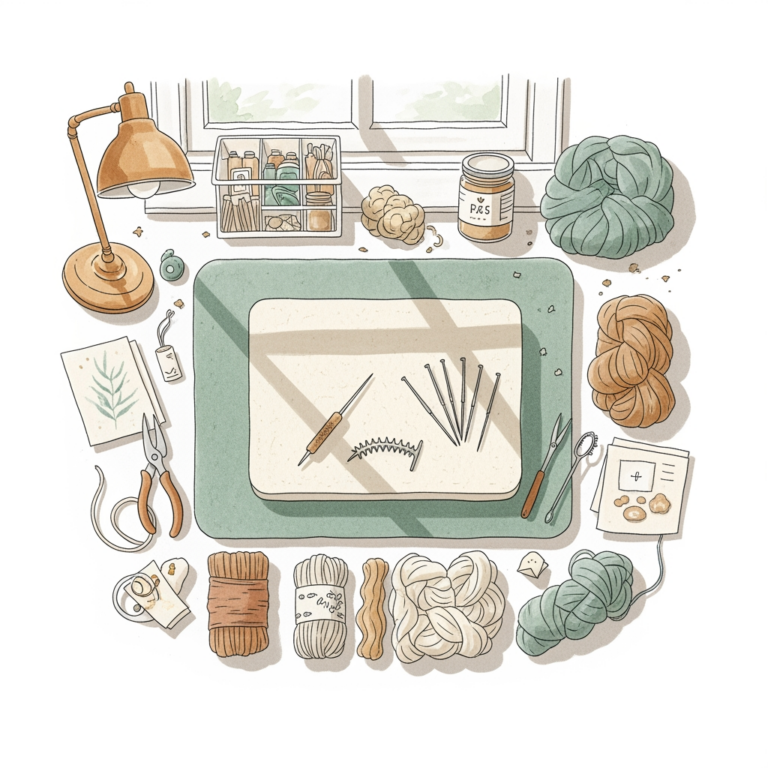
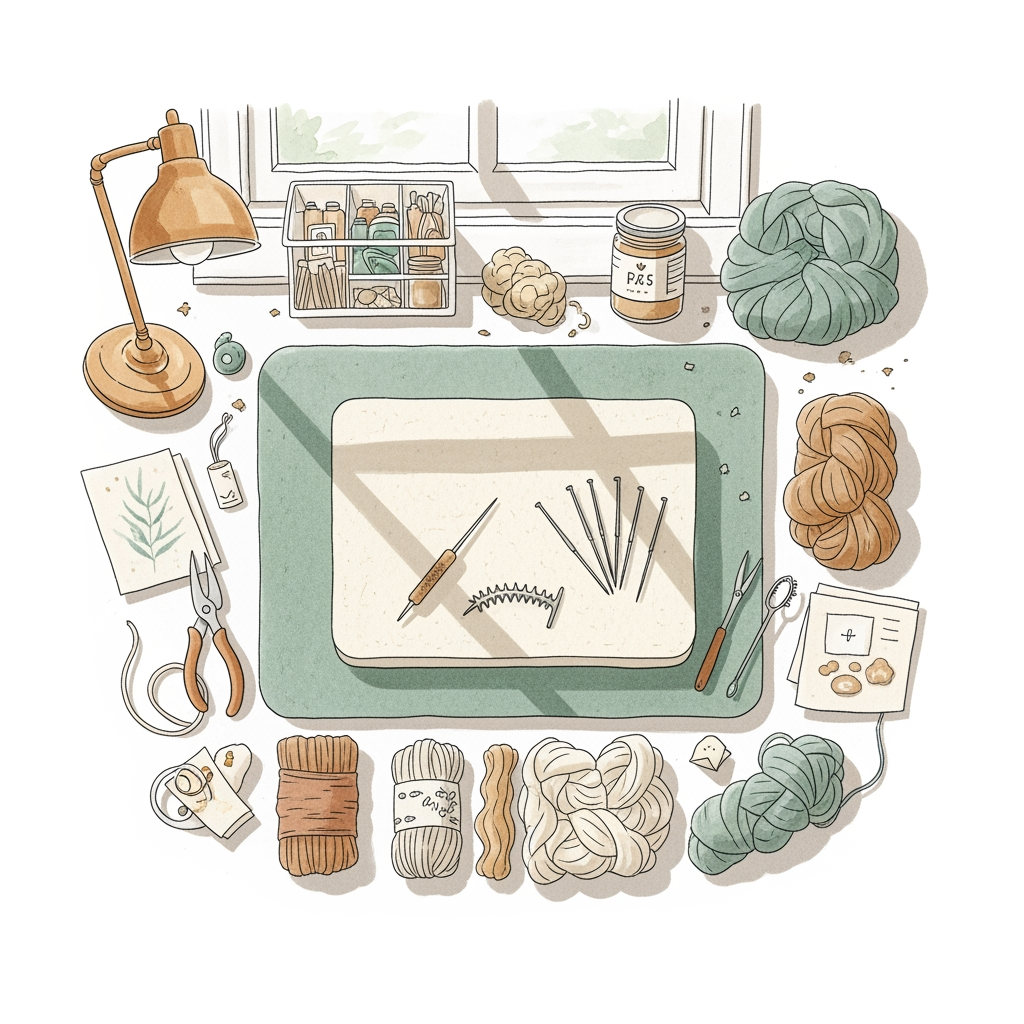
While wool is the star, your tools are the supporting cast that makes the magic happen. The most important tool is the needle itself, which comes in various gauges (sizes) and tip styles, such as star, triangular, or spiral.
- Triangular Needles: The standard for general-purpose felting.
- Star Needles: Excellent for surface work because they have more barbs, which helps smooth out the surface faster.
- Foam Pad or Brush Mat: Never felt on a hard surface, as you will break your needles instantly; a dense foam pad provides the necessary "give."
Remember, needles are consumables. They will dull and break over time, just like knitting needles can bend or snag. Keep a variety of gauges on hand, and don’t be afraid to switch them out as you move from building the core to refining the details.
Needle felting is a tactile, meditative practice that rewards patience and a steady hand. By understanding the properties of your wool and matching the fiber type to your project’s needs, you can elevate your work from simple shapes to professional-grade fiber sculptures. Take the time to experiment with different breeds and textures, and you will quickly develop an intuition for how each fiber behaves under your needle. Happy felting, and enjoy the process of watching your creations come to life.