7 Best Daylight Floor Lamps For Yarn Shop Quality Lighting
Discover the 7 best daylight floor lamps to achieve true-to-life color accuracy in your yarn shop, ensuring perfect project matching and vibrant displays.
Nothing ruins a late-night knitting session faster than struggling to distinguish between navy blue and black yarn in dim light. Proper illumination is just as critical to your craft as choosing the right needle material or managing your tension. These seven lamps provide the clarity needed to spot dropped stitches and subtle color shifts before they become permanent mistakes. Investing in the right light is the smartest way to protect your eyes and ensure your finished garments look as vibrant as the skeins you fell in love with.

OttLite 2-in-1 LED Magnifier: Best Overall Choice
When you are working with dark, fingering-weight wool, finding a dropped stitch can feel impossible under standard household bulbs. The OttLite 2-in-1 combines a clean, daylight-balanced LED with a built-in magnifier that makes reading your knitting chart or checking your gauge effortless.
The versatility of this lamp is its greatest strength. You can easily switch between a floor-standing configuration for your favorite armchair or a tabletop setup for your desk. The magnifying lens is a game-changer for those moments when you’re working with complex lace patterns or tiny 2.00mm needles.
However, keep in mind that the magnification area is relatively small. You will need to position the lamp precisely to keep your work in the "sweet spot" of the lens. It is an excellent companion for detail-oriented work, but it won’t replace a broad-coverage lamp for large-scale colorwork.
Brightech Litespan LED: Best for Large Projects
If you are currently working on a massive cabled blanket or a long, stockinette-heavy sweater, you need a lamp that casts a wide, consistent pool of light. The Brightech Litespan delivers an expansive beam that covers your entire lap without creating harsh shadows or annoying glare.
The flexible neck allows you to tilt the light exactly where you need it, whether you are knitting in a deep recliner or sitting upright at a table. Because it uses high-efficiency LEDs, it stays cool to the touch even after hours of marathon knitting.
This is a functional, no-nonsense tool that prioritizes coverage over aesthetics. If you struggle with eye fatigue during long sessions, the broad, flicker-free light of this lamp is a significant relief. It’s a workhorse for the dedicated knitter who values consistency above all else.
Daylight Company Slimline 3: Best Professional Pick
The Slimline 3 is the gold standard for those of us who treat our knitting like a serious profession. Its long, slender head provides a massive spread of light, which is essential when you are managing multiple balls of yarn for intricate stranded colorwork.
The light quality here is exceptionally crisp, making it easy to spot slight variations in dye lots or subtle differences in fiber texture. The touch-sensitive dimmer is a welcome feature, allowing you to adjust the brightness based on the time of day or the specific color of your project.
While it comes with a higher price tag, the build quality is superior to most consumer-grade lamps. It is designed to last for years, making it a worthy investment for someone who knits daily. If you value precision and professional-grade clarity, this is the lamp to beat.
Verilux Heritage Floor Lamp: Best Natural Light

There is a specific quality to daylight that makes choosing yarn colors much easier, and the Verilux Heritage mimics that spectrum better than almost anything else. It reduces the "yellowing" effect that cheap bulbs have, which is vital when you are trying to match a mohair strand to a base yarn.
The design is elegant and fits well into a living room setting, which is a nice bonus if you prefer your knitting space to look like a home rather than a workshop. The light is soft yet bright, providing excellent visibility without being harsh on the eyes.
Because the light is so balanced, it helps you see the true character of your fiber. If you are working with high-contrast projects or delicate silk blends, this lamp ensures you aren’t fooled by artificial light tints. It is a fantastic choice for the knitter who wants both form and function.
Neatfi XL 2,200 Lumens: Best for Color Accuracy
When you are working with subtle heathered yarns or complex gradients, you need a lamp that doesn’t distort color. The Neatfi XL is incredibly bright, providing 2,200 lumens of light that cut through even the darkest, most saturated fibers.
The sheer brightness of this lamp is its standout feature, making it perfect for knitters who find themselves squinting at their work as the sun goes down. It illuminates your entire workspace, ensuring that your color choices remain accurate from the first cast-on to the final bind-off.
Because it is so powerful, make sure to use the dimming features to find the right balance for your specific environment. It is a heavy-duty option that is best suited for a dedicated craft corner. If you are prone to color-matching errors, this lamp is your best defense.
Globe Electric Architect: Best Versatile Option
The Architect lamp offers a classic, adjustable design that feels right at home in a dedicated knitting nook. Its swing-arm mechanism is incredibly responsive, allowing you to pull the light close when you are working on a tricky cable cross or push it back when you need more room to maneuver.
This lamp is perfect for those who like to customize their setup based on the project at hand. Whether you are knitting socks, sweaters, or delicate lace shawls, you can adjust the angle of the head to eliminate shadows on your needles.
It is a more mechanical option than the modern LED towers, which gives you more control over the physical placement of the light. While it may require a bit more fiddling to get the position just right, the flexibility is unmatched. It is a reliable, tactile choice for the hands-on knitter.
TaoTronics LED Floor Lamp: Best Budget Selection
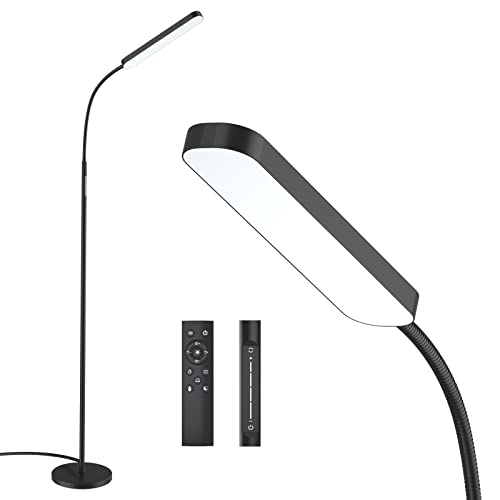
If you are just starting your knitting journey and don’t want to break the bank, the TaoTronics LED floor lamp is a fantastic entry point. It offers a clean, bright light that is leagues ahead of a standard living room lamp, at a fraction of the cost of professional models.
The lamp is lightweight and easy to move, which is great if you tend to knit in different rooms throughout the house. It features multiple color temperature settings, allowing you to choose between a warm, relaxing glow or a cool, crisp light for detailed work.
While it lacks the heavy-duty build of the more expensive options, it delivers exactly what a knitter needs: clear, adjustable light. It is a sensible purchase for the budget-conscious maker who still wants to prioritize eye health. You don’t need a top-tier lamp to see your stitches clearly, and this model proves it.
Why Daylight Lighting Matters for Fiber Artists
Fiber arts are inherently visual, and the way light interacts with your yarn can change your entire perception of a project. When you knit in poor light, your eyes have to work significantly harder to focus, leading to headaches and premature fatigue.
Furthermore, artificial lighting often creates a yellow or orange cast that masks the true undertones of your yarn. This is particularly problematic when you are working with natural fibers like wool or alpaca, where subtle color differences can make or break a project’s look.
Good lighting also helps you maintain consistent tension. When you can clearly see the relationship between your needle and the yarn, your hands naturally fall into a more rhythmic, efficient pattern. Investing in daylight lighting is as much about your long-term health as it is about the quality of your knitting.
Understanding Color Rendering Index for Knitting
The Color Rendering Index (CRI) is a measurement of how accurately a light source reveals the true colors of objects compared to natural daylight. For knitters, a high CRI is non-negotiable, as you need to know that the "teal" you are using is actually teal and not a muddy blue.
Look for lamps with a CRI of 90 or higher to ensure you are seeing your yarn’s true saturation and hue. A lower CRI can lead to "metamerism," a phenomenon where colors look like a perfect match in the shop but appear completely different once you step outside.
When you are buying a lamp, don’t just look at the lumen count; check the CRI rating as well. A very bright light with a low CRI will still leave you guessing about your color choices. Prioritize color accuracy to ensure your hard work results in a beautiful, cohesive garment.
How to Position Your Lamp to Prevent Eye Strain
The most common mistake knitters make is placing their light source directly behind them, which casts a shadow of their own body onto their hands. Instead, position your lamp to the side of your dominant hand, angled slightly toward your needles.
This placement minimizes glare on your needles, especially if you prefer slick metal or polished wood surfaces. If you find yourself leaning forward constantly, your light is likely too far away or not bright enough; adjust your lamp closer to bring the work into your natural field of vision.
Finally, consider the height of the lamp relative to your seated position. The light should be at a height where it illuminates your hands without shining directly into your eyes. By creating a well-lit, shadow-free zone, you can knit for hours without the typical strain that comes from fighting with your environment.
Finding the right lamp is a personal journey that depends on your specific knitting habits, your workspace, and the types of projects you love most. Whether you prioritize color accuracy for complex stranded work or simple, bright illumination for basic stockinette, there is a model here to suit your needs. Don’t settle for dim, yellow, or inconsistent light that makes your craft more difficult than it needs to be. Your eyes are your most important knitting tool, so give them the light they deserve and watch your projects reach a new level of clarity.