6 Best Lint Shavers For Yarn Care That Actually Work
Keep your knitwear looking pristine with these six top-rated lint shavers. We review the most effective tools to safely remove pills and restore your yarn.
After spending two decades watching beautiful hand-knitted sweaters succumb to the inevitable friction of daily wear, I know the heartbreak of seeing your hard work covered in unsightly pills. A quality lint shaver is the most essential tool in a knitter’s maintenance kit, acting as a restorative device for your fiber art. Choosing the right one depends entirely on the fiber content, the twist of your yarn, and your tolerance for manual labor. This guide breaks down the best options to keep your hand-knits looking like they just came off the blocking board.
Philips Fabric Shaver: The Gold Standard Pick
When you’ve spent forty hours on a complex cable-knit sweater, you don’t want to risk it with a cheap, inconsistent blade. The Philips model is widely regarded as the gold standard because of its remarkably consistent motor speed and precision-engineered head. It maintains a steady RPM, which prevents the "snag and pull" that can happen when a motor slows down under the weight of thick, lofty wool.
The height-adjustable cap is the real hero here, allowing you to control how close the blades get to the fabric surface. This is vital for high-twist yarns that might have a slight halo; you want to remove the surface fuzz without cutting into the structural integrity of the stitch. It’s reliable, sturdy, and arguably the most trustworthy tool for a knitter’s prized collection.
Bottom line: If you want peace of mind while grooming your favorite heirloom pieces, this is the investment you should make.
Conair Fabric Shaver: Best Budget Option


We’ve all been there: you’ve spent your entire budget on luxury hand-dyed merino and suddenly realize you need a maintenance tool. The Conair is the classic "workhorse" that you’ll find in almost every knitter’s drawer for a reason. It is affordable, widely available, and surprisingly effective at clearing away the surface pilling that happens in high-friction areas like underarms and sleeves.
Because it is battery-operated, it lacks the raw, sustained power of a plug-in unit, but it is perfect for quick touch-ups. I often recommend this for beginners who are just starting to build their toolkit and don’t need a professional-grade machine yet. Just be mindful of the battery levels; a dying battery can cause the blades to drag, which is a recipe for accidental snags.
Bottom line: It’s the perfect entry-level tool for keeping your everyday acrylic or wool-blend accessories looking fresh.
Gleener Fabric Shaver: Best for Delicate Knits
Not all pilling requires a motorized blade, and sometimes the best approach is a manual one. The Gleener is unique because it uses three different interchangeable edges, each designed for a specific weight of fabric. For delicate lace or fine-gauge silk-mohair blends, the gentle edge is a lifesaver, allowing you to lift pills without putting the fiber through a mechanical shredder.
Using a manual tool forces you to slow down and really look at your stitches, which is a practice I encourage every knitter to adopt. You can feel the resistance of the fabric, ensuring you aren’t catching any stray yarn overs or delicate cables. It’s a tactile experience that feels much more like "fiber care" than "appliance maintenance."
Bottom line: If you are terrified of accidentally cutting your hand-knitted lace, the Gleener provides the control you need.
Beautural Fabric Shaver: Best for Large Areas
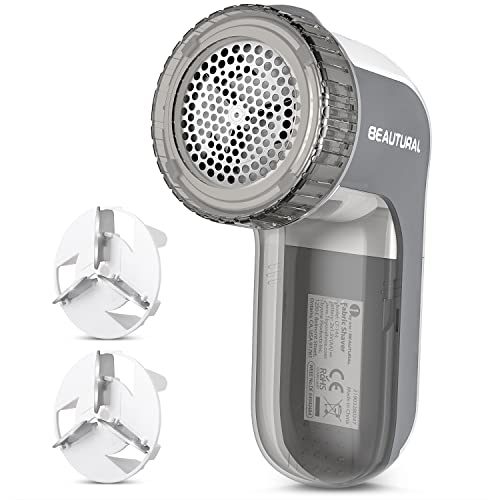
When you’ve finished a full-length, oversized sweater in a bulky-weight yarn, the sheer surface area can be daunting. The Beautural features a wider shaving head that makes quick work of large, flat panels like the back of a cardigan or a heavy blanket. The efficiency of the larger head means you spend less time hovering over the fabric, reducing the risk of over-shaving a single spot.
It also comes with a variety of settings, which is essential for different yarn textures. If you are working on a piece with a lot of "bloom"—that soft, fuzzy quality found in woolen-spun yarns—you need a tool that can be dialed back to avoid stripping away the character of the yarn. It balances speed with safety better than most high-capacity shavers.
Bottom line: Choose this if you have a large inventory of sweaters and want to get the job done in record time.
Bymore Rechargeable Shaver: Best for Precision
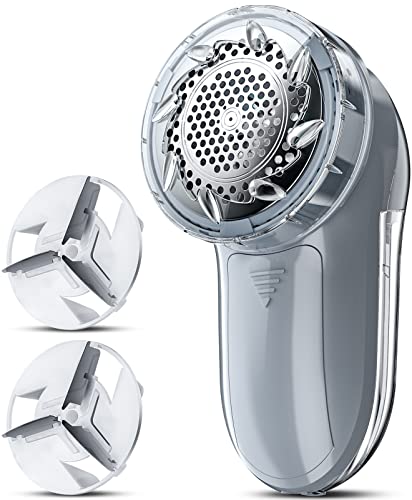
Precision is everything when you are working with intricate colorwork or garments with varying textures. The Bymore is a sleek, rechargeable unit that offers a smaller shaving head, making it ideal for maneuvering around buttons, necklines, and cuffs. It’s the tool I reach for when I’m dealing with small, localized pilling on a sock heel or a delicate collar.
The rechargeable battery is a significant upgrade over standard AA-powered models, providing a consistent, high-torque performance that doesn’t fade as the battery drains. This consistency is key to avoiding the "choppy" look that occurs when blades slow down. It’s a small, nimble tool that feels like a natural extension of your hand.
Bottom line: It’s the surgeon’s tool of the knitting world, perfect for tight spaces and detailed garments.
Rowenta Lint Remover: Best Heavy Duty Choice

Sometimes you’re dealing with a coat or a heavy, felted wool piece that requires a bit more muscle. The Rowenta is built for durability and power, featuring a robust motor that won’t bog down even when faced with dense, stubborn pills on thick, worsted-weight fabrics. It’s the tool you use when the fabric is sturdy enough to handle a more aggressive shave.
Because of its power, I suggest using this with caution on anything with a loose gauge or a delicate fiber content. It’s meant for heavy-duty restoration rather than routine maintenance of your finest cashmere. However, for a sturdy wool sweater that has seen years of heavy wear, it can make it look brand new again.
Bottom line: This is the heavy lifter for your most durable, high-friction garments.
How to Safely De-Pill Your Hand-Knitted Garments
The most important rule in de-pilling is to lay your garment completely flat on a hard, non-slip surface. Never try to shave a sweater while wearing it or while it is draped over your lap, as the uneven tension can lead to accidental holes. Always start with a light touch, moving in circular motions rather than dragging the shaver in long, aggressive lines.
Before you begin, check your gauge and the yarn’s twist. A tightly plied, smooth yarn can handle a closer shave, while a soft, single-ply yarn is extremely vulnerable to mechanical damage. If you see a stray loop, stop immediately and use a crochet hook to pull it to the inside of the garment rather than shaving over it.
- Always test on an inconspicuous area, like the inside of a hem.
- Keep the fabric taut but not stretched.
- Empty the lint trap frequently to maintain suction and blade speed.
Understanding Fiber Content and Pilling Risks
Pilling is a natural byproduct of friction, but certain fibers are more prone to it than others. Synthetic fibers like acrylic and nylon often hold onto pills stubbornly because they are strong and don’t break away easily. Natural fibers like merino or cashmere pill because the short, soft fibers work their way to the surface, creating that characteristic fuzz.
Understanding how your yarn was spun is also critical. Worsted-spun yarns, which are smooth and tightly twisted, pill less than woolen-spun yarns, which are lofty and have more fiber ends exposed. When choosing yarn for a high-wear project like socks or a daily-wear sweater, look for a higher ply count or a blend with a small percentage of nylon for added durability.
- Superwash wool: Often prone to pilling due to the smooth nature of the processed fiber.
- Alpaca: Extremely soft, but the long fibers can create large, wispy pills.
- Cotton/Linen blends: Generally pill less but can lose their shape if over-shaved.
Proper Maintenance for Your Lint Shaver Blades
A dull blade is the number one cause of fabric damage, as it pulls and tears at the fibers instead of slicing through them cleanly. Make sure to clean the blade assembly after every use, removing any trapped lint or dust that can clog the motor. If you notice the shaver struggling or making a high-pitched grinding sound, it’s time to replace the blades or clear the housing.
Most shavers have replaceable heads, and I recommend keeping at least one spare set on hand. Don’t wait for your blades to become completely ineffective; if you notice you’re having to go over the same area three or four times, the blades are likely dull. A sharp blade is a safe blade, and it’s a small price to pay for the longevity of your hand-knits.
Frequently Asked Questions About Fabric Care
Can I use a lint shaver on mohair? Generally, no. Mohair is intended to have a "halo," and a shaver will destroy the delicate, fuzzy character that makes mohair special. Use a soft-bristled sweater brush instead.
Will shaving make my sweater thinner over time? Yes, every time you shave, you are removing a tiny amount of fiber. Use a shaver sparingly and only when the pilling becomes visually distracting to preserve the garment’s structure.
What if I accidentally cut a hole? Don’t panic! If you catch a small hole early, you can often duplicate stitch over it using a bit of the original yarn from your project stash. Always keep a small amount of leftover yarn from every project for this exact reason.
Maintaining your hand-knitted wardrobe is an act of love that extends the life of your creativity far beyond the final bind-off. By choosing the right tool for your specific fiber and gauge, you can keep your pieces looking pristine for years to come. Remember that patience is your best knitting tool, and a gentle touch with these devices will always yield the best results. Happy knitting, and may your sweaters remain pill-free and beautiful.