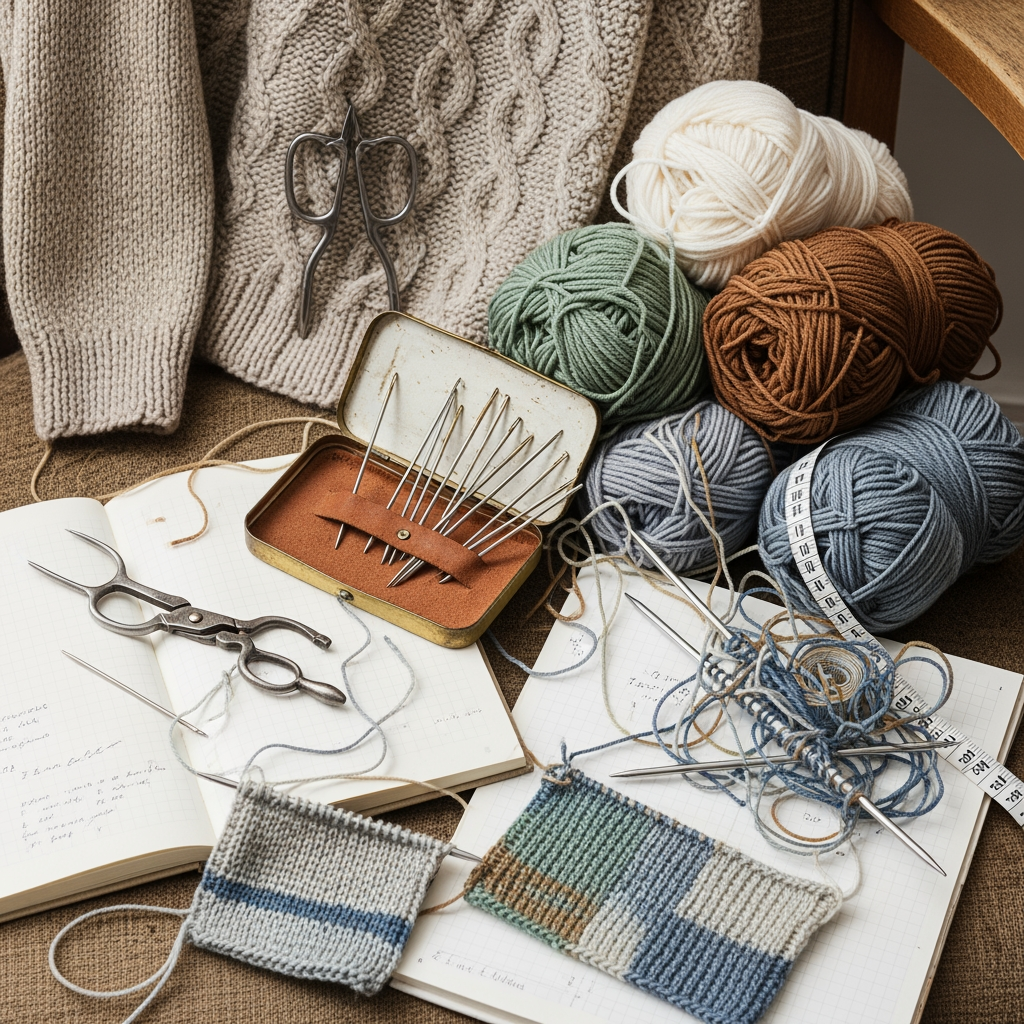
6 Best Wool Needles For Joining Knitted Pieces
Selecting the right tool ensures seamless seams. We review the 6 best wool needles for joining knitted pieces, focusing on durability, eye size, and finish.
The final stage of any knitting project is where the magic happens, transforming flat, disparate panels into a cohesive garment. Choosing the right tapestry needle is just as critical as selecting the perfect yarn or needles for your gauge. A poor choice here can lead to split plies, frustrating snags, or seams that look bulky and amateurish. These six selections represent the gold standard for finishing work, ensuring your hard-earned stitches remain secure and beautiful.
Clover Chibi Darning Needles: Best Overall Choice


When you reach the end of a long project, you want a tool that simply works without any fuss. The Clover Chibi set is a staple in my notions bag because it offers a variety of sizes in a convenient, portable case.
These needles feature a slightly flexible, soft tip that glides through knitted fabric without piercing the fibers themselves. This is crucial for beginners who might struggle to find the exact "path" between stitches when seaming.
The set includes three different sizes, covering everything from delicate lace-weight mohair to chunky, oversized wool. While they aren’t the most rigid needles on the market, their versatility makes them the most reliable choice for a knitter’s primary kit.
CocoKnits Steel Stitch Needles: Best for Precision
If you are working on intricate colorwork or garments with fine-gauge yarn, standard plastic needles often feel too blunt. CocoKnits Steel Stitch needles are designed with a sharp, polished tip that allows for surgical precision.
These are particularly effective when you need to pick up a dropped stitch or navigate through a tight mattress stitch seam. Because they are made of steel, they don’t bend under tension, giving you total control over where the needle exits the fabric.
Be aware that the sharp tip can be unforgiving if you aren’t careful; it is easy to accidentally split a yarn ply if your tension is inconsistent. Reserve these for projects where you need absolute accuracy and clean, invisible joins.
Tulip Tapestry Needles: Best for Smooth Finishing
Tulip is renowned for their high-quality manufacturing, and their tapestry needles are no exception. They are incredibly smooth, which prevents the "drag" often felt when pulling a long tail of yarn through a dense seam.
The eye of the needle is polished to perfection, meaning your yarn won’t fray or snap during the process. This is a game-changer when working with luxury fibers like silk or high-twist merino that are prone to pilling.
These needles are an investment, but they provide a tactile experience that makes the finishing process feel luxurious rather than tedious. If you struggle with yarn catching or snagging, the superior finish of a Tulip needle will solve that frustration immediately.
Bohin Bent Tip Needles: Best for Ergonomic Ease

Seaming a sweater can take hours, and that repetitive motion often puts strain on your wrists and fingers. The Bohin bent tip design is a revelation for ergonomics, as it allows you to scoop through stitches without bending your wrist at an awkward angle.
The bent tip acts as a hook, making it much easier to slide under loops of yarn without having to flip the fabric over constantly. This is particularly helpful for those with arthritis or anyone who finds traditional straight needles cumbersome.
While it takes a moment to get used to the angle, once you master the movement, your seaming speed will increase significantly. They are a brilliant tool for long seams, such as side seams or sleeve attachments.
Susan Bates Finishing Needles: Best Value Set
You don’t always need high-end materials to get a professional result. The Susan Bates set is an accessible, no-nonsense option that provides exactly what you need at a price point that makes losing a needle less of a tragedy.
These needles are sturdy and feature a large eye, which is a blessing for those who struggle with threading thicker wools. They are the "workhorse" needles of the knitting world—reliable, durable, and readily available.
They might lack the polished finish of more expensive brands, but they get the job done reliably. For a beginner building their first collection of tools, this set is the smartest starting point.
Dritz Yarn Darner Needles: Best for Thick Yarns
Working with bulky or super-bulky yarn requires a needle with a substantial eye and a long, sturdy shaft. Dritz Yarn Darners are specifically designed to handle these heavy-duty tasks without feeling like you’re trying to sew with a tent stake.

Because they are longer than standard tapestry needles, they allow you to weave in ends over a greater distance. This is essential for heavy yarns, as it ensures the tail stays buried securely within the fabric weight.
The blunt tip is perfect for pushing through thick, lofty yarns without catching on the individual fibers. If your projects involve chunky knit blankets or oversized sweaters, keep a dedicated pair of these on hand.
How to Select the Right Needle Size for Your Yarn
The rule of thumb is to choose a needle that is slightly thinner than the knitting needle you used for the project. If you used a 4mm knitting needle, look for a tapestry needle that is roughly 3mm or 3.5mm in diameter.
You want the needle to pass through the fabric without stretching the existing stitches. If the needle is too thick, it will create unsightly gaps in your seam; if it is too thin, it may be difficult to pull the yarn through comfortably.
Always consider the fiber content as well. Slippery fibers like bamboo or silk require a needle with a bit of grip, while grippy, sticky wools benefit from a slick, polished metal needle to reduce friction.
Why Bent Tip Needles Improve Your Seaming Speed
Bent tip needles essentially serve as a "hook" that stays oriented in the right direction. By keeping the tip angled upward, you can slide the needle through the loops of your knitted fabric in a single, fluid motion.
This eliminates the need to constantly adjust your hand position or flip the garment to see where the needle is exiting. It turns a manual, stop-and-go process into a rhythmic, flowing task.
For long seams like those found on a cardigan or a blanket, this efficiency is invaluable. It reduces hand fatigue and helps maintain consistent tension along the entire length of the seam.
Essential Tips for Achieving Invisible Seams
The secret to an invisible seam is matching your seaming yarn to the weight and color of the project yarn. If you are working with a variegated or hand-dyed yarn, try to match the specific color section you are currently seaming.
Always work from the right side of the fabric whenever possible. By using the mattress stitch—picking up the bar between the edge stitch and the next stitch—you create a seam that mimics the look of a knitted column.
Don’t pull your seaming yarn too tight, or you will create a puckered, stiff seam that ruins the drape of the garment. Aim for a tension that matches the natural stretch of the knitted fabric itself.
How to Properly Weave in Ends for Durability
Weaving in ends is the final line of defense against your project unraveling over time. Never just snip your yarn close to the fabric; you must weave the tail through the back of the stitches for at least two inches.
Follow the path of the yarn in the knitting itself, mimicking the "V" shape of the stitches. This hides the tail completely and ensures that it won’t pop out when the garment is washed or stretched.
For extra security, especially on high-wear items like socks, try splitting the yarn ply with your needle as you weave. This traps the tail within the fiber itself, making it nearly impossible for the end to work its way loose.
Mastering the art of finishing is what separates a homemade project from a professional-looking garment. By selecting the right needle for your specific yarn and project, you ensure that all your hard work is protected and polished. Don’t be afraid to experiment with different materials and shapes until you find the tool that feels like an extension of your own hand. Happy seaming, and may your ends always stay tucked away.