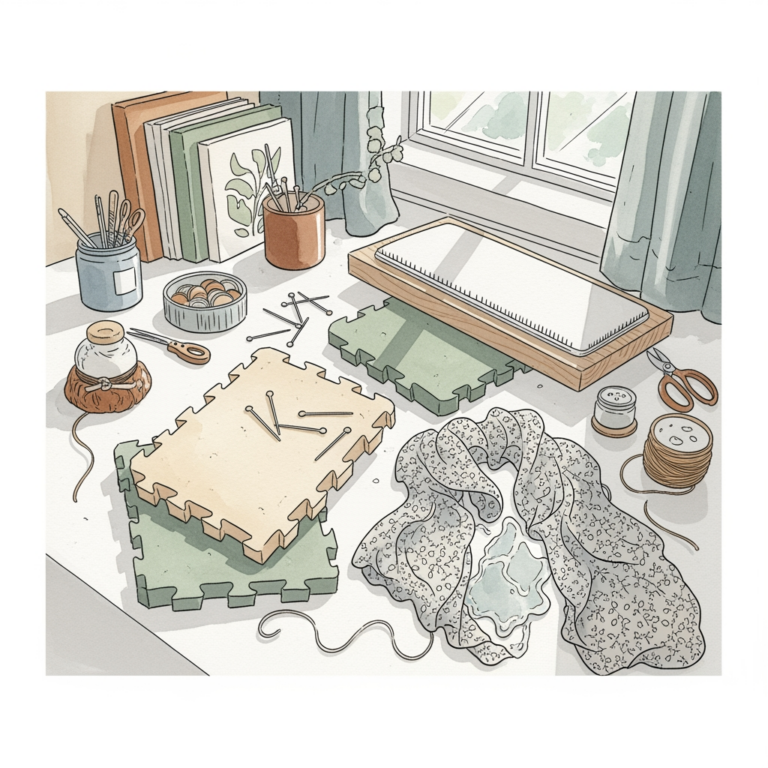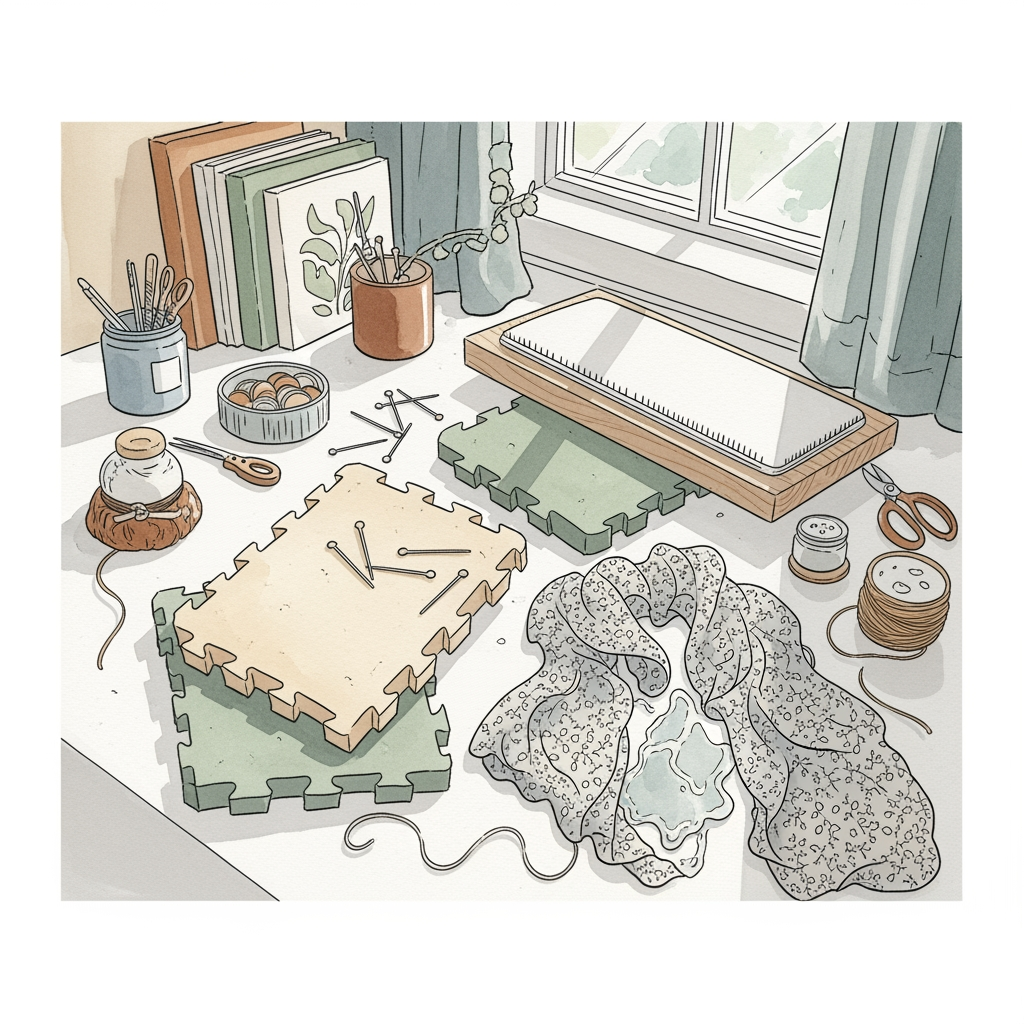
7 Best Blocking Boards For Small Accessories To Try
Perfect your crochet and knitting projects with these 7 top-rated blocking boards. Discover durable, space-saving tools designed for precise finishing touches.
Blocking is the quiet, transformative magic that turns a wobbly, uneven piece of knitting into a professional-looking garment. When working on small accessories like lace mitts, cowls, or delicate doilies, having the right surface is just as important as your choice of yarn. The wrong board can leave your stitches distorted or your edges uneven, undoing hours of careful work. Here are the top surfaces to ensure your hard work gets the finish it deserves.
Knitter’s Pride Lace Blocking Mats: Best Overall
These mats are the industry standard for a reason: they are dense enough to hold a pin firmly, yet soft enough to maneuver easily. The thickness is consistent, which is vital when you are pinning out a delicate lace shawl or a pair of intricate fingerless gloves.


The standout feature here is the interlocking design that stays put. Unlike cheaper foam that can wiggle or gap, these tiles lock together with satisfying precision. This creates a seamless, flat workspace that won’t shift while you are wrestling with tension.
If you frequently block lace, the density of these mats is a major advantage. It prevents the pins from leaning or popping out, ensuring your picot edges remain sharp and uniform. They are truly the workhorse of the serious knitter’s studio.
Clover Blocking Mats: Best for Delicate Pieces

Clover mats are often thinner than the heavy-duty alternatives, which makes them incredibly easy to store in a small apartment. They are perfectly suited for smaller accessories that don’t require massive amounts of floor space.
Because they are slightly softer, they are exceptionally gentle on delicate fibers like mohair or fine silk. You won’t struggle to push pins into the surface, which minimizes the risk of snagging those precious, gossamer-thin yarns.
One thing to keep in mind is that their smaller footprint means they are best for items like socks or small cowls. If you try to block a massive wool afghan on these, you might find the lack of rigidity a bit frustrating. For small, intricate projects, however, they are a delight to use.
Boye Interlocking Foam Boards: Best Budget Pick

If you are just starting your journey into blocking, you don’t need to break the bank. These foam boards offer a reliable, no-frills surface that gets the job done for a fraction of the cost of high-end kits.
They are lightweight and portable, making them great if you have to block your project on a dining room table and clear it away quickly. While they might show wear and tear faster than premium options, they provide a perfectly functional grid for standard blocking.
Don’t let the lower price point fool you into thinking they aren’t useful. For simple projects like basic stockinette scarves or cotton washcloths, they provide all the stability you need. They are the perfect entry point for any knitter building their tool kit.
Cocoknits Knitter’s Block Kit: Best for Precision

This kit is designed for the knitter who treats blocking as a science. It includes a specialized board, pins, and even a set of magnets to help you maintain perfect geometry while you work.
The inclusion of a grid on the surface is a game-changer for symmetry. If you are blocking a pair of socks, you can ensure each one is stretched to the exact same dimensions, which is essential for a professional fit.
It is an investment, certainly, but the thought put into the accessories makes the process much faster. If you struggle with getting your edges straight, the built-in measuring tools in this kit will save you from the frustration of constant re-pinning.
Fringe Supply Co. Blocking Board: Best Wood Option
For those who prefer a natural, tactile experience, a wooden blocking board is a beautiful alternative to synthetic foam. These boards are incredibly sturdy and provide a solid, non-slip base for your projects.
Wood is particularly excellent for blocking items that require significant tension, such as heavy wool sweaters or complex cabled accessories. You don’t have to worry about the board compressing or warping under the weight of wet, heavy fibers.
While they are heavier and less portable than foam, they last a lifetime. If you are looking for a "buy it once" tool that looks as good as it performs, this is the gold standard for your craft room.
KnitIQ Blocking Mats with Grid: Best for Symmetry

The printed grid on these mats is not just a suggestion; it is a precision tool. When you are blocking lace with complex geometric repeats, having a visual guide printed directly on the mat takes the guesswork out of the process.
The density of the foam is high, which means it holds pins securely without the surface flaking or crumbling over time. This is particularly important when working with high-tension lace that requires dozens of pins to reveal the stitch pattern.
These mats are a favorite for knitters who find themselves constantly reaching for a ruler. By removing the need to measure every three inches, you can focus entirely on the drape and shape of your work.
Beadsmith Macrame Board: Best for Small Projects

While technically designed for macrame, these boards are a hidden gem for knitters working on tiny accessories. If you are blocking jewelry, small lace medallions, or delicate trims, the grid on this board is unparalleled.
The surface is designed to hold pins at many different angles, which is helpful when you are working on circular or non-traditional shapes. It’s compact, rigid, and surprisingly versatile for the fiber artist who works on a smaller scale.
It’s a perfect niche tool for the knitter who loves the details. If you find your larger foam mats are overkill for a pair of delicate earrings or a lace collar, this board provides the precision you’ve been looking for.
How to Choose the Right Blocking Surface Material
Choosing between foam, wood, or cork comes down to your project type and storage capacity. Foam is the most versatile for general knitting, while wood offers superior longevity and stability for heavy projects.
Consider the following when making your selection:
- Fiber Weight: Heavy wools require dense, rigid surfaces to prevent sagging.
- Project Size: Ensure your surface area matches your largest likely project.
- Storage: If you live in a small space, look for interlocking tiles that can be broken down.
- Pin Retention: Ensure the material is thick enough to hold pins at an angle without them popping out.
Always test a small corner of your mat with your pins to ensure the material doesn’t leave residue on light-colored yarns. Some cheaper foam can react with certain fibers if left for too long in high humidity.
Essential Tools for Precision Blocking Success
A blocking board is only as good as the tools you pair with it. T-pins are the industry favorite because their shape prevents them from slipping through the weave of your fabric.
Beyond pins, consider adding these to your kit:
- Blocking Wires: These are essential for straight edges on shawls and blankets.
- Measuring Tape: A flexible tape is crucial for checking dimensions as you stretch.
- Spray Bottle: A fine mist is often better than soaking your project, especially for delicate fibers.
- Rust-Proof Pins: Never risk using standard pins, as they can leave permanent rust marks on wet yarn.
Investing in high-quality stainless steel pins will pay for itself the first time you don’t have to worry about staining a light-colored project. Reliability in your tools means you can focus on the final shape of your work.
Tips for Perfecting Your Blocking Technique
The biggest mistake knitters make is over-stretching their work. Remember that blocking is meant to even out stitches and open up patterns, not to force a garment into a size it wasn’t knitted to be.
Start by gently pinning the corners of your piece, then work your way toward the center. This helps distribute the tension evenly across the fabric and prevents "pulling" that can distort your stitch definition.
If you are blocking lace, patience is your best friend. Let the piece dry completely before removing the pins; if you unpin while the yarn is still damp, the fibers will "remember" their previous shape and the blocking will fail.
Blocking is the final, essential step that separates a handmade item from a store-bought piece. By choosing the right surface for your specific needs, you ensure that your stitches bloom and your edges remain crisp. Take your time, use the right tools, and enjoy the transformation of your hard work. Happy knitting, and may your edges always be straight.