7 Best Yarn Swifts For Untwisting Hanks To Use
Find the perfect yarn swift to simplify your knitting. Our guide reviews 7 top models, helping you untwist hanks efficiently for a smooth crafting process.
Transforming a beautiful, hand-dyed hank of yarn into a manageable cake is one of the most satisfying rituals in a knitter’s life. However, without the right equipment, that process can quickly devolve into a frustrating nightmare of tangled loops and knots. A high-quality yarn swift acts as your extra set of hands, holding the fiber steady so you can focus on the rhythmic joy of winding. Choosing the right tool depends on your space, your budget, and how often you find yourself falling in love with skeins that haven’t been pre-wound.
Stanwood Needlecraft Tabletop Swift: Best Overall
This model is the industry standard for a reason, balancing build quality with a smooth, silent rotation that keeps tension consistent. It features a sturdy metal clamp that attaches firmly to most tables, ensuring it won’t wobble while you wind.
The umbrella-style mechanism opens effortlessly, accommodating a wide range of hank sizes from lace weight to bulky. Because it operates so fluidly, you rarely have to worry about the yarn snagging or the swift stopping mid-turn, which is vital when you are working with delicate, hand-spun fibers.
For the serious hobbyist who buys hanks regularly, this is a "buy it once" investment. It bridges the gap between professional equipment and home-use practicality perfectly.
Amish-Style Wooden Yarn Swift: Best Sturdy Choice
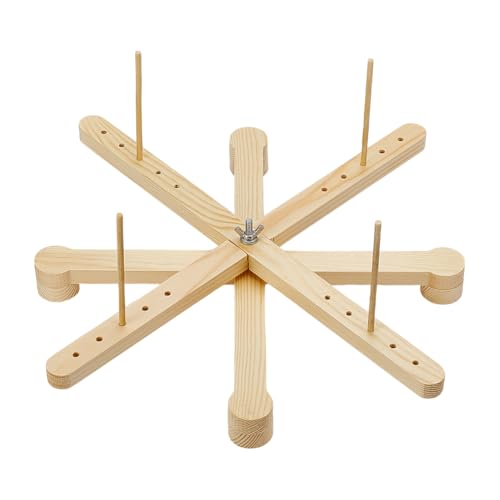

If you prefer a tool that doesn’t require clamping to your furniture, the Amish-style swift is your best friend. It consists of two wooden cross-pieces that sit directly on your table, providing a low-profile, rock-solid base.
Because it doesn’t rely on complex hinges or umbrella ribs, there is almost nothing that can break or bend. It is essentially a simple, elegant piece of woodworking that relies on gravity and friction to spin.
This is ideal for those who work with heavy, high-yardage hanks that might cause a lightweight umbrella swift to tip over. It is also incredibly easy to disassemble and store in a small drawer when you aren’t winding.
Lacis Wooden Umbrella Swift: Best Classic Design
There is something undeniably beautiful about a well-crafted wooden umbrella swift. The Lacis model captures that traditional aesthetic while providing the mechanical reliability needed for modern fiber processing.
The wood is polished to a high sheen, ensuring that even the most delicate silk or mohair blends won’t catch on rough edges. It feels substantial in the hand and adds a touch of artisan charm to your craft room.
While it requires a bit more care than a metal model, the tactile experience of using wood is unmatched. It is a favorite for those who appreciate tools that are as much a joy to look at as they are to use.
KnitPicks Yarn Swift: Best Value for Beginners
If you are just starting your journey into buying hand-dyed hanks, you don’t need to break the bank to get a functional tool. The KnitPicks swift offers a straightforward, no-frills design that gets the job done reliably every time.
It is lightweight and portable, making it easy to tuck away if you don’t have a dedicated craft space. While it may not feel as heavy-duty as professional-grade equipment, it is more than capable of handling the occasional project.
For someone who knits a few sweaters a year, this is the perfect entry point. It allows you to graduate from the "chair-back" method of winding without spending a fortune.
Strauch Jumbo Ball Winder and Swift: Best Pro Set
If you are a prolific knitter who works with massive amounts of yarn, you eventually realize that your tools need to keep up with your speed. The Strauch system is designed for high-volume winding, providing a level of precision that is hard to find elsewhere.
This setup is built to handle jumbo hanks without breaking a sweat, ensuring that your yarn cakes are perfectly tensioned every time. When you are winding 800 yards of lace-weight yarn, you want a system that won’t jitter or stall.

This is a significant investment, but for those who run a small business or knit constantly, the time saved is worth every penny. It turns a chore into a seamless, professional-grade workflow.
Nancy’s Knit Knacks Heavy Duty Swift: Best Durability
When you handle fibers that are slippery or prone to tangling—like fine alpaca or silk—you need a swift that stays perfectly centered and balanced. This heavy-duty option is engineered to withstand years of rigorous use without losing its alignment.
The construction is robust, utilizing high-quality materials that resist the wear and tear of daily winding. If you find yourself frustrated by swifts that lean or wobble, the structural integrity of this model will be a revelation.
It is a workhorse tool designed for the knitter who values longevity above all else. You won’t have to worry about replacing parts or dealing with mechanical failures after a few seasons of heavy use.
ChiaoGoo Wooden Umbrella Swift: Best Portable Pick
Portability is a major factor for knitters who attend retreats, guild meetings, or travel frequently. The ChiaoGoo swift is remarkably compact, folding down into a slim profile that fits easily into a project bag or suitcase.
Despite its small footprint, it is surprisingly capable of handling standard-sized hanks. It maintains the smooth rotation of larger models, proving that you don’t have to sacrifice performance for convenience.
If you are the type of knitter who likes to wind yarn on the go, this is your best option. It is light, efficient, and fits perfectly into an active, mobile lifestyle.
How to Properly Set Up Your Swift for Winding Yarn
Always ensure your swift is positioned at a height that allows the yarn to flow upward at a slight angle toward your ball winder. If the swift is too low, the yarn will drag against the table, creating uneven tension in your final cake.
Before placing the hank on the swift, make sure the ties are removed carefully. If you leave the ties on, you will inevitably end up with a "locked" hank that stops the swift from spinning, leading to snapped strands or frustrating tangles.
- Check your rotation: Give the swift a light spin to ensure it moves freely before attaching your yarn.
- Balance the weight: Distribute the hank evenly around the umbrella ribs to prevent lopsided spinning.
- Secure the yarn: Start by winding a few inches by hand to ensure the yarn is caught securely in the winder’s hook.
Umbrella vs. Amish-Style Swifts: Which is Better?

The umbrella swift is generally better for those who want speed and adjustability for various hank sizes. Its ability to expand and contract allows for a precise fit, which is essential for preventing the yarn from slipping off the ribs.
The Amish-style swift, conversely, is the winner when it comes to durability and simplicity. It has no moving parts to break, making it a reliable, permanent fixture in your craft space that requires zero maintenance.
If you have limited table space and need to store your tools away, go with an umbrella style. If you have a dedicated corner and want a tool that will last for decades, the Amish-style is the superior choice.
Essential Tips for Winding Hanks Without Tangles
The most common mistake knitters make is winding too fast, which can cause the yarn to "jump" off the swift or create internal tangles. Keep a steady, moderate pace and keep an eye on the hank to ensure it hasn’t caught on a stray wooden piece.
If you are winding a delicate fiber like mohair or angora, go even slower. These fibers have a "halo" that can catch on itself, and once a mohair knot forms, it is nearly impossible to undo without damaging the yarn.
- Watch the twist: If the yarn starts to look twisted or "kinked," stop and untwist the hank slightly.
- Don’t over-wind: Avoid making your yarn cakes too tight, as this can stretch the yarn and affect your gauge later.
- Use a yarn bowl: If you are winding by hand, a yarn bowl can help keep the ball from rolling away and picking up dust.
Investing in a reliable yarn swift is one of the most practical upgrades you can make for your knitting practice. By eliminating the stress of untangling hanks, you preserve the integrity of your yarn and save your energy for the actual knitting. Whether you choose a compact umbrella model or a sturdy Amish-style cross, your future self will thank you every time you start a new project. Happy winding, and may your yarn always flow smoothly from the swift to your needles.