6 Best Metal Rulers For Precise Stitch Counting
Find the perfect tool for your craft. We review 6 top-rated metal rulers designed for precise stitch counting, ensuring accuracy in every needlework project.
Achieving the perfect fit in a hand-knit garment starts long before you pick up your needles; it begins with an accurate gauge swatch. Many knitters struggle with inconsistent stitch counts because they rely on flimsy plastic rulers that warp or bend under pressure. Investing in a high-quality metal ruler provides the rigid, reliable baseline necessary for professional-looking results. Here are the top six metal rulers that will help you measure your stitches with absolute precision.
Wescott Stainless Steel Ruler: Best Overall Choice
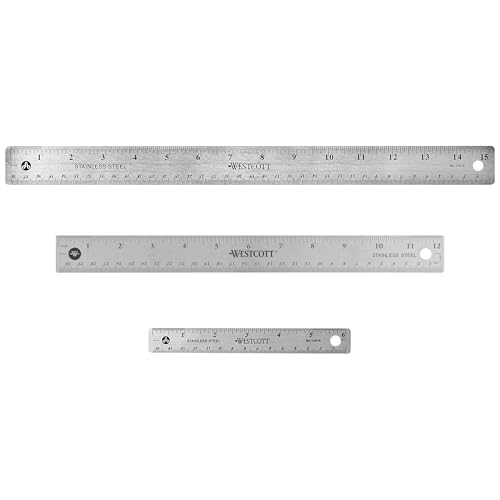

The Wescott Stainless Steel Ruler is a staple in my knitting bag because it offers the perfect balance of weight and visibility. Its high-contrast, etched markings don’t rub off, even after years of being tossed into a project bag alongside sharp tapestry needles and cable stitch holders.
Because this ruler is made of heavy-duty stainless steel, it lies completely flat against your fabric. This is essential when you are measuring a swatch of a bouncy, high-twist wool that wants to curl at the edges.
The bottom line: If you want a tool that will last for decades and never lose its accuracy, the Wescott is an investment that pays for itself in avoided re-knitting.
Alvin Steel Ruler: The Professional Drafter Pick

The Alvin Steel Ruler is designed for precision drafting, which makes it an excellent choice for knitters who need to measure tiny, intricate gauge patterns. Its edges are machined with extreme care, ensuring that the "zero" mark starts exactly at the edge of the metal.
When you are working on a complex lace shawl with fine silk or alpaca, every millimeter counts. This ruler allows you to align your gauge swatch perfectly without the "fudge factor" that comes with rounded or thick-edged plastic tools.
While it is slightly heavier than other options, that weight works in your favor by pinning down your fabric. It is the gold standard for those who demand technical accuracy in their finished measurements.
Mr. Pen Metal Ruler: Best Value for Your Kit

If you are a knitter who tends to misplace tools, the Mr. Pen Metal Ruler is a fantastic, budget-friendly option that doesn’t sacrifice quality. It comes in a set that offers both a 6-inch and a 12-inch option, giving you versatility for everything from sock swatches to sweater panels.
The markings are clear and easy to read, even in the dim light of a cozy evening knitting session. While it is thinner than the professional drafting rulers, it is still far superior to any flexible plastic measuring tape.
It’s the perfect "everyday" ruler to keep in your primary project bag. You’ll appreciate having the smaller size on hand when you need to quickly check the row height of a cuff or a sock heel.
Fiskars Non-Slip Ruler: Ideal for Precision

The Fiskars Non-Slip Ruler addresses the biggest frustration knitters face: the ruler sliding across the fabric while you are trying to count stitches. It features a specialized backing that grips the yarn, preventing the tool from shifting mid-count.
This is a game-changer when you are working with slippery fibers like bamboo, silk, or superwash wool. These fibers often have a "drape" that makes them slide around, making it nearly impossible to keep a standard metal ruler in place.
Choose this tool if you find yourself getting frustrated by having to recount your stitches multiple times. The extra stability ensures that your count stays consistent from the first inch to the last.
Helix Stainless Steel Ruler: Durable and Slim

The Helix Stainless Steel Ruler is incredibly slim, making it an excellent choice for knitters who prefer a minimalist tool kit. Its profile is low enough that it won’t distort the fabric when you lay it across your work.
I often recommend this for knitters who work primarily with small-gauge projects, such as socks or baby garments. Because it is so thin, you can easily slide it between stitches to verify your tension without stretching the yarn out of shape.
It is a durable, no-nonsense tool that fits perfectly into the pockets of most knitting bags. It is the ideal choice for the knitter who values portability without compromising on measurement integrity.
Staedtler Metal Ruler: Best for Gauge Accuracy

The Staedtler Metal Ruler is renowned for its manufacturing precision, which is vital when you are calculating complex stitch multiples for a custom-fit sweater. The markings are laser-etched, meaning they are incredibly sharp and resist fading over time.
When you are working with stranded colorwork, your gauge can tighten up unexpectedly. Having a ruler with high-precision markings helps you catch these subtle shifts in tension before you have knitted half a sleeve.
This ruler is favored by those who treat their knitting as a technical craft. If you are prone to doing a lot of math for your projects, the clarity of the Staedtler will make your calculations much easier and more reliable.
Why Metal Rulers Outperform Plastic for Knitters
Plastic rulers have a tendency to warp, crack, or lose their markings over time, which can lead to "gauge creep." If your ruler is bent, your measurement will be off by a fraction of a millimeter, which can result in an entire inch of difference across a sweater width.
- Rigidity: Metal remains flat, ensuring you aren’t measuring over a curve.
- Longevity: Etched metal markings won’t wear off like printed plastic.
- Weight: The natural heft of metal helps keep your fabric pinned down.
Metal rulers provide a consistent, rigid edge that gives you a true reading every time. When you are putting forty hours into a garment, you want to know that your gauge swatch wasn’t a lie.
How to Measure Gauge Without Distorting Stitches
One of the most common mistakes I see is pressing the ruler down too hard on the fabric. This stretches the stitches, giving you a false, looser gauge reading that will lead to a sweater that grows too large after blocking.
- Lay it flat: Place your swatch on a hard, flat surface.
- Don’t press: Let the ruler rest gently on top of the stitches.
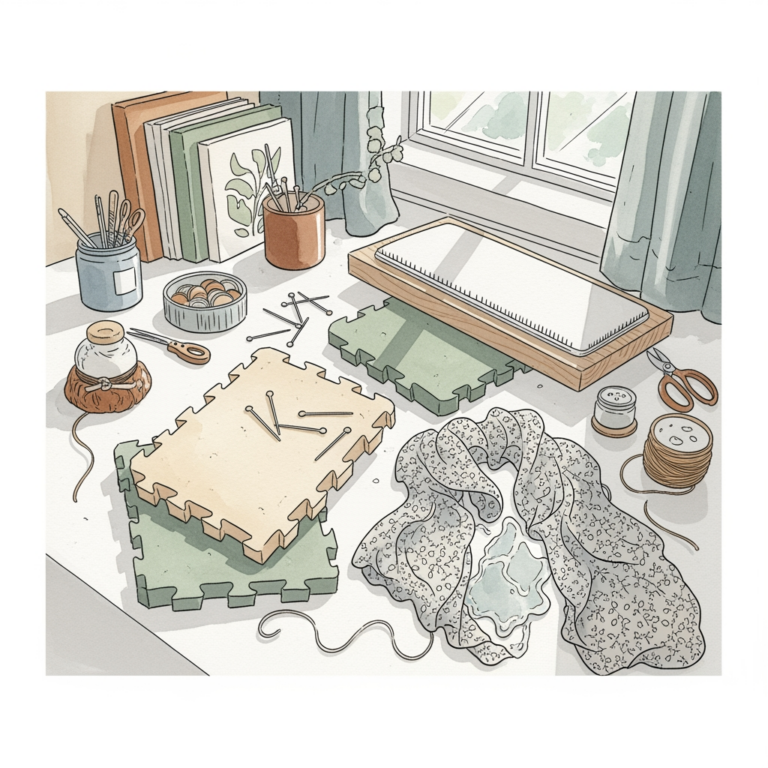
- Use pins: If the edges curl, use blocking pins to hold them flat before measuring.
Always measure your gauge after the swatch has been washed and blocked. Measuring "off the needles" is rarely accurate because the tension of the needles themselves distorts the yarn.
Essential Tips for Accurate Stitch Count Reading
To get the most accurate count, always measure over at least four inches of fabric. Measuring over a single inch is risky because a single misplaced stitch can throw off your entire calculation by a significant margin.
- Count the "V’s": Focus on the loops of the stitches, not the spaces between them.
- Half stitches: Don’t be afraid to count half-stitches; they matter for your final math.
- Average it out: Measure in three different spots on the swatch and take the average.
Remember that your gauge can change based on your mood, your needles, and even the time of day. If you are tired, your tension might be looser, so always double-check your count when you are fresh.
Maintenance and Care for Your Metal Measuring Tool
Metal rulers are low-maintenance, but they aren’t indestructible. Keep them in a protective sleeve or a dedicated pocket in your project bag to prevent the edges from getting nicked or burred.
If the surface becomes sticky from yarn oils or hand lotion, a quick wipe with a microfiber cloth and a drop of rubbing alcohol will restore the finish. Avoid using abrasive sponges, as these can eventually wear down the etched markings.
Treat your metal ruler as a precision instrument, not just a scrap of metal. When you take care of your tools, they will take care of your projects, ensuring that every stitch you count is a stitch that counts.
Choosing the right metal ruler is a small but impactful step toward taking your knitting from "homemade" to "handmade professional." By selecting a tool that offers stability, accuracy, and durability, you eliminate the guesswork that often leads to ill-fitting garments. Treat your gauge swatch with the respect it deserves, and your finished projects will reward you with a perfect fit every time. Happy knitting, and may your gauge always be spot on.