6 Best Blocking Grid Sheets For Precision Shaping
Achieve professional results with our top 6 blocking grid sheets. These essential tools ensure perfect symmetry and precision shaping for your textile projects.
Achieving a professional finish on your hand-knits depends entirely on the precision of your blocking process. A high-quality grid sheet transforms a shapeless, freshly washed garment into a garment with crisp edges and perfectly opened lace motifs. Without a reliable surface, even the most meticulous knitting can look uneven or slumped. These six tools provide the structural foundation needed to elevate your work from "homemade" to heirloom quality.
Knitter’s Pride Knit Blockers: Best Overall Pick


These blockers are a game-changer because they replace the tedious, finger-pricking work of inserting dozens of individual T-pins. By using a long plastic bar with multiple stainless steel pins, you can secure several inches of fabric in a single motion.
They are particularly effective when blocking long, straight edges on sweaters or the wide, flat top of a triangular shawl. Because the pins are anchored in a solid base, they maintain consistent tension across the entire edge, preventing the "scalloping" effect that often happens when individual pins are spaced unevenly.
However, they can be cumbersome on tight curves or small, intricate lace points. For those tight areas, you’ll still want a few single pins on hand to fine-tune the shape. The bottom line: These are the ultimate time-saver for large-scale projects.
Clover Blocking Mats: Best for Precision Detail

Clover mats are renowned for their high-density foam, which holds pins firmly without the "wiggle" found in cheaper alternatives. When you are blocking delicate lace, that stability is non-negotiable.

The grid markings are printed with exceptional clarity, allowing you to align your stitches with mathematical precision. If you are blocking a complex geometric shawl, these mats ensure that every point is equidistant from the center.
The trade-off is the price point, as they are often more expensive than generic foam tiles. If you only knit occasionally, you might find them an investment, but for the serious lace knitter, the durability and accuracy are worth every penny.
Cocoknits Blocking Mats: Best Modular Design
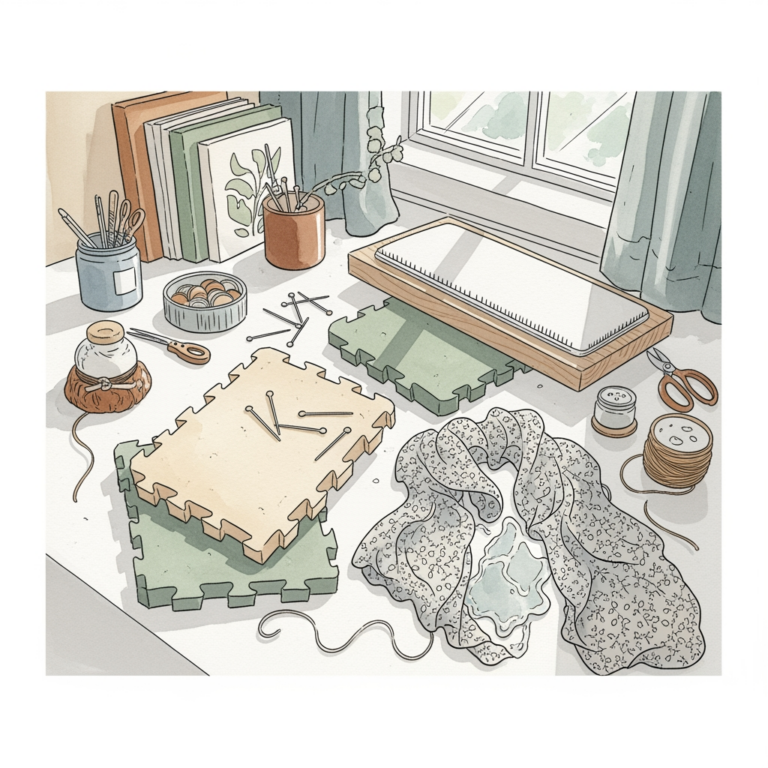
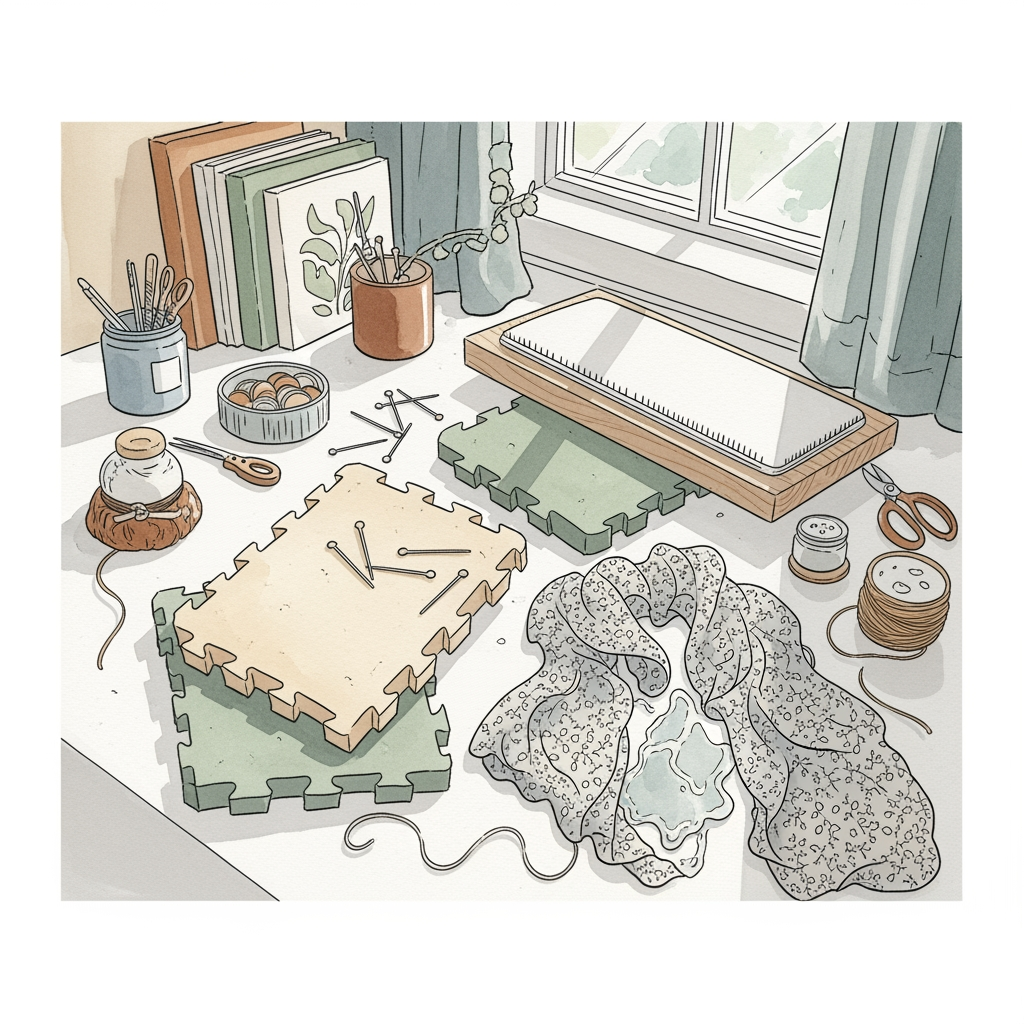
Cocoknits has addressed the biggest frustration in blocking: the lack of space. Their modular system allows you to snap tiles together in any configuration, whether you are blocking a long scarf or a wide, circular sweater.
The surface is made of a heat-resistant, recycled EVA foam that feels substantial and professional. Because the tiles are neutral in color, they don’t distract from the colors of your yarn, helping you see the stitch definition clearly.
One minor downside is that the interlocking teeth can occasionally wear down if you are constantly assembling and disassembling them. If you have the space, keep them set up as a permanent blocking station to extend their lifespan.
Boye Interlocking Foam Tiles: Best Value Option

If you are a beginner just starting to build your toolkit, these tiles offer a functional, no-frills entry point. They provide the necessary square footage for most garments without requiring a significant financial commitment.
They are soft and easy to pin into, making them very forgiving for those still learning how to tension their pieces. While they may not have the high-density foam of premium mats, they are more than adequate for blocking wools and acrylics.
Be aware that the grid markings on budget tiles can sometimes be slightly off-center. Always double-check your measurements with a tape measure rather than relying solely on the printed lines.
We R Memory Keepers Grid Mat: Best for Lace

Though originally designed for crafters, this mat is a secret weapon for knitters working on fine lace. The surface is exceptionally smooth and features a very fine, high-contrast grid that is ideal for measuring tiny stitch repeats.
It is particularly useful for blocking superwash wools, which tend to grow significantly when wet. The precision grid helps you keep the dimensions in check so you don’t accidentally overstretch the fabric.
The mat is not as thick as traditional foam tiles, so you will need a flat, hard surface underneath it. It is best used for smaller items like socks or lace swatches where precision is the absolute priority.
Darice Foam Blocking Boards: Best for Beginners

Darice boards are lightweight and incredibly easy to handle, making them perfect for knitters who don’t have a dedicated craft room. You can easily tuck them under a bed or into a closet when your project is finished.
They are soft enough that you won’t struggle with hand fatigue when inserting pins, which is a major plus for those with arthritis or limited hand strength. They are an honest, simple tool that gets the job done without unnecessary complexity.
They are not as durable as high-density mats, so you may notice pin holes accumulating over time. Treat them as a reliable workhorse that will serve you well until you decide to upgrade to a more permanent system.
How to Choose the Perfect Blocking Grid System
Choosing the right system comes down to your primary project type and your available space. If you mostly knit sweaters, prioritize surface area and modularity; if you are a lace addict, prioritize high-density foam and accurate grids.
Consider the thickness of the foam as well. Thicker mats allow you to pin vertically, which is vital for securing thick, heavy wool sweaters that might otherwise slide off a thinner board.
Don’t ignore the storage factor. If you live in a small apartment, a modular system that breaks down into a small box will be far more useful than a large, rigid board that you have to lean against a wall.
Essential Tips for Perfect Lace and Garment Shape
Always measure your garment against your schematic before you start pinning. It is much easier to adjust your tension while the item is still damp than it is to re-wet and re-block the entire piece.
When blocking lace, start by pinning the center of each side, then work your way out toward the corners. This "anchor-and-stretch" method prevents the lace from skewing to one side.
Use rust-proof pins exclusively. Nothing ruins a beautiful project faster than a brown rust stain from a cheap pin that sat in a damp, wet sweater overnight.
Why Grid Markings Matter for Precision Blocking
Grid markings are not just for aesthetics; they are your primary tool for ensuring symmetry. When you are blocking a pair of socks or the two front panels of a cardigan, you need to ensure they are identical in size.
By aligning the edges of your work with the grid, you can spot subtle differences in tension that you might miss with the naked eye. This is especially important for stranded colorwork, where the floats can tighten the fabric unevenly.
If your mat doesn’t have a grid, lay a tape measure along the edges to verify your dimensions. Precision in blocking is the difference between a garment that fits well and one that feels "off" when worn.
Proper Care and Storage for Your Blocking Mats
Keep your mats clean by wiping them down with a damp cloth after each use. If you’ve blocked a particularly dirty or oily yarn, a mild soap solution is fine, but ensure they are completely dry before stacking them away.
Avoid storing your mats in direct sunlight, as UV rays can cause the foam to become brittle and crumble over time. A cool, dry closet is the best environment to maintain the integrity of the foam.
If you use pins, remove them as soon as the garment is dry. Leaving pins in the mats for weeks at a time can cause the foam to lose its "memory" and stop gripping the pins effectively.
Investing in a quality blocking grid system is the final, crucial step in your knitting journey. By providing a stable and accurate surface, these tools allow your stitches to relax and bloom into their intended shape. Choose the system that best fits your workspace and project goals, and you will see an immediate improvement in the professional look of your finished garments. Happy blocking, and may your edges always be perfectly crisp.