7 Best Adjustable Task Lamps For Intricate Cable Patterns
Discover the 7 best adjustable task lamps for intricate cable patterns. Improve your precision with these top-rated, flexible lighting solutions for crafters.
Working with intricate cable patterns requires more than just patience and a sharp set of needles; it demands impeccable visibility to track every twist and cross. When you are deep into a complex aran sweater or a delicate cabled hat, poor lighting can lead to missed stitches and costly dropped cables. Finding the right task lamp transforms your knitting experience from a straining chore into a precise, enjoyable craft. Here are the best lighting solutions to keep your stitches clear and your eyes fresh.
Daylight Company Slimline 3 LED Floor Lamp


This lamp is a staple in many professional studios for a reason: the reach and adjustability are unmatched. When you are working on a large-scale project like a cabled blanket, the flexible joints allow you to position the light exactly over your lap without the lamp head getting in the way of your needles.
The light quality is exceptionally crisp, which is vital when you are working with dark-colored wool or low-contrast yarns. If you have ever struggled to see the definition of a cable while knitting with navy or black alpaca, this lamp’s high-contrast illumination will be a game-changer.
The footprint is slim, meaning it won’t take up precious floor space in your craft corner. However, the price point is higher than basic household lamps, so it is an investment piece for those who knit daily.
OttLite 2-in-1 LED Magnifying Floor Lamp

Magnification is often the secret weapon for knitters who struggle with fine-gauge cables or dark, fuzzy fibers like mohair. This 2-in-1 design transitions easily from a floor lamp to a desk lamp, making it versatile for different knitting setups.
The built-in magnifier is perfect for inspecting your work after a complex row of cabling to ensure no stitches were twisted incorrectly. It saves you from having to lean in close, which significantly reduces neck and shoulder fatigue during long sessions.
Keep in mind that the magnifier is a fixed focus point; it takes a little practice to get your hands positioned comfortably underneath it. Once you find that sweet spot, you will wonder how you ever cabled without it.
BenQ ScreenBar Halo for Desk Knitting Setup
If your knitting station is also your computer desk—perhaps where you keep your digital patterns or watch tutorials—the ScreenBar Halo is a brilliant space-saver. It clips to the top of your monitor, casting light directly onto your hands rather than the screen.
This design eliminates the glare that often plagues desk-bound knitters using traditional lamps. It provides a wide, even spread of light that illuminates your entire work area, which is ideal if you like to keep your yarn bowl and notions pouch nearby.
It lacks the directional flexibility of a swing-arm lamp, so it is best suited for knitters who maintain a consistent posture. It is a sleek, modern solution for the tech-savvy crafter.
Brightech LightView Pro Magnifying Floor Lamp
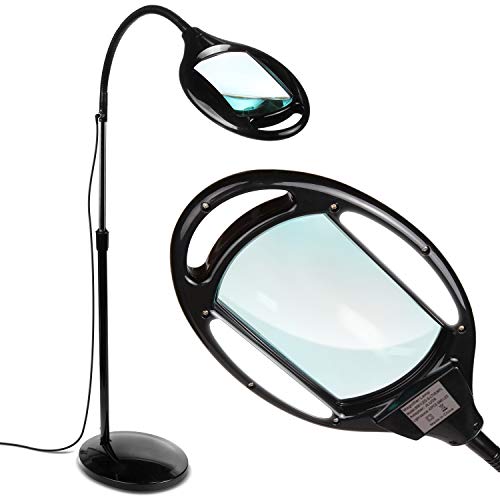
This lamp is built for heavy-duty detail work, featuring a sturdy base and a powerful magnifying lens. If you are working on intricate, miniature cables or fine lacework, the clarity provided by this lens is superior to many competitors.
The swing arm is robust, allowing you to pull the light close or push it away without the lamp sagging over time. This reliability is essential when you are in the "flow state" of a complicated pattern and don’t want to stop to adjust your gear.
Be aware that the base is quite heavy, which provides stability but makes it less portable. It is the ideal choice for a dedicated knitting chair where you spend the majority of your time.
Lepower Metal Architect Swing Arm Desk Lamp

Sometimes, you don’t need fancy features; you just need a reliable, directional light that you can clamp to your side table. This classic architect design is a favorite because it is incredibly affordable and highly adjustable.
The metal construction feels durable, and the spring-balanced arm stays exactly where you put it. It is perfect for directing light onto your needles while keeping the rest of the room dim, which helps you focus on the rhythm of your knitting.
Because it uses a standard bulb socket, you can choose your own LED bulb to control the color temperature. Just ensure you pick a "daylight" bulb to keep your yarn colors accurate.
TaoTronics LED Desk Lamp With Flexible Arm

If you prefer a minimalist aesthetic, this lamp offers a clean, modern look with a highly flexible silicone neck. It is remarkably easy to twist and turn, allowing you to aim the light at your needles from any angle.
The multiple brightness levels are a standout feature, allowing you to dim the light if you are knitting in a darker room or brighten it up for complex cabling. It is lightweight and portable, making it easy to move from your knitting chair to your desk.
It is a great entry-level option for beginners who are just starting to realize that overhead room lighting isn’t enough. It won’t dominate your space, but it provides plenty of targeted illumination for most projects.
Lavish Home Swing Arm Architect Floor Lamp

This floor-standing version of the classic architect lamp offers the same benefits as the desk version but with the added convenience of height. It is excellent for knitters who prefer to sit in a deep armchair where a desk lamp cannot reach.
The reach is impressive, allowing the light to hover directly over your work without needing to be right next to your chair. It is a practical, no-nonsense tool that does exactly what it promises.
It is a bit more utilitarian in design, which might not fit every home decor style. However, for sheer functionality in a knitting nook, it is hard to beat.
Key Features to Look for in Knitting Task Lamps
When shopping for a lamp, prioritize adjustability above all else; your posture will change throughout a project, and your light needs to move with you. Look for lamps with heavy, stable bases or secure clamps that won’t wobble while you work.
Brightness is not the only metric—color accuracy is equally important. You need a lamp that displays the true color of your yarn, or you might be surprised by your color choices once you step outside into natural light.
Finally, consider the heat output. You want an LED lamp that stays cool to the touch, as you don’t want to be sweating over your wool while you knit.
Why Color Rendering Index Matters for Cables
The Color Rendering Index (CRI) measures how accurately a light source reveals colors compared to natural daylight. For knitters, a high CRI (90 or above) is essential to distinguish between subtle shades of yarn in a stranded colorwork project.
Low-CRI lighting can make similar yarn colors look identical, leading to accidental color swaps in your cables. This is especially problematic when working with tonal or hand-dyed yarns where the color shifts are subtle.
Investing in a high-CRI lamp ensures that the beautiful, complex colors you selected in the yarn shop look exactly the same on your needles at home. It is the difference between a project that looks professional and one that looks "off."
Tips for Reducing Eye Strain During Night Knits
Even with the best lamp, knitting at night can be taxing on your eyes. Follow the 20-20-20 rule: every 20 minutes, look at something 20 feet away for 20 seconds to reset your focal point.
Ensure your background lighting is not too dim; having a sharp contrast between your bright knitting area and a pitch-black room can actually increase eye fatigue. A soft ambient lamp in the room helps balance the light.
Finally, remember that your eyes need rest just like your hands do. If you find yourself squinting or holding your work closer to your face than usual, it is time to put the needles down for the night.
Choosing the right task lamp is a vital step in protecting your vision and elevating the quality of your knitting. By prioritizing adjustable arms, high CRI ratings, and stable designs, you can ensure your intricate cable patterns are as crisp as you intended. Take the time to set up your space properly, and your eyes will thank you for years of comfortable crafting. Happy knitting, and may your cables always cross perfectly.