7 Best Claw Weights For Uniform Tension To Try
Achieve perfect knitting tension with these 7 top-rated claw weights. Discover how these essential tools ensure consistent, professional results every time.
Achieving consistent tension on a knitting machine is the difference between a professional-looking garment and a piece that looks like it was wrestled into shape. Claw weights are the unsung heroes of the knitting room, providing the necessary downward pull to keep stitches from dropping or forming uneven loops. Without proper weighting, even the most expensive machine will struggle to produce a clean, uniform fabric. This guide explores the best options to help you master your machine’s tension and elevate your finished projects.
Silver Reed KA-8210 Claw Weight: Best Overall
The Silver Reed KA-8210 is widely considered the gold standard for standard-gauge machines. Its design is intuitive, offering a perfect balance of weight that isn’t so heavy it risks snapping your yarn, yet substantial enough to keep the work moving smoothly.
When you are working with fine-gauge yarns or delicate wool blends, you need a weight that provides consistent downward tension without distorting the stitch structure. This model excels because it grips the fabric securely without leaving deep, permanent indentations in the fiber.
If you are a beginner, this is the weight you should start with. It is versatile enough to handle everything from basic stockinette to more complex tuck stitch patterns, making it a reliable workhorse for your collection.
Brother KA-8210 Claw Weight for Standard Gauge
Brother machines have a specific personality, and the KA-8210 is engineered to complement their needle beds perfectly. These weights are prized for their ability to maintain a steady pull even when your carriage is moving rapidly across the bed.
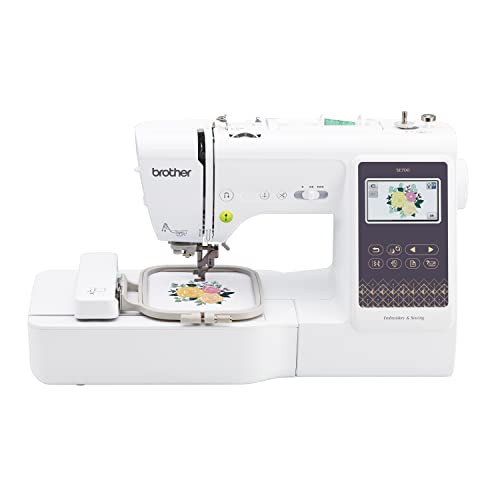

The primary advantage here is the consistency of the hook design. It latches onto the cast-on comb or the fabric edge with a satisfying click, ensuring that you don’t have to constantly readjust your weights as you knit.
For those working on long, narrow projects like scarves or sweater panels, these weights provide the stability needed to prevent edge curling. They are an essential investment for anyone who finds their Brother machine’s tension drifting toward the end of a row.
Passap Weights for Precision Tension Control

Passap machines operate differently than traditional Japanese-style machines, and their weights reflect that mechanical sophistication. These weights are designed for high-precision knitting where every stitch must be perfectly placed.

Because Passap machines often use a dual-bed system, the weight distribution needs to be extremely balanced to prevent the fabric from favoring one side. These weights are heavier and more compact than standard alternatives, offering a concentrated pull that is ideal for complex double-bed work.
If you are tackling intricate jacquard or double-knit fabrics, these are your best bet. They allow for a level of control that lighter, generic weights simply cannot replicate, especially when working with slippery synthetic fibers.
KnitKing Claw Weights for Reliable Performance

KnitKing weights are legendary for their durability and "set it and forget it" reliability. They are built to withstand years of heavy use, making them a favorite among production knitters who spend hours at the machine every day.
What sets these apart is the tension spring mechanism, which is slightly more robust than what you find on entry-level weights. This extra strength is vital when working with heavier, more stubborn yarns that tend to "jump" off the needles during the carriage pass.
If you find yourself frequently knitting with wool-acrylic blends or slightly coarser fibers, the KnitKing weight provides the extra grip necessary to keep the fabric seated. It is a solid, no-nonsense tool that rarely fails under pressure.
Artisan Knitting Machine Claw Weight Set
Artisan weights are a fantastic option if you want to build a comprehensive kit without breaking the bank. They often come in sets of varying sizes, which is a massive advantage when you are working on projects that change in width, such as raglan sleeves or tapered skirts.
The flexibility of having different weight increments allows you to customize the pull as you increase or decrease your stitch count. This prevents the "puckering" effect that occurs when you have too much weight on a narrow section of fabric.
I recommend this set for anyone who enjoys garment construction. Being able to swap out a heavy weight for a lighter one as you shape your pieces is a pro-level technique that significantly improves the drape of your final garment.
Singer 7-Wire Claw Weight for Heavy Fabrics

When you are working with chunky yarns or heavy, dense fabrics, a standard 4-wire weight just won’t cut it. The Singer 7-Wire weight offers a wider surface area and more points of contact, which distributes the load more evenly across the fabric.
This design is crucial for preventing "laddering," where the weight pulls too hard on a single stitch, causing it to elongate and create a vertical hole. By spreading the tension across seven points, the weight keeps the fabric flat and uniform.
If you are using a bulky-gauge machine for winter sweaters or blankets, this weight is essential. It provides the heavy-duty support required to keep thick, multi-ply yarns moving through the needles without snagging or dropping.
Studio/Silver Reed 4-Wire Claw Weight Pick
The 4-wire weight is the quintessential tool for fine-to-medium weight yarns. It is lightweight, easy to manage, and perfect for the majority of everyday knitting tasks where you don’t want to over-stretch the fiber.
These are particularly useful when you are working on the edges of a piece where you need just enough tension to keep the stitches from curling. They are delicate enough that they won’t damage the yarn, even if you are working with luxury fibers like alpaca or silk.
If you are knitting a delicate lace shawl or a lightweight summer top, stick with the 4-wire. It provides the gentle guidance your stitches need without the risk of distorting the intricate stitch patterns.
Why Claw Weights Are Essential for Tension
Claw weights serve one primary purpose: they simulate the tension that your hands would provide if you were knitting by hand. On a machine, the carriage does the work, but it needs a constant, downward pull to ensure the new loop is pulled through the old loop correctly.
Without this weight, your stitches will become loose, uneven, or, worse, they will simply fail to knit off the needle entirely. This is especially true when you are casting on or binding off, where the lack of existing fabric creates a "floating" effect that is prone to errors.
- Prevents dropped stitches: Keeps the fabric under the needle bed.
- Ensures even gauge: Maintains consistent stitch size across the entire row.
- Supports complex patterns: Holds the fabric in place for tuck or slip stitches.
How to Properly Balance Weights on Your Bed
Balancing your weights is an art form that comes with practice. The golden rule is to distribute your weights evenly across the width of your knitting, focusing on the center and the edges where curling is most likely to occur.
If you are working on a very wide piece, like a full sweater front, you should place your weights at regular intervals. A common mistake is putting all your weight in the center, which causes the edges to become loose and the center to become over-stretched.
- Move weights up frequently: As your work grows, move the weights up to stay close to the needles.
- Check for symmetry: Ensure you have the same amount of weight on the left and right sides.
- Don’t over-weight: If the fabric looks strained or the needles are bending, take some weight off.
Troubleshooting Common Weighting Issues Today
If you notice your stitches are consistently dropping on one side, it is almost always a weighting issue. First, check that your weights are not catching on the bottom of the machine or the floor, which can cause them to swing and pull unevenly.
Another common issue is "puckering," where the fabric looks distorted after you take it off the machine. This usually means you used too much weight for the type of yarn; remember that delicate fibers like silk need much less pull than sturdy wool.
Finally, if you are knitting a complex pattern like cables, remember that the fabric becomes thicker and heavier as you go. You may need to remove some weights as you progress to prevent the fabric from becoming unnaturally elongated or thin.
Mastering the use of claw weights is a fundamental step in moving from a novice machine knitter to an expert. By choosing the right weight for your specific yarn and pattern, you ensure that your fabric remains consistent, professional, and beautiful. Remember that your weights are your most important partner in the knitting process, so take the time to balance them carefully for every project. Happy knitting, and may your tension always be perfectly even.