7 Best Ventilation Fans For Dye Studio Air Quality
Improve your dye studio’s air quality with our top 7 ventilation fans. Discover essential features to remove chemical fumes and ensure a safer workspace today.
Setting up a dedicated space for fiber dyeing is a dream for many, but the chemical realities of acid dyes and auxiliaries demand serious ventilation. Without proper airflow, the particles and vapors from your dye pots can quickly compromise your health and the air quality of your home. Choosing the right ventilation fan is just as critical as selecting the perfect yarn base for a complex lace project. This guide breaks down the best options to keep your studio safe and your lungs clear.
iPower 8-Inch Inline Duct Fan: Best Overall Choice


When you are scaling up from small-batch dyeing to professional-level production, the iPower 8-inch fan is a powerhouse. It moves a massive volume of air, which is essential when you have multiple pots simmering at once.
This fan is built for longevity and consistent performance, much like a high-quality set of stainless steel needles that won’t warp over time. Its robust design handles the moisture-heavy environment of a dye studio without stuttering.
The trade-off here is the noise level, which is significant when running at full power. If you are working in a shared space or near living quarters, you might need to invest in some acoustic ducting to dampen the sound.
VIVOSUN 6-Inch Ventilation Fan for Dye Studios

The VIVOSUN 6-inch model strikes a perfect balance for the average home dyer who isn’t running a full-scale factory. It is compact enough to fit into most DIY ventilation setups while providing enough suction to clear out steam and dye-related fumes.
Think of this fan like a reliable workhorse needle, perhaps a classic bamboo circular. It isn’t the flashiest piece of equipment, but it gets the job done consistently without requiring a PhD in engineering to install.
One thing to keep in mind is the housing material, which is sturdy but can be sensitive to direct chemical splashes. Ensure your ducting setup is airtight so no corrosive vapors linger near the motor housing.
AC Infinity CLOUDLINE T6 Inline Duct Fan System
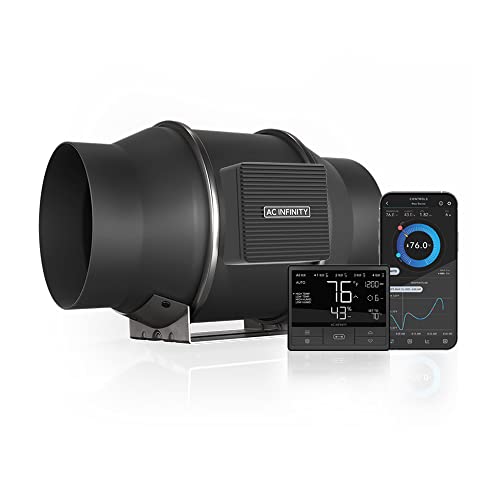
The CLOUDLINE T6 is the gold standard for those who love precision and automation. Its integrated controller allows you to set specific temperature and humidity triggers, which is incredibly useful for maintaining a stable environment in your studio.
For a knitter, this is akin to using a sophisticated digital scale to measure your yarn weight down to the milligram. It removes the guesswork and ensures that your ventilation is working exactly as hard as it needs to at any given moment.
While the price point is higher, the energy efficiency and smart features provide long-term value. It’s an investment in your studio’s infrastructure that pays off in peace of mind.
TerraBloom 4-Inch Inline Booster Duct Fan Unit

If you have a smaller setup—perhaps a corner of a garage or a basement closet—the TerraBloom 4-inch booster is an excellent, unobtrusive choice. It is lightweight and easy to mount, making it perfect for smaller duct runs.
Don’t let the "booster" label fool you; it provides a surprising amount of airflow for its size. It’s ideal for clearing out the steam from a single pot of wool yarn without creating a wind tunnel in your workspace.
Be aware that these smaller units are not designed for long, convoluted ducting paths. If your exhaust has to travel through several turns to reach the outside, you will lose efficiency quickly.
Hon&Guan 4-Inch Mixed Flow Exhaust Duct Fan
The Hon&Guan mixed flow fan is a clever piece of engineering that blends the high pressure of centrifugal fans with the high airflow of axial fans. It’s a versatile option that handles resistance well, making it a reliable choice for complex setups.
This fan is quiet enough that you can hold a conversation or listen to a podcast while you monitor your dye baths. It’s a great middle-ground choice for someone who prioritizes a peaceful work environment.
Installation is straightforward, but do ensure you have the correct duct size to avoid backpressure. A mismatched duct size can cause the fan to struggle, much like using a needle that is too thick for your yarn weight creates uneven, clunky fabric.
Fantech FG 6XL Centrifugal Inline Exhaust Fan

Fantech is known for professional-grade reliability, and the FG 6XL is a workhorse that can run for years without complaint. It is specifically designed to handle moisture-laden air, which is the primary concern in any fiber dyeing space.
This fan is sealed tight, meaning you won’t have to worry about dye particles or humidity corroding the internal electronics. It’s the "heavy-duty" option for those who dye frequently and want a "set it and forget it" solution.
The trade-off is the size and the need for a professional-style installation. This isn’t a plug-and-play fan; it requires a bit of mechanical know-how to secure properly into your ductwork.
Tjernlund M-6 Inline Duct Booster Ventilation

The Tjernlund M-6 is a specialized tool often used in HVAC, and it brings that same level of industrial performance to your dye studio. It is exceptionally good at pushing air through longer runs of ducting.
If your studio setup requires the exhaust to be vented out a window that is several feet away, this fan is your best friend. It maintains consistent airflow where other, weaker fans would fail.
It’s a robust, no-nonsense piece of equipment. While it lacks the fancy digital displays of other models, it makes up for it in pure, reliable mechanical output.
Why Air Quality Matters in Your Dye Studio Space
Dyeing fiber involves more than just color; it involves chemicals, acids, and often heat that releases microscopic particles into the air. Breathing these in, even in small amounts, can lead to respiratory irritation over time.
You wouldn’t knit with cheap, scratchy acrylic if you have sensitive skin, so don’t treat your lungs any differently. Protecting your respiratory health is the most important part of your studio setup.
- Acid Dyes: Can release fine powders during weighing.
- Auxiliaries: Often contain chemicals that should not be inhaled.
- Steam: Carries moisture and potentially chemical residue into the air.
Essential Ventilation Tips for Fiber Dyeing Safety
Always place your ventilation intake as close to the dye pot as possible. The closer the fan is to the source of the vapor, the less chance those particles have to circulate through your room.
Ensure that your exhaust is vented completely outside, not just into another room or an attic. A common mistake is using a simple filter box; while filters help, they aren’t a replacement for active, outside-venting airflow.
- Check seals: Ensure all duct connections are taped with professional-grade foil tape.
- Maintain flow: Keep your ducting as straight as possible to prevent air friction.
- Use a mask: Even with a fan, wear a high-quality N95 or P100 respirator when handling dry dye powders.
Understanding CFM Ratings for Proper Air Exchange
CFM stands for Cubic Feet per Minute, and it is the metric that determines how much air your fan moves. To calculate what you need, multiply the length, width, and height of your studio to find the total volume in cubic feet.
You want a fan that can exchange the entire air volume of your studio at least 15 to 20 times per hour. If you are dyeing in a small space, a fan with a higher CFM rating is non-negotiable.
Don’t be tempted to undersize your fan to save money or noise. Just like choosing the wrong needle size leads to a project that never fits, choosing the wrong CFM rating leads to a studio that never clears.
Investing in a high-quality ventilation system is the most responsible step you can take for your long-term health as a fiber artist. By understanding your studio’s specific needs—from the volume of your workspace to the frequency of your dyeing—you can create a safe environment that allows your creativity to flourish. Take the time to install your fan correctly, and you will be able to enjoy your dye sessions with total peace of mind. Happy dyeing, and may your colors always be as vibrant as your health.