7 Best Steam Irons For Finishing Garments Worth Owning
Discover the top 7 steam irons for professional garment finishing. We evaluate performance, steam output, and durability to help you choose the best model.
Achieving a professional finish on your hand-knits is the difference between a project that looks "homemade" and one that looks truly bespoke. While your stitches provide the foundation, the right steam iron acts as the final sculptor, evening out tension and coaxing fibers into their final, elegant form. Investing in a quality iron isn’t just about removing wrinkles; it’s about mastering the drape and texture of your finished fabric. Here are seven irons that stand out for their reliability and performance in the fiber arts studio.
Rowenta Focus Excel: Best Overall Steam Iron


The Rowenta Focus Excel is a workhorse that consistently delivers the high-volume steam necessary for setting stubborn wool fibers. Its precision tip is particularly helpful when you are working on lace shawls where you need to maneuver between pins without distorting the delicate points of your motifs.
For the knitter who tackles a wide variety of weights—from fingering weight socks to chunky fisherman sweaters—this iron offers the perfect balance of weight and steam output. The stainless steel soleplate glides effortlessly over finished pieces, ensuring that you don’t snag or pull at the yarn.
The primary trade-off here is the weight; it is a substantial tool that requires a sturdy ironing board. If you have limited space or struggle with wrist fatigue, keep in mind that this iron is designed for performance, not portability.
Oliso M3 Pro Project Iron: Best For Quilters

The Oliso M3 Pro is a favorite among makers who prioritize safety and convenience during long blocking sessions. Its standout feature is the "iTouch" technology, which lifts the iron off the board automatically when you let go of the handle, preventing accidental scorching of your precious hand-dyed yarns.
Because knitters often spend significant time pinning out large garments, having an iron that doesn’t need to be constantly stood upright is a game changer. It saves your wrists and keeps your workspace organized, which is essential when you have a sprawling sweater pinned to a blocking mat.
While it is smaller than a standard household iron, its compact size is actually an asset for navigating tight areas like armholes or gussets. It might take a few extra passes for a massive blanket, but the precision and safety features make it an invaluable studio companion.
Reliable Velocity 230IR: Best For Precision

If you are a perfectionist who obsesses over the symmetry of your cables or the crispness of your ribbing, the Reliable Velocity 230IR is your best friend. It utilizes a unique steam generator technology that creates pressurized steam, allowing you to "set" your stitches with minimal contact.
This is critical for mohair or angora blends, where excessive pressure can crush the halo and ruin the texture of the yarn. By using the high-pressure steam, you can relax the fibers without ever actually touching the iron to the fabric, effectively "hovering" the heat into place.
The price point is higher than your average department store model, but for the knitter who invests hundreds of hours into a single project, it is a form of insurance. You are paying for the ability to control exactly how much moisture hits your fiber.
Black+Decker Digital Advantage: Best Value

For the knitter on a budget who still needs reliable temperature control, the Black+Decker Digital Advantage is a solid, no-nonsense choice. It heats up quickly and provides a consistent steam flow that is more than adequate for most natural fibers like merino or alpaca.
It lacks some of the high-end bells and whistles of the boutique models, but it gets the job done without fuss. The digital display is easy to read, which helps when you are transitioning between different fiber types that require specific temperature settings.
Be aware that the steam holes can occasionally clog if you live in an area with hard water, so using distilled water is a must. It is a straightforward tool that proves you don’t need to break the bank to achieve a polished, professional look.
Panasonic NI-WL600 Cordless: Best Ergonomic
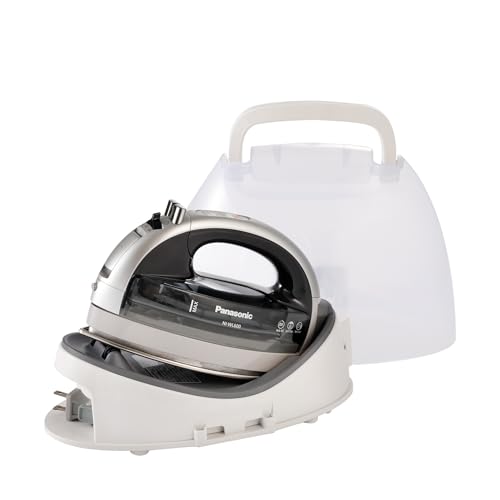
The cordless design of the Panasonic NI-WL600 removes the constant battle with the power cord that often leads to snagged stitches or knocked-over yarn bowls. When you are blocking a large, complex piece, the freedom of movement is unparalleled.
The double-pointed soleplate is a clever design choice, allowing you to move the iron in any direction without catching the fabric. This is especially useful when you are working on circular items like hats or cowls that need to be rotated frequently.
The trade-off is that the iron must be returned to its charging base periodically to maintain heat. If you are used to a continuous steam flow, you will need to adjust your workflow to accommodate these brief heating intervals.
CHI Steam Iron with Titanium: Best Durability
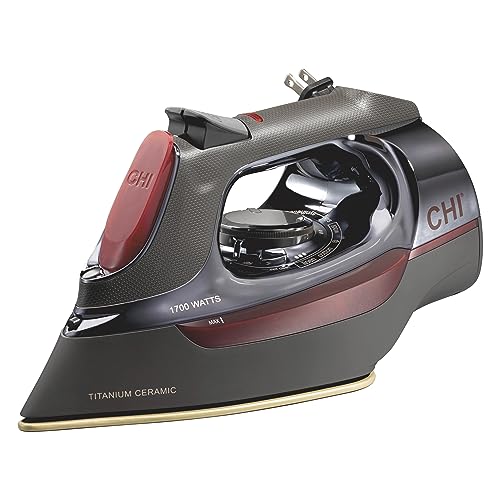
The CHI iron features a titanium-infused ceramic soleplate that is incredibly resistant to scratches and buildup. If you are prone to accidentally ironing over a stray pin or a plastic stitch marker, this soleplate will survive the encounter better than most.
The glide is exceptionally smooth, which is vital when you are blocking delicate lace that is pinned under tension. You need an iron that moves like silk across the surface of the yarn, and the CHI delivers on that front with ease.
While it is marketed for garment care, its durability makes it a long-term investment for a knitter’s studio. It is robust enough to handle the humidity of constant steam blocking without the internal components wearing out prematurely.
Shark Professional Steam Iron: Best Features
The Shark Professional offers a wide range of steam settings, including a powerful vertical steam burst that is excellent for refreshing sweaters while they are still on a hanger. This is perfect for those "in-between" moments when a full re-wash isn’t necessary, but the garment needs a little lift.
The extra-large water tank means fewer trips to the sink, which is a blessing when you are blocking an entire adult-sized cardigan. Its intuitive controls make it easy to switch between steam levels, allowing you to customize your approach for different fiber contents.
Keep in mind that with more features comes more complexity; it is a larger unit that requires a bit more storage space. It is a feature-rich powerhouse for the knitter who wants a single tool that can handle everything from heavy wool coats to delicate silk scarves.
Why Steam Blocking Matters For Your Finished Knits
Steam blocking is the final step of the knitting process that allows your stitches to "bloom" and settle into their intended shape. When you knit, the yarn is under tension; steam relaxes the fibers, allowing them to expand and fill out the gaps, which creates a more uniform and cohesive fabric.
For beginners, this process can feel intimidating, but it is the secret to making your work look store-bought. It helps to even out minor tension irregularities, such as "rowing out" in stockinette stitch, and ensures that your garment dimensions match your pattern’s schematic.
Without blocking, your project may feel stiff or slightly distorted, especially if you have used a superwash wool that tends to grow after washing. Steam blocking provides the structure necessary to hold the garment’s shape over time.
How To Safely Steam Block Delicate Wool Fibers
When working with delicate fibers like cashmere, mohair, or fine alpaca, the golden rule is "hover, don’t press." You want to use the steam to penetrate the fibers, not the weight of the iron to crush them, which can lead to permanent matting or a "shiny" spot on the fabric.
Always use a press cloth—a clean, white cotton pillowcase works wonders—between your iron and your knitwear. This acts as a protective barrier that prevents direct contact and shields the yarn from excessive heat that could damage the delicate cuticle of the fiber.
Start with a test swatch if you are unsure of how your yarn will react to steam. If the fibers start to look flat or lifeless, you are using too much heat or pressure; back off and let the steam do the heavy lifting from a distance.
Essential Steam Iron Maintenance For Knitters
Your iron is a precision tool, and like your needles, it requires regular care to function at its best. Always empty the water reservoir after each use to prevent mineral buildup and internal corrosion, which can eventually spit brown, rusty water onto your clean knitwear.
If you have a self-cleaning function, use it monthly, especially if your local water supply is "hard." A clean soleplate is also vital; if you notice any sticky residue, wipe the soleplate down with a damp cloth while the iron is cool to ensure it never snags your delicate hand-knits.
Finally, check the steam vents regularly for blockages. A toothpick or a specialized cleaning brush can clear out any mineral deposits, ensuring that your steam output remains consistent and powerful for years to come.
Choosing the right steam iron is an investment in the longevity and beauty of your hand-knitted wardrobe. By understanding how your specific fiber choices interact with heat and steam, you can elevate your finishing techniques to a professional standard. Whether you prioritize precision, ergonomics, or durability, there is a tool here that will help you bring out the best in every stitch. Happy blocking, and may your finished objects always look as beautiful as the effort you put into them.