7 Best Glass Seed Beads for Delicate Knitting
Discover the top 7 glass seed beads for delicate knitting. Learn how to select the perfect size, finish, and quality to elevate your intricate fiber projects.
Adding glass beads to your knitting transforms a standard project into a shimmering, heirloom-quality piece of art. However, selecting the wrong bead can lead to snagged yarn, uneven tension, or a finished fabric that feels stiff and heavy. As a knitter, you must balance the weight of the bead with the delicate nature of your chosen fiber. These seven selections represent the gold standard for integrating glass into your stitches without compromising the integrity of your work.
Miyuki 11/0 Seed Beads: Best for Delicate Lace


When you are working with fine lace-weight yarn, the 11/0 Miyuki seed bead is the industry benchmark for a reason. These beads are exceptionally consistent in size and shape, which is critical when you are knitting a complex shawl where every stitch counts.
Because they are slightly larger than the microscopic 15/0s, they are much easier to manipulate with a crochet hook or a dental floss threader. They provide just enough sparkle without dragging down the drape of a delicate silk or mohair blend.
Bottom line: If you are new to bead knitting, start here. The quality control ensures you won’t waste time picking out misshapen beads mid-row.
Toho 15/0 Round Beads: Precision for Fine Yarn

If you are working with cobweb-weight yarn or knitting socks on 2.00mm needles, the 15/0 Toho bead is your best friend. These are incredibly tiny, meaning they integrate seamlessly into the stitch without creating a bulky, awkward lump.
The secret to Toho’s success is their larger hole size compared to other brands of the same diameter. This allows you to pass your yarn through the bead more easily, reducing the risk of fraying your fiber as you pull it through.
Bottom line: Use these when you want the bead to look like part of the stitch, rather than an accessory sitting on top of it.
Preciosa Czech Seed Beads: Best Value Selection
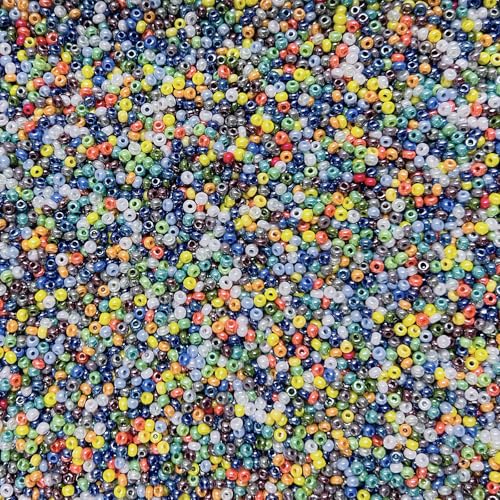
Preciosa beads offer a more organic, slightly irregular aesthetic that many knitters prefer for rustic or traditional projects. They are often more affordable than their Japanese counterparts, making them perfect for large-scale projects like beaded curtains or heavy shawls.
Keep in mind that their shape can vary slightly from bead to bead. While this provides a lovely, handmade look, it can cause minor tension fluctuations if you are aiming for machine-like perfection.
Bottom line: Choose Preciosa when you want a classic, old-world feel and are working with a slightly thicker, more forgiving yarn.
Matsuno 8/0 Beads: Ideal for Chunky Beadwork

When you are working with worsted or bulky weight yarn, 11/0 beads will simply disappear into the fabric. The 8/0 Matsuno bead is sized perfectly to stand out against thicker plies without overwhelming the stitch pattern.
These beads are robust and hold up well to the higher friction of thicker wools. They are excellent for adding weight to the hem of a cowl or creating bold, geometric patterns in a winter accessory.
Bottom line: If your yarn has a high WPI (wraps per inch), don’t go smaller than 8/0, or the bead will get lost in the twist of the yarn.
Miyuki Delica Beads: Uniformity for Intricate Art

Miyuki Delicas are cylinder-shaped beads that stack perfectly against one another. In the world of bead knitting, they are the go-to choice for charted designs where you need the beads to align in straight, clean columns.
Because they are uniform, they create a very structured, professional appearance. However, their sharp edges can sometimes be abrasive, so avoid using them with delicate, single-ply yarns that snag easily.
Bottom line: Use Delicas for tapestry-style knitting where the beads form a specific, crisp image.
Toho Treasures: Best for Consistent Bead Spacing

Toho Treasures are the direct competitor to the Delica, offering a similar cylindrical shape with a slightly softer edge profile. Many knitters find that the slightly larger hole of the Treasure makes them more forgiving during the knitting process.
They are remarkably consistent, which helps keep your gauge even across large sections of beaded fabric. If you find your knitting tension tightens up when you add beads, the smooth profile of these beads can help mitigate that effect.
Bottom line: These are the safest choice for high-speed knitting where you want to minimize snags and tension issues.
Preciosa Rocailles: Durability for Daily Wear
Rocailles are the workhorses of the bead world, known for their extreme durability and colorfastness. If you are knitting a piece that will see heavy use—like a pair of fingerless gloves or a bag—these are the beads you want.
They are resistant to the wear and tear of friction and light exposure, ensuring your project looks as good in a year as it does today. While they may have slight variations in size, their structural integrity is unmatched.
Bottom line: Prioritize these for garments that will be washed frequently or subjected to daily friction.
How to Select the Right Bead Size for Your Yarn
The rule of thumb is to match the bead hole size to the thickness of your yarn. If the yarn barely fits through the bead, you will spend your entire project fighting with the fiber, which leads to fatigue and potential breakage.
- Lace weight: Use 15/0 or 11/0.
- Fingering/Sock weight: Use 11/0 or 8/0.
- DK/Worsted weight: Use 8/0 or 6/0.
Always perform a "test swatch" with your chosen yarn and beads before casting on your main project. If the bead feels forced, move up one size, or look for a bead with a larger internal diameter.
Essential Tools for Effortless Bead Knitting
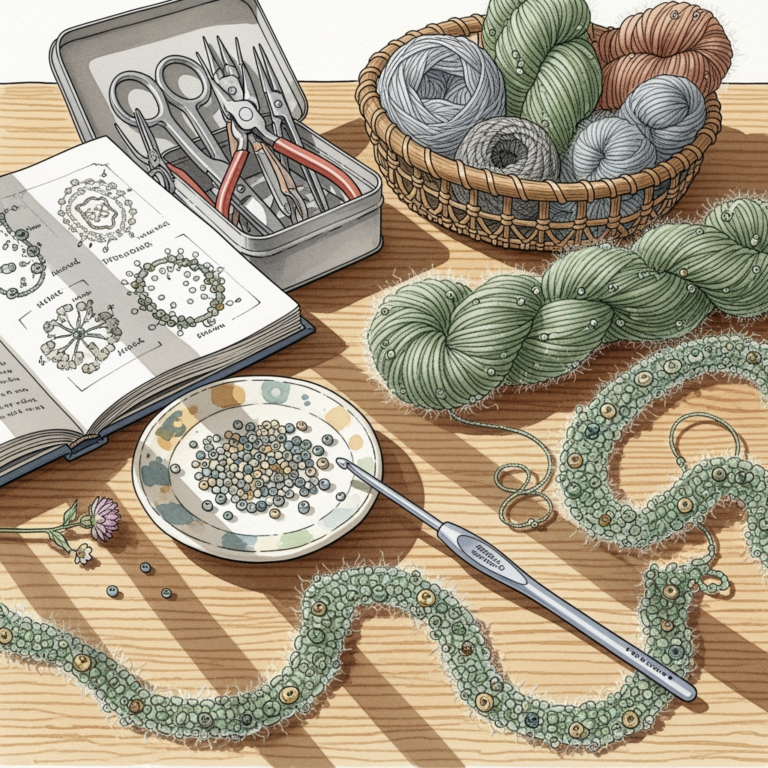
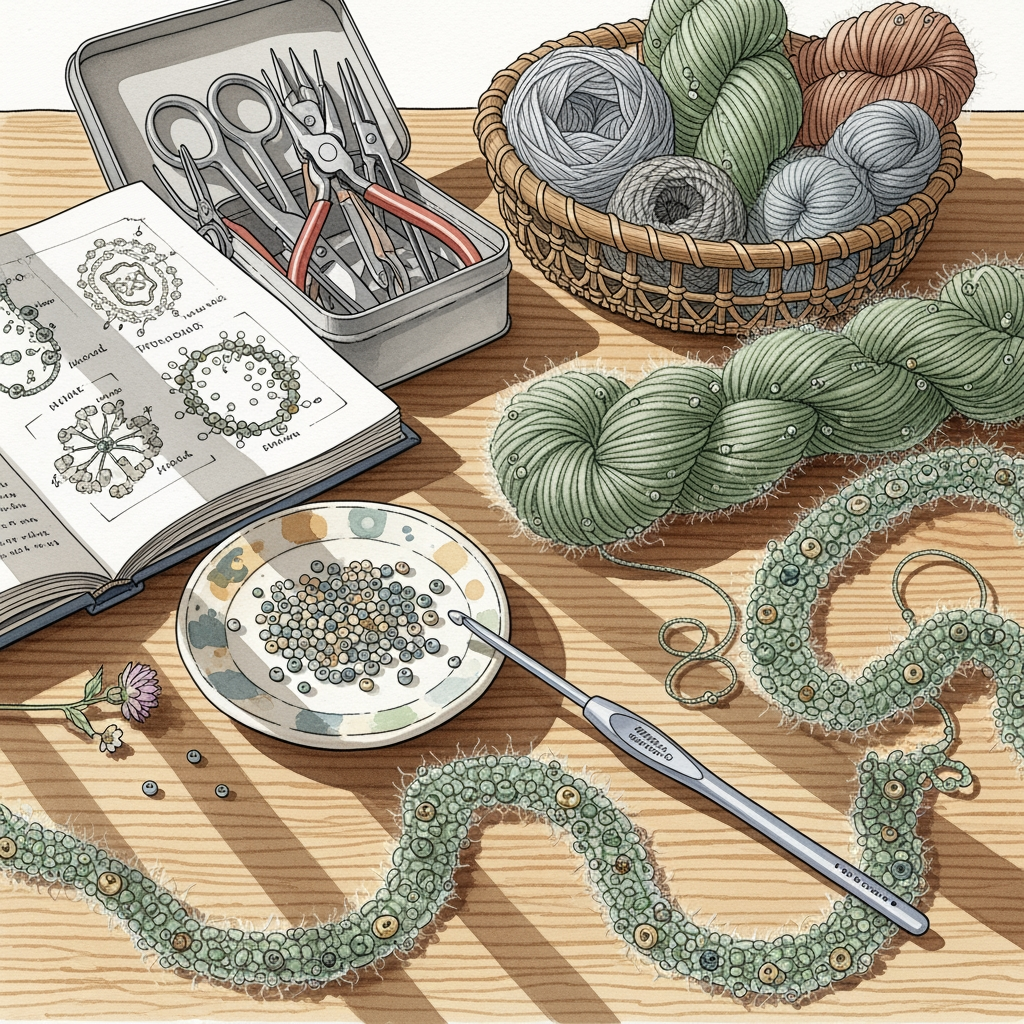
You don’t need a massive kit, but two tools are non-negotiable: a high-quality crochet hook (0.5mm to 0.75mm) and a bead spinner. The crochet hook is used to pull your yarn loop through the bead, while the spinner saves hours of manual threading.
When choosing a hook, ensure the head is smooth and snag-free. If you are working with sticky fibers like mohair or angora, a metal hook is essential to prevent the yarn from grabbing the tool.
Bottom line: Don’t skimp on your hook; a cheap, rough hook will ruin your yarn before you even finish the first row.
Troubleshooting Common Bead Placement Errors
The most common issue is the "bead flip," where the bead sits sideways instead of flat against the stitch. This usually happens when your knitting tension is too loose or the bead is too large for the stitch.
If you notice your beads are consistently sitting at an angle, try tightening your tension on the stitch immediately following the bead. Alternatively, ensure you are pulling the yarn through the bead in the same direction every time to maintain consistency.
Bottom line: If a bead looks wrong, fix it immediately. It is much easier to drop down one stitch and correct it than to try to fix a row of misaligned beads during blocking.
Bead knitting is a rewarding way to add depth, light, and luxury to your fiber projects. By choosing the right bead size for your yarn weight and keeping your tools in good repair, you can master this technique with ease. Remember that your tension will naturally shift when adding beads, so take your time and enjoy the rhythmic process of watching your fabric sparkle. Happy knitting, and may your stitches always remain consistent and bright.