7 Best Yarn Winders For Uniform Cake Winding
Discover the top 7 yarn winders for perfect cakes. Our guide compares features to help you ensure uniform tension and efficient storage for your yarn stash.
Transforming a tangled, hand-wound hank into a tidy, center-pull cake is one of the most satisfying rituals in a knitter’s life. A quality yarn winder ensures your yarn stays organized, prevents frustrating knots during colorwork, and allows for a smooth, consistent tension while you knit. Choosing the right tool depends heavily on your stash size and the weight of the fibers you reach for most often. This guide breaks down the best options to help you find the perfect partner for your yarn storage needs.
Stanwood Needlecraft Large Metal Yarn Winder


The Stanwood Needlecraft Large Metal Yarn Winder is the gold standard for many serious stash-builders. Its heavy-duty metal gears provide a level of durability that plastic models simply cannot match, especially when you are winding large, 400-gram cones of lace-weight mohair or bulky wool.
Because it features a large capacity, it handles substantial yardage without needing to be stopped and emptied halfway through. This is a massive time-saver when you are preparing yarn for a large-scale project like a cabled sweater or a multi-color blanket.
The primary tradeoff here is the price point and the physical footprint on your craft table. If you only wind yarn once a year, this might be overkill, but for the dedicated maker, it is an investment that pays for itself in longevity.
Knit Picks Yarn Ball Winder: Best Budget Pick
If you are just starting your journey into the world of hanks and cakes, the Knit Picks winder is an excellent entry point. It is lightweight, portable, and gets the job done reliably for standard-sized hanks of fingering or worsted-weight yarn.
While it is made mostly of plastic, its simplicity is its greatest strength for the occasional user. It’s perfect for those who want to turn a few hanks into center-pull cakes without investing in professional-grade machinery.
Be mindful that the gears are plastic, so it is best not to force the handle if you feel resistance. If you try to wind a massive, bulky-weight skein too quickly, the gears can strip, so keep your pace steady and gentle.
Lacis Jumbo Yarn Winder for Bulky Skeins

Bulky, roving-style yarns are notorious for being difficult to manage, often refusing to sit neatly on standard winders. The Lacis Jumbo Yarn Winder is designed specifically to accommodate these thick, lofty fibers without crushing the life out of them.
The wider base and larger spindle allow for a more airy wind, which is crucial for maintaining the loft of wool. If you crush your yarn too tightly during the winding process, you risk losing the bounce and elasticity that makes your finished garment feel so luxurious.
This winder is a staple for those who frequently work with super-bulky knits or hand-spun yarns. It ensures that even the thickest fibers are ready for your needles without becoming dense or felted in the process.
Nancy’s Knit Knacks Heavy Duty Yarn Winder
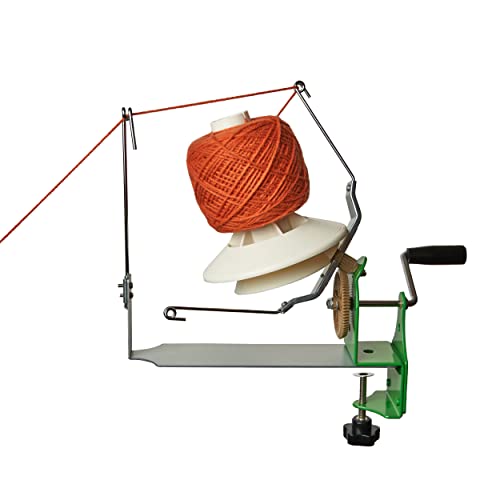
Nancy’s Knit Knacks has long been respected for creating tools that feel like they were designed by knitters, for knitters. This heavy-duty winder is built for those who process high volumes of yarn, perhaps for a small business or a very ambitious stash.
The mechanical design is incredibly smooth, minimizing the "jerking" motion that often leads to uneven cakes. When your cake is uniform, your yarn flows off the center pull with consistent tension, which directly impacts the evenness of your stitch gauge.
While it requires a bit more desk space and a solid surface to clamp onto, the performance is unmatched in terms of stability. It is a workhorse that handles everything from slippery silk blends to sticky, rustic wools with equal grace.
U-nitt High Speed Metal Yarn Ball Winder
The U-nitt metal winder is a fantastic middle ground for those who want the durability of metal gears without the massive size of professional industrial units. It is fast, efficient, and holds a respectable amount of yardage for most standard projects.
The metal construction means it won’t flex or wobble under the pressure of a fast winding session. This stability is vital because a wobbling winder often leads to cakes that collapse or "slump" midway through the process, creating a tangled mess.
This is a great choice for the knitter who values speed and reliability. Just remember to keep the gears lightly lubricated with a drop of machine oil occasionally to ensure it continues to operate as smoothly as the day you bought it.
ChiaoGoo Hand-Operated Yarn Ball Winder

ChiaoGoo is a brand synonymous with quality needles, and their winder reflects that same attention to detail. It is a compact, hand-operated unit that is perfect for knitters who need to wind yarn on the go or have limited storage space in their knitting bag.
Despite its smaller size, it creates a very clean, tight cake that is easy to store in bins or project bags. It’s particularly effective for winding small amounts of leftover yarn into "mini-cakes" for colorwork or scrap projects.

Because it is manual and compact, it is not ideal for winding massive, sweater-quantity hanks in one sitting. However, for the knitter who values portability and precision, it is a highly effective, space-saving solution.
Amish Style Wooden Yarn Swift and Winder
While technically two tools, the pairing of an Amish-style wooden swift with a winder is the ultimate setup for any serious fiber artist. The swift holds the hank open and rotates as you wind, preventing the yarn from twisting or tangling during the process.
Wooden swifts are generally preferred over plastic umbrella swifts because they are sturdier and less prone to snapping under the tension of a heavy hank. They also add a beautiful, tactile element to your craft room that feels traditional and grounded.

Investing in a high-quality wood swift will change your winding experience entirely. It allows you to wind yarn at a consistent speed, which is the secret to getting a perfectly uniform cake every time.
Key Features to Look for in a Yarn Winder
When shopping for a winder, look for gear construction and clamping strength. Metal gears are always preferable for longevity, while a strong, deep-reach clamp ensures the winder stays firmly attached to your table, even when you are winding quickly.
Consider the maximum capacity of the spindle. If you primarily knit with fingering-weight yarn for socks, a standard winder is fine, but if you regularly work with 200g hanks of worsted-weight wool, a jumbo winder is a non-negotiable upgrade.
Finally, check the smoothness of the guide arm. A guide arm that moves freely prevents the yarn from catching or snapping, which is especially important for delicate fibers like lace-weight mohair or single-ply yarns that are prone to breaking.
How to Properly Use a Winder for Uniform Cakes
Always start by placing your hank on a swift; never try to wind directly from a pile on the floor. The swift provides the necessary tension to keep the yarn moving smoothly, which prevents the yarn from stretching or snapping.
Guide the yarn through the winder’s tension arm with a light, consistent touch. If you hold the yarn too tightly, you will create a cake that is too dense, which can stretch out delicate fibers like alpaca or silk, potentially altering your gauge.
For the most uniform result, wind at a steady, moderate pace. Sudden bursts of speed or stopping abruptly can cause the yarn to wrap unevenly, leading to a cake that is prone to tangling once you start knitting from the center.
Troubleshooting Common Yarn Winder Issues
If your yarn is constantly slipping off the spindle, check that your yarn is fed through the guide arm at the correct angle. Often, a slight adjustment to the tension arm’s position can prevent the cake from "crawling" off the top of the winder.
If your winder feels "gritty" or difficult to turn, it may just need a quick cleaning and lubrication. Dust and fiber bits can get caught in the gears over time; a quick blast of canned air and a tiny drop of oil can usually restore smooth operation.
Finally, if your cakes are collapsing, you are likely winding too loosely or the yarn is too slippery. Try placing a small piece of tissue paper or a cardboard tube on the spindle before you start to give the cake a firmer core to build upon.
Finding the right yarn winder is about balancing your project volume with the practical realities of your workspace. Whether you choose a budget-friendly plastic model or a heavy-duty metal machine, the goal is always to protect your yarn and make your knitting process more enjoyable. Take the time to set up your swift correctly, keep your tension steady, and your yarn will reward you with a smooth, snag-free experience. Happy knitting, and may your cakes always be perfectly wound!