6 Best Sewing Threads For Reinforcing Seams To Use
Select the right thread for durable seams. Our guide explores the six best options to ensure your projects remain strong, secure, and built to last longer.
Every knitter knows the heartbreak of a beautiful, hand-knit garment losing its structural integrity at the shoulders or underarms after only a few wears. Choosing the right sewing thread for reinforcing these high-tension areas is just as critical as selecting the perfect yarn for your stitch pattern. While your knitting needles create the fabric, your sewing thread acts as the hidden skeleton that prevents sagging and distortion. This guide explores the best threads to ensure your hard work stands the test of time.
Gutermann Mara 100: Best Overall Polyester Thread


Gutermann Mara 100 is the gold standard for most knitters because it is manufactured using Micro Core Technology. This process creates a thread that is remarkably smooth and uniform, preventing the uneven tension that often leads to puckered seams.
Because it is a polyester-wrapped polyester thread, it offers excellent abrasion resistance without being overly stiff. It glides through delicate wool fibers without cutting them, which is a major concern when working with softer, single-ply yarns.
If you are looking for a reliable, "set it and forget it" thread for stabilizing shoulder seams in a heavy wool sweater, this is your best bet. It is strong enough to carry the weight of the garment but thin enough to remain invisible within the stitch structure.
Coats & Clark Dual Duty XP: Best All-Purpose Pick
Coats & Clark Dual Duty XP is a staple in most sewing kits for a reason: it is incredibly accessible and performs consistently across a wide range of weights. It blends the strength of polyester with the smooth finish of cotton, making it a versatile choice for those who switch between different yarn bases.
The "XP" stands for extra performance, and you will notice this when sewing through dense, felted, or superwash wools. It resists tangling and knotting, which is a lifesaver when you are trying to anchor a seam on a complex piece of colorwork.
However, keep in mind that it has slightly more "fuzz" than the Mara 100. If you are working with a very high-twist, smooth merino, you might find it catches slightly more during the sewing process.
YLI Woolly Nylon Thread: Best For Stretchy Seams

If you are knitting a garment with significant negative ease, such as a fitted tank top or a ribbed cuff, you need a thread that moves with your fabric. YLI Woolly Nylon is a textured, crimped thread that offers incredible elasticity.
When you use this to reinforce a side seam, it won’t snap when the garment is pulled over your head or stretched during wear. It essentially acts like a tiny, hidden elastic band, preserving the integrity of the knit fabric’s natural bounce.
The primary tradeoff is that it can be tricky to work with if you are not used to its texture. You must ensure your sewing machine tension is adjusted properly, as this thread is much bulkier than standard sewing thread.
Mettler Silk-Finish Cotton: Best Natural Option
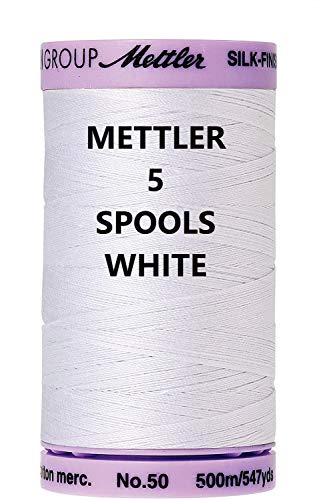
For the purists who insist on keeping their garment 100% natural, Mettler Silk-Finish Cotton is the premier choice. It is made from long-staple Egyptian cotton, which gives it a high sheen and a smooth, lint-free surface.
Cotton thread is inherently less elastic than polyester, so it is best used for garments that don’t require a lot of "give" at the seams. It is perfect for stabilizing the shoulder seams of a linen or cotton-knit summer top where you want the reinforcement to match the fiber content of the yarn.
Be aware that cotton thread is not as strong as synthetic alternatives. Avoid using this for heavy, oversized sweaters where the weight of the yarn might cause the cotton thread to snap over time.
Madeira Aerolock 125: Best For High-Stress Areas

Madeira Aerolock 125 is a core-spun thread designed specifically for sergers and high-speed sewing, making it exceptionally strong. If you are constructing a garment that will see heavy daily wear, this is the thread you want in your seams.
It is incredibly thin but possesses a high tensile strength, meaning it can take a lot of tension without breaking or distorting your knitting. It is particularly effective for reinforcing the underarm gussets of a cardigan, which are prone to friction and pulling.
Because it is so strong, it is important to match your needle size carefully. Using too large a needle can create holes in your knitting that the thread won’t be able to fill, potentially leading to runs in your fabric.
Sulky Invisible Thread: Best For Discreet Seaming

Sulky Invisible Thread is a monofilament thread that is essentially a very fine, clear strand of nylon or polyester. It is the perfect solution when you need to reinforce a seam without the thread color clashing with your yarn.
It is ideal for complex lace patterns or variegated yarns where finding a matching solid color is impossible. Once it is stitched into the seam, it becomes completely transparent, leaving only the beauty of your stitch work visible.
The main drawback is that monofilament can be stiff and occasionally itchy against the skin. I recommend using this only for seams that are not in direct contact with your body, such as attaching a collar or reinforcing a decorative trim.
Why Reinforcing Seams Is Vital For Knit Garments
Knitted fabric is inherently unstable compared to woven fabric because it is a series of interlocking loops. Without reinforcement, the weight of the garment can cause these loops to stretch, sag, or eventually ladder into a hole.
Shoulder seams are the most common failure point because they carry the entire weight of the garment. By sewing a ribbon or a piece of strong thread into the seam allowance, you create a permanent anchor that prevents the yarn from over-stretching.
Don’t wait for your garment to show signs of wear before you reinforce it. Incorporating this step during the finishing process is a form of insurance that ensures your hand-knit items remain wearable for decades, not just seasons.
Matching Thread Weight To Your Specific Yarn Fiber
The golden rule of reinforcement is to ensure your thread doesn’t overpower your yarn. If you are working with a delicate fingering-weight lace, a heavy-duty polyester thread will cut through the fibers like a knife.
- Lace/Fingering Weight: Use fine threads like Mara 100 or Sulky Invisible.
- DK/Worsted Weight: Standard weight polyester or cotton threads are usually sufficient.
- Bulky/Super Bulky: You can use slightly heavier threads, but focus on the strength of the stitch rather than the thickness of the thread.
Always test your thread on a swatch before committing to the final garment. If the thread creates a visible ridge or causes the fabric to pucker, switch to a thinner gauge or a different fiber type.
Essential Tips For Sewing Seams By Hand Or Machine
Whether you are using a sewing machine or a needle and thread, the goal is to distribute the stress evenly. When sewing by hand, use a backstitch to ensure the seam remains secure even if one individual stitch breaks.
If you are using a machine, a narrow zigzag stitch is often better than a straight stitch for knitwear. The zigzag allows for a tiny amount of movement, which mimics the natural flexibility of the knitted fabric.
Always pin your seams carefully before sewing, ensuring the knitting is not stretched or distorted. If you sew a stretched seam, your garment will be permanently misshapen once you take it off the machine.
Troubleshooting Common Thread Snapping In Knitting
If your thread keeps snapping while you are sewing, the first thing to check is your needle size. A needle that is too small for the thread will cause friction, heating up the thread and causing it to break under tension.
Another common culprit is a rough spot on your sewing machine’s throat plate or bobbin case. Knit fibers and sewing threads are delicate, and even a microscopic burr can snag your thread and cause it to snap mid-seam.
Finally, check your tension settings. If your machine tension is set too high, it will pull the thread taut, leaving no room for the natural expansion of the knit fabric. Loosen your tension slightly and test on a scrap piece of your project yarn.
Reinforcing your seams is the secret mark of a seasoned maker, transforming a fragile project into a durable heirloom. By carefully choosing the right thread—whether it’s the strength of polyester or the invisibility of monofilament—you protect your time and effort. Remember that your goal is to support the fabric, not to compete with it. With these tools and techniques, your knitwear will maintain its shape and beauty for years to come.