6 Best Stainless Steel Blocking Pins For Lace
Achieve professional lace results with our top 6 stainless steel blocking pins. Discover rust-proof, durable options that ensure precision for every project.
Blocking is the final, transformative step that turns a crumpled piece of knitting into a professional-grade masterpiece. When working with delicate lace, the right stainless steel pins ensure your hard work maintains its shape without the risk of unsightly damage. Choosing the correct tool is just as vital as selecting your yarn or needles. This guide breaks down the best stainless steel pins to help you achieve crisp, defined lace edges every time.
Knitter’s Pride T-Pins: The Industry Gold Standard


These pins are a staple in almost every serious knitter’s notions bag for good reason. They offer a perfect balance of weight and rigidity, which is essential when you are stretching a lace shawl to its maximum potential.
The T-bar head is the standout feature here, as it provides a secure grip for your fingers when pushing into dense blocking mats. You won’t find yourself struggling to pull them out once the piece is dry, even after they have been pinned for days.
Because they are made of high-quality stainless steel, they resist bending under the tension of heavy wool or alpaca lace. If you frequently block large, complex pieces, these are the reliable workhorses you want in your kit.
Clover Patchwork Pins: Best for Delicate Lace

When you are working with fine-gauge lace, such as cobweb or lace-weight mohair, traditional T-pins can sometimes be too thick. Clover’s patchwork pins are significantly thinner, allowing them to glide between delicate stitches without distorting the fiber.
These pins are incredibly sharp, which prevents snagging on expensive silk or cashmere yarns. Their slender profile is ideal for pinning out tiny picot edges or intricate points that require precision rather than brute force.
Be aware that because they are thinner, they are more prone to bending if you try to pull too much tension against them. Reserve these for the finishing details where finesse is required, rather than the initial structural anchoring of a large project.
Susan Bates T-Pins: Reliable and Rust Resistant

Susan Bates has been a household name in knitting for decades, and their T-pins remain a solid, middle-of-the-road choice. They offer consistent quality and a smooth finish that won’t catch on your yarn.
The primary advantage of these pins is their resistance to rust, even when used on damp, heavily saturated wool. This is critical for projects that require a long drying time or repeated blocking sessions.
They are widely available and reasonably priced, making them an excellent choice for a beginner building their first blocking kit. They may not have the premium feel of boutique tools, but they will never let you down in a pinch.
Lacis Stainless Steel Pins: Precision for Blocking
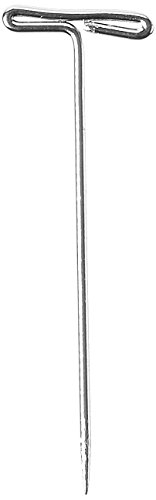
Lacis is known for catering to the specialized needs of lace makers and textile artists. Their stainless steel pins are engineered for those who demand absolute accuracy in their blocking process.
These pins are often slightly longer than standard sewing pins, which provides better leverage when pinning through multiple layers of fabric. They are incredibly stiff, meaning they hold their shape even when you are applying significant force to open up lace eyelets.
If you are a perfectionist who spends hours obsessing over the symmetry of your lace points, these pins are worth the investment. They provide the structural integrity needed to ensure your finished piece looks as crisp as a store-bought garment.
Dritz Extra-Long T-Pins: Best for Heavy Fabrics
Sometimes, the weight of a large project—like a heavy wool-blend circular shawl—requires more than standard pins can offer. Dritz extra-long T-pins provide that extra reach and surface area needed to anchor heavy fabric firmly to your blocking board.
The extra length is a game-changer when you need to pin through thick seams or layered lace borders. They provide a much deeper anchor point, ensuring that your blocking mat doesn’t pull up or shift while the piece is drying.
While they might be overkill for a lightweight scarf, they are indispensable for larger, heavier projects. Keep a pack of these on hand specifically for those times when your lace is dense and requires a firmer hold.
Boye Stainless Steel T-Pins: The Budget Friendly Pick

Boye pins are the quintessential "utility" option that you can find in almost any craft store. They are straightforward, functional, and get the job done without any unnecessary bells or whistles.
If you are just starting out and don’t want to overspend on accessories, these are a perfectly acceptable entry point. They are durable enough to last for years, and their stainless steel construction is reliable enough for most standard lace projects.
Don’t let the lower price tag fool you into thinking they are low quality; they are a classic for a reason. They provide a solid, no-nonsense solution for knitters who prefer to spend their budget on high-quality yarn instead of notions.
Why Stainless Steel Matters for Your Lace Projects
In the world of blocking, your pins are constantly exposed to moisture. If you use cheap, plated pins, the moisture from your wet-blocked lace will eventually break down the coating, leading to rust.
Rust is the enemy of every knitter; it leaves permanent, orange-brown stains on your beautiful, hand-knitted fabric. Stainless steel is inherently resistant to this oxidation, providing a clean and safe environment for your fiber to dry.
Beyond rust, stainless steel is harder and more durable than aluminum or plated steel. It maintains its point longer, ensuring that you aren’t accidentally piercing or tearing your yarn fibers during the pinning process.
Essential Tips for Perfect Lace Blocking Results
Always start by soaking your lace in cool water with a gentle, no-rinse wool wash. Never wring out your lace; instead, roll it in a thick towel and press firmly to remove excess moisture before pinning.
When pinning, start from the center of your piece and work your way out toward the edges. This ensures that the tension is distributed evenly, preventing the lace from becoming lopsided or distorted.
- Use enough pins: Don’t be afraid to use a high density of pins to hold your lace shape.
- Check your symmetry: Use a measuring tape to ensure your points are equidistant from the center.
- Be patient: Allow your project to dry completely before removing the pins.
How to Prevent Rust Marks on Your Finished Knits
Even with stainless steel, it is a good practice to avoid leaving pins in your project for an excessive amount of time. If you live in a humid climate, the risk of moisture lingering in the fibers is higher.
Always ensure your blocking mats are clean and dry before you begin. If you are using a DIY blocking setup, such as a carpet or a cardboard surface, ensure there are no hidden contaminants that could react with the water.
If you are working with very light-colored or white yarn, be extra cautious. You can perform a quick "test soak" with a single pin in a scrap piece of your yarn to ensure it doesn’t react negatively to your specific water source.
Frequently Asked Questions About Blocking Tools

Do I really need T-pins, or can I use regular sewing pins? T-pins are superior because the T-bar prevents the pin from sliding entirely into the mat and makes them much easier to remove.
How many pins do I need? It depends on the size of your project, but for a standard lace shawl, having at least 50 to 100 pins is recommended to ensure every point is secured.
Can I reuse my pins indefinitely? Yes, as long as they remain straight and the points stay sharp, stainless steel pins can last for a lifetime of knitting.
Investing in high-quality stainless steel pins is a small price to pay to protect your hundreds of hours of knitting work. By choosing the right tool for the weight and delicacy of your project, you ensure that every lace eyelet and cable pop is showcased to perfection. Remember that blocking is not just a chore, but the final act of creation that brings your design to life. Happy knitting, and enjoy the satisfaction of seeing your lace reach its full potential.