7 Best Latch Tools For Picking Up Dropped Stitches
Dropped a stitch? Discover the 7 best latch tools for seamless knitting repairs. Our guide highlights top picks to help you restore your project with ease.
Every knitter knows the heart-stopping moment a stitch slips off the needle and begins a slow, rhythmic descent down the fabric. While a dropped stitch can feel like a disaster, it is simply an inevitable part of the craft that every maker must learn to master. With the right latch tool, you can reclaim those lost stitches without unraveling hours of hard work. This guide explores the best tools to keep in your knitting bag to ensure your projects remain pristine.
Clover Knitting Stitch Repair Tool: Best Overall


The Clover Knitting Stitch Repair Tool is a staple in my notions pouch for a reason. It features a tiny, precise latch hook on one end and a functional needle point on the other, making it incredibly versatile for both picking up stitches and weaving in ends.
This tool excels because of its slim, low-profile design. It slips easily between tight stitches without distorting the surrounding fabric, which is crucial when you are working with delicate lace or high-twist yarns that show every imperfection.
The trade-off here is the size; it is quite small and can be easily misplaced if you aren’t careful. However, for sheer reliability and performance across various yarn weights, it remains the gold standard for most knitters.
Susan Bates Knit-Chek: The Classic Choice
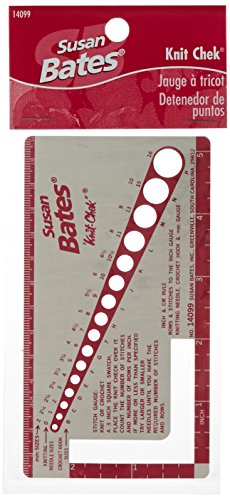
The Susan Bates Knit-Chek is more than just a repair tool; it is a multi-purpose gadget that has been a workshop essential for decades. It combines a needle gauge, a ruler, and a small latch hook into one durable metal plate.
If you are a knitter who appreciates efficiency and minimalism, this is the tool for you. It is virtually indestructible, meaning you can toss it into a project bag without worrying about the hook snapping or the tip dulling over time.
While it lacks the ergonomic handle of modern specialty tools, its utility is unmatched for travel. It is the perfect "just in case" tool for knitters who want to be prepared for gauge checks and minor repairs simultaneously.
Addi Quick Fix Repair Hook: Best Ergonomic Pick

When you are working on a long-term project like a cabled sweater or a complex colorwork piece, ergonomic comfort becomes a priority. The Addi Quick Fix Repair Hook features a shaped handle that reduces hand fatigue during those tedious "laddering up" sessions.
The hook itself is engineered with the same high-quality finish as Addi’s famous circular needles. It glides through fibers like silk, which is a massive advantage when working with sticky wools or mohair blends that tend to grab onto metal tools.
One minor drawback is the handle thickness, which might feel slightly bulky if you are attempting a repair in a very tight, crowded section of a project. Overall, it is a premium choice for knitters who prioritize comfort and smooth fiber movement.
Prym Ergonomic Stitch Fixer: Best Comfort Grip

The Prym Ergonomic Stitch Fixer takes a different approach to comfort with its soft-touch, non-slip grip. If you suffer from arthritis or simply find thin metal hooks difficult to hold for long periods, this tool is a game-changer.
The hook head is designed to be slightly rounded, which prevents it from accidentally splitting your yarn as you pull the ladder through the dropped loop. This is particularly helpful when working with plied yarns that have a tendency to fray or separate under tension.
Because of the grip, this tool is slightly larger than standard hooks, making it less ideal for very fine gauge work. However, it is an excellent addition for anyone who values tactile feedback and a secure hold.
Boye Aluminum Crochet Hook: The Versatile Tool
Sometimes the simplest solution is the most effective. A standard size-E or F aluminum crochet hook from Boye is a tool every knitter likely already owns, and it works perfectly for picking up dropped stitches in medium-weight yarns.
The benefit of using a standard crochet hook is the familiarity of the handle and the consistency of the hook shape. If you have been crocheting for years, your muscle memory will make the repair process feel like second nature.
The main downside is that these hooks are not designed specifically for knitting repairs, so they lack the specialized latch mechanism. You have to be more deliberate with your movements to ensure the stitch doesn’t slip off the hook mid-repair.
Knitter’s Pride Ginger Hook: Best Luxury Option

The Knitter’s Pride Ginger line is known for its stunning aesthetic and smooth, polished wood finish. Their repair hook is a beautiful piece of equipment that feels warm and natural in the hand, unlike the cold, clinical feel of metal tools.
This tool is ideal for knitters who work primarily with slippery synthetic fibers or silk, as the wooden texture provides a slight bit of "grip" that prevents the stitch from sliding off the hook too quickly. It feels like a high-end investment in your craft.
Be aware that because it is wood, it is more fragile than its metal counterparts. You should avoid putting pressure on the hook tip to prevent snapping, especially when working with heavy, dense wools.
Tulip Etimo Crochet Hook: Best For Fine Gauge
If you are a sock knitter or someone who loves working with lace-weight yarn, the Tulip Etimo is the gold standard. The hook is precision-engineered to be incredibly smooth, allowing it to navigate the tightest, smallest stitches without snagging.
The handle is ergonomically shaped to fit the hand perfectly, providing excellent control for those tiny, intricate movements required for fine-gauge repairs. It turns a stressful repair task into a precise, manageable operation.
While the price point is higher than other options, the quality of the finish is undeniable. If you spend most of your time working with needles smaller than 3.0mm, this is the tool that will save your sanity.
How to Choose the Right Size for Your Yarn Weight
Selecting the right hook size is the difference between a seamless repair and a distorted, messy stitch. Generally, you want a hook that is slightly smaller than the needle size you used for the project to ensure it catches the yarn easily.
If you are working with bulky yarn, a larger hook is necessary to grab the wide loops of the ladder. Conversely, for lace weight, a tiny hook is essential to avoid stretching the surrounding fabric out of shape.
Always test the hook against your yarn before starting the repair. If the hook splits the yarn, it is too sharp or too large; if it won’t hold the yarn, it is too small or lacks a deep enough throat.
Essential Tips for Fixing Dropped Stitch Ladders
The most important tip is to stay calm and identify the "ladder" of horizontal strands before you begin. Use a stitch marker to secure the dropped loop so it doesn’t travel any further down while you prepare to fix it.
When picking up the stitches, work from the back of the fabric if possible, as this keeps the repair hidden and mimics the natural look of the knitted stitch. Always pull the horizontal strand through the loop from the bottom up.
Don’t rush the process. If you find the tension is uneven, gently tug on the surrounding stitches once the repair is complete to redistribute the extra yarn. This helps the fixed area blend in with the rest of the fabric.
Troubleshooting Common Stitch Repair Challenges
If you find that your repair looks "twisted" compared to the rest of your knitting, you likely picked up the loop in the wrong orientation. Ensure that both legs of the stitch are open and not crossed before pulling the next strand through.
Working with mohair or fuzzy yarns can be a nightmare because the fibers cling together, obscuring the ladder. In these cases, use a smooth metal tool and work under a bright light so you can clearly see the path of the yarn.
If you have dropped multiple stitches in a row, it is often easier to ladder down to the point of the drop and then work back up. Don’t be afraid to use a spare needle to hold the stitches above the drop while you focus on the repair.
Mastering the art of the dropped stitch repair is a rite of passage that transforms your relationship with your knitting. By keeping one of these reliable tools in your kit, you gain the confidence to tackle any pattern without the fear of a permanent mistake. Remember that every repair is a learning opportunity that makes you a more skilled and observant maker. Happy knitting, and may your stitches stay exactly where they belong.