6 Best Yarn Feeders For Multi-Color Knitting To Try
Master multi-color knitting with our top 6 yarn feeders. Discover how these essential tools improve tension, speed, and precision for your next project.
Mastering multi-color knitting requires more than just patience; it demands a system to keep your tension consistent and your strands from becoming a tangled mess. When you are juggling two or more colors, the physical act of managing those threads can quickly lead to hand fatigue and uneven stitches. A high-quality yarn feeder acts as a third hand, guiding your yarn precisely to the needles without the friction that causes gauge fluctuations. Investing in the right tool transforms a frustrating colorwork session into a rhythmic, meditative experience.
Clover Knitting Yarn Guide: Best Overall Choice
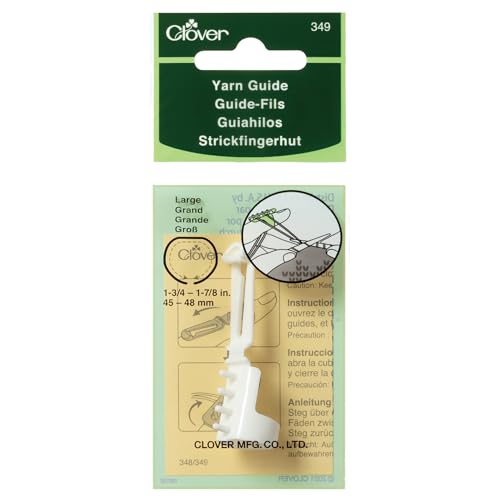

The Clover Knitting Yarn Guide is a staple in many knitting bags because of its straightforward, no-nonsense design. It sits comfortably on your finger, providing a stable path for two strands of yarn to flow simultaneously.
What makes this the best overall choice is its versatility across various yarn weights. Whether you are working with a fine fingering weight for a delicate fair isle sweater or a squishy worsted weight, the guide maintains a smooth delivery. It eliminates the "yarn cross" issue that often plagues beginners when they switch colors mid-row.
However, it is worth noting that the plastic construction is lightweight, which some knitters love, while others might find it feels less substantial. If you have larger hands, you may need to adjust your grip slightly to ensure it doesn’t slide off during long knitting sessions. Ultimately, it provides the most consistent performance for the widest range of projects.
Prym Ergonomic Yarn Knitting Thimble Review
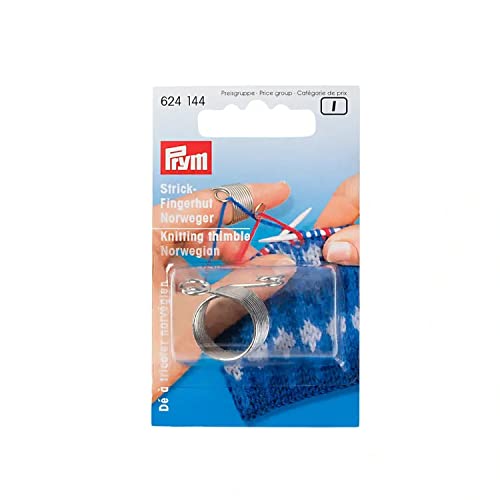
Prym has taken a unique approach by focusing entirely on the ergonomics of the knitting hand. This thimble is designed to sit securely on the index finger, featuring a wide, contoured base that prevents it from digging into your skin during marathon knitting sessions.
The real benefit here is for knitters who suffer from hand strain or arthritis. By distributing the pressure of the yarn tension across a wider surface area, it allows you to knit for hours without the typical cramping associated with holding multiple strands. It is a game-changer for complex colorwork that requires a steady, light touch.
The trade-off is the learning curve; it feels different than a traditional yarn guide. If you are used to a very tight, direct tension, you might find the Prym’s design a bit "loose" at first. Give it a few rows to settle into your natural rhythm before deciding if it’s the right fit for your hands.
Honeycomb Yarn Guide for Fair Isle Projects

Fair Isle knitting often involves carrying two colors across the back of the work, and the Honeycomb Yarn Guide is specifically engineered to keep these strands separated. By preventing the yarns from twisting around each other, it ensures that your floats—the loose yarn on the back of the work—remain even and professional.
This tool is particularly helpful when working with high-twist wools that tend to cling together. When you are using sticky, non-superwash wool, the individual channels in the honeycomb design prevent the fibers from grabbing each other. This results in a much cleaner, more uniform fabric on the right side.
Be aware that this guide works best when you have a consistent picking style. If you are a "thrower" rather than a "picker," you might find the physical setup of the honeycomb guide a bit cumbersome. It is best suited for knitters who have already mastered the basics of holding yarn in their non-dominant hand.
Susan Bates Yarn Feeder: Best for Beginners
If you are just starting your journey into the world of stranded colorwork, the Susan Bates Yarn Feeder is an excellent entry point. It is affordable, widely available, and incredibly easy to understand at a glance.
The simple metal loop design allows you to thread your yarn quickly, which is perfect for those moments when you are still getting used to the mechanics of two-handed knitting. It doesn’t overcomplicate the process, allowing you to focus on your stitch pattern rather than the tool itself. It is a low-risk investment for testing whether you enjoy colorwork.
Keep in mind that because it is a simple metal loop, it doesn’t offer the same level of tension adjustment as more expensive, multi-channel guides. As your skills advance and you start tackling more complex patterns, you may find yourself wanting more control. For the beginner, however, it is the perfect bridge to more advanced techniques.
Tulip Yarn Guide: Precision for Colorwork
Tulip is renowned for its high-quality manufacturing, and their yarn guide is no exception. It offers a level of precision that is unmatched, making it a favorite for knitters who obsess over every single stitch.
The guide is designed to handle multiple strands with surgical accuracy, ensuring that your tension remains perfectly balanced even when switching between background and foreground colors. If you are working on a project with intricate geometric patterns or fine-gauge colorwork, this is the tool that will help you achieve that professional, "store-bought" look.
The premium price point reflects the quality of the materials and the thoughtful engineering. While it might be overkill for a simple striped hat, it is an essential piece of equipment for a complex colorwork sweater. It is a luxury, but for the serious colorwork knitter, it is a worthwhile investment in your craft.
Addi Knitting Thimble: The Premium Selection
The Addi Knitting Thimble is the gold standard for many professional knitters. Crafted with precision, it feels like an extension of your finger rather than a piece of plastic you’ve strapped on.
Its primary strength lies in its durability and the smoothness of the metal finish. When you are working with delicate fibers like silk or alpaca, you need a guide that won’t snag or fray the yarn. The Addi thimble provides a frictionless path that keeps your yarn pristine from the first stitch to the last.
Because it is a premium product, it is designed for those who know exactly how they like their yarn tensioned. It doesn’t offer a lot of "play," so it rewards a consistent knitter. If you value longevity and high-end materials, this is the tool that will stay in your knitting kit for decades.
Why Use a Yarn Feeder for Multi-Color Work
A yarn feeder is essentially a tension-management system. When you knit with two colors, one yarn is often held tighter than the other, which can lead to puckering or uneven stitches. By using a feeder, you create a neutral, consistent tension point that keeps both yarns flowing at the same rate.
Beyond tension, a feeder saves your fingers from the constant rubbing of yarn. Without one, the friction of the yarn sliding over your skin can cause irritation or even calluses during long projects. It turns a manual struggle into a fluid, mechanical process.
Finally, it helps with speed. Once you stop worrying about your yarn strands tangling, you can focus on your rhythm. You’ll find that your knitting becomes faster and more enjoyable because the "management" part of the process is handled by the tool.
Essential Tips for Managing Multiple Yarn Strands
- Keep your colors consistent: Always hold the same color in the same position (e.g., the dominant color always on the left).
- Prevent tangles: Use a yarn bowl or separate bags to keep your balls of yarn from rolling around and twisting together.
- Mind your floats: If you are carrying a color for more than three stitches, twist the yarns on the back to prevent long, snag-prone loops.
- Check your gauge: Multi-color knitting is often tighter than single-color knitting, so don’t be afraid to go up a needle size to maintain your desired fabric density.
Yarn Feeder Materials: Plastic vs. Metal Options
Plastic feeders are lightweight and often more affordable, making them great for beginners or knitters who prefer a tool they can barely feel on their finger. However, they can sometimes wear down over time, especially if you are using a very abrasive wool yarn.
Metal feeders, on the other hand, offer superior smoothness and durability. They are less likely to develop grooves from the friction of the yarn, ensuring a consistent experience for years. They do have a bit more weight, which some knitters find helps keep the tool in place, while others might find it slightly heavy.
Ultimately, the choice comes down to your personal sensitivity and the type of yarn you use most often. If you knit with delicate, slippery fibers, a smooth metal guide is usually the better choice. If you prefer a lightweight, unobtrusive tool, plastic is your best bet.
How to Maintain Tension While Knitting Colorwork
The secret to perfect colorwork is not just the tool, but your hand position. You want to maintain a "relaxed tension," which means holding the yarn firmly enough to keep it from sagging, but not so tight that you stretch the fibers.
If you find your colorwork fabric is puckering, it’s a sign that your floats on the back are too short. Try stretching your work out horizontally on the needles every few stitches to ensure the floats have enough room to move. This is a common mistake that can be corrected with a bit of mindful practice.
Remember that blocking is your best friend. Even if your tension looks a little uneven while the piece is on the needles, a good soak and block can do wonders to even out the stitches. Don’t be too hard on yourself; colorwork is a skill that improves significantly with every project you finish.
Choosing the right yarn feeder is a deeply personal decision that depends on your hand size, your preferred knitting style, and the specific fibers you enjoy working with most. Whether you opt for the budget-friendly simplicity of a Susan Bates guide or the premium precision of an Addi thimble, the goal remains the same: a more enjoyable and consistent knitting experience. Experiment with a few different styles to see which one feels like a natural extension of your hand. Once you find your perfect match, you will wonder how you ever managed those tangled multi-color projects without it.