6 Best Knitting Tension Gauges For Consistent Stitches
Achieve professional results with our top 6 picks for knitting tension gauges. Learn how these tools ensure consistent stitch size for your next project.
Achieving consistent stitch tension is the secret bridge between a handmade garment that looks amateur and one that looks professional. Even the most experienced knitters rely on precise tools to ensure their needle sizes remain accurate through years of wear and tear. Finding the right gauge tool is more than just a purchase; it is an investment in the longevity and fit of every project you cast on. Here are six reliable options to help you maintain that perfect, even fabric.
ChiaoGoo Knitting Needle Gauge: The Gold Standard


When it comes to accuracy, the ChiaoGoo gauge is widely considered the industry benchmark. It is crafted from durable, lightweight plastic that doesn’t warp, ensuring that your needle measurements remain consistent over years of heavy use.
The layout is exceptionally intuitive, featuring clearly marked holes for both metric and US sizes. If you have a collection of mixed needles—perhaps a combination of stainless steel and bamboo—this tool helps you quickly identify sizes that have faded or rubbed off over time.
Because it is thin and flat, it slides easily into any knitting bag or notions pouch. The bottom line: It is a no-nonsense, highly precise tool that belongs in every knitter’s kit.
Susan Bates Knit Chek: Best Budget-Friendly Tool
The Susan Bates Knit Chek is a classic for a reason, offering a multi-purpose solution that handles more than just needle sizing. It features a built-in ruler and a series of holes that measure needles from US 0 to 15.
What sets this tool apart is the inclusion of a "stitch gauge" window. By laying the tool over your knitted fabric, you can quickly count how many stitches and rows fit within a square inch.
While it is made of lightweight plastic, it is inexpensive enough to keep one in every project bag you own. If you are just starting your journey, this tool provides the most utility for the lowest price point.
Cocoknits Maker’s Keep Gauge: Best Modern Design
The Cocoknits Maker’s Keep is designed for the knitter who values aesthetics alongside functionality. It is a beautiful, tactile tool made from biodegradable PLA, making it a sustainable choice for the eco-conscious maker.
Beyond just sizing needles, it is designed to work as part of the broader Cocoknits system. It feels substantial in the hand, which is helpful if you suffer from hand fatigue or have difficulty gripping smaller, thinner plastic gauges.
The design is sleek and minimalist, fitting perfectly into a modern craft space. It is the ideal choice if you want a tool that is as beautiful as it is functional.
Clover Knitting Needle Gauge: Best Simple Option
Clover tools are famous for their reliability and smooth finish, and their needle gauge is no exception. It is a straightforward, sturdy plastic card that resists bending, even when tossed into a crowded bag of yarn and accessories.
This gauge is particularly helpful for those who struggle with hard-to-read markings. The numbers are printed in high-contrast ink, making them visible even in lower lighting conditions, such as knitting by a lamp at night.
It covers a wide range of standard needle sizes, making it a great "daily driver." For the knitter who wants a tool that simply works every time without any extra bells or whistles, this is the one.
HiyaHiya Sheep Needle Gauge: Best Novelty Tool

The HiyaHiya Sheep gauge brings a touch of whimsy to your knitting notions without sacrificing accuracy. Shaped like a sheep, it is a fun, charming addition to your collection that makes identifying needle sizes feel a little less like a chore.
Don’t let the cute design fool you; it is a highly functional tool that measures needles from 2mm to 10mm. It is small enough to hang from a project bag zipper or a lanyard, ensuring you never lose it during a knitting group session.
It is a perfect gift for a fellow knitter or a treat for yourself to brighten up your workspace. It proves that your tools can be both personality-driven and technically precise.
Boye Aluminum Needle Gauge: Best Classic Choice
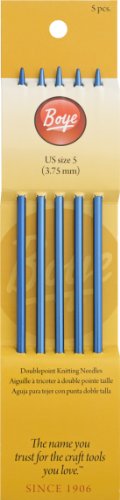
The Boye Aluminum Gauge is a throwback to the days of metal tools that last a lifetime. Unlike plastic gauges that can crack or warp if left in a hot car, this aluminum tool remains rigid and true.
It feels cool and substantial in the hand, and the metal edges are smooth enough that they won’t snag your delicate wool or silk yarns. Because it is metal, it is virtually indestructible, meaning you will likely only ever need to buy one.
It is a nostalgic piece of equipment that connects you to the history of the craft. If you prefer tools that have a bit of weight and a lifetime of durability, look no further.
Why Consistent Tension Matters for Your Projects
Tension is the physical manifestation of how you hold your yarn and needles. If your tension varies wildly throughout a project, your fabric will have "ladders" or uneven stitches that become even more obvious after blocking.
Consistent tension ensures that your gauge—the number of stitches per inch—stays uniform from the first row to the last. This is especially critical for garments, where a change in tension can mean the difference between a sweater that fits perfectly and one that is too small.
By using a gauge tool to confirm your needle size before starting, you set the foundation for a professional finish. Remember, even the most expensive yarn will look lackluster if the stitch tension is inconsistent.
How to Use a Needle Gauge for Accurate Sizing
To use a needle gauge, gently insert the tip of your needle into the various holes until you find the one that fits snugly without forcing it. If the needle slides through with significant "wiggle room," it is too small; if it doesn’t fit at all, it is too large.
Always check both ends of the needle, as some needles can become slightly misshapen near the tips after years of use. It is also helpful to check your needles before starting a new project, especially if you have been using them for lace or cabling.
If you are using a circular needle, ensure you are measuring the needle shaft itself, not the join where the cord meets the needle. Precision at the start prevents the frustration of frogging your work later.
Why Your Needles May Not Match the Label Size
It is a common misconception that all needles marked "US 8" are exactly the same size. Manufacturing tolerances vary between brands, and materials like bamboo can swell slightly over time due to moisture.
Furthermore, different materials affect how your yarn behaves; a 4mm metal needle will often result in a different gauge than a 4mm wooden needle because the yarn slides differently. This is why you should always knit a swatch to check your gauge rather than relying solely on the needle size printed on the label.
Check your needles periodically to ensure they haven’t worn down or become bent. Always trust your gauge swatch over the number printed on the needle.
Troubleshooting Common Gauge and Tension Issues
If your swatch is too tight, you are likely gripping the needles too firmly or using needles that are too small for your yarn weight. Try moving up one needle size or focusing on relaxing your hands as you knit.
If your swatch is too loose, try a smaller needle size or consider a different style of needle, such as bamboo, which adds a bit of "grip" to the yarn. If you find your tension changes when you switch from knitting flat to knitting in the round, this is perfectly normal; adjust your needle size accordingly.
Don’t be afraid to experiment with different needle materials—slick nickel-plated needles can help you speed up, while matte bamboo can help you control slippery fibers like mohair. The best knitter is one who knows how to adjust their tools to achieve the desired fabric.

Mastering your tension is a journey, not a destination, and having the right needle gauge is your most reliable compass. By checking your tools regularly and understanding how your personal style interacts with different materials, you gain total control over your final fabric. Choose the gauge that fits your habits, and you will find that your projects become more consistent and enjoyable to knit. Happy making, and may your stitches always be even.